
Things to Do in Aruba: 16 Activities & My Tips
What to do in Aruba? For me, that question came to mean much more than simply “which sights should I tick off?”. I lived in Aruba for about six months in 2020 and have returned almost every year since, most recently in 2026. Because of that, I have not only experienced the island during one long stay, but have also been able to rediscover it over the years. Not just the famous beaches and attractions, but also the roads between them, the rugged north coast, San Nicolas, Arikok and the places where you sometimes stop spontaneously because something catches your attention.
Aruba is small, but that is exactly why you can easily combine very different activities. In the morning you can drive through a dry landscape filled with cacti, a few hours later snorkel in crystal-clear blue water and end the day watching the sunset on the west coast.
In this guide I share my favorite things to do and places to see in Aruba, together with practical tips, useful things to know and a few combinations that help you make the most of your day without planning every minute of your vacation.
This page contains affiliate links. If you book through them, we may earn a commission at no extra cost to you. Learn more.
💡 My advice in short: don’t try to tick off Aruba in one or two packed days. Choose one day for Arikok, one day for San Nicolas and Baby Beach, and a separate day for the north or snorkeling. Leave enough room for the beach and spontaneous stops as well. That relaxed poco poco pace is something I came to appreciate more and more during my longer stay and later visits.
Want to spread these activities across your vacation days without overplanning? Use my 7-, 10-, or 14-day Aruba itinerary. If you are traveling during Carnival season, also read my Aruba Carnival guide for parade information and practical tips.
🌴 Things to do in Aruba at a glance
| For nature | Arikok National Park |
| For culture | San Nicolas and Oranjestad |
| For snorkeling | Arashi, Boca Catalina, Tres Trapi and Mangel Halto |
| For adventure | 4×4 tour, water sports or Hooiberg |
| For a scenic drive | California Lighthouse, Alto Vista, north coast and gold mill ruins |
| For relaxation | Eagle Beach, Baby Beach or a catamaran trip |
| My favorite combination | San Nicolas + Baby Beach |
| My most important tip | Don’t plan every day from start to finish |
🌴 Looking for more than just activities, such as where to stay, transportation, travel time and planning your vacation? Read my complete Aruba travel guide with tips from my time living on the island and my many later visits. To compare the island’s hotel zones and quieter areas, also read my guide to where to stay in Aruba.
🧭 In this guide
- Arikok National Park
- San Nicolas and street art
- Discover Aruba’s different beaches
- Snorkeling in Aruba
- Visit Oranjestad
- California Lighthouse
- Alto Vista Chapel
- Climb Hooiberg
- Natural Bridge and the rugged north coast
- Discover the gold mill ruins
- Ayo and Casibari Rock Formations
- Try a water sport
- Take a boat or catamaran trip
- Flamingos on Renaissance Island
- Make local food part of your day
- Deliberately plan nothing for a while
- My favorite combinations for three days
- Practical tips
- Frequently asked questions
🇦🇼 Why Aruba is so easy to explore
One of the biggest advantages of Aruba, in my opinion, is the island’s size. Aruba covers about 181 km² and is roughly 30 kilometers long and 10 kilometers wide. That means beaches, towns and attractions are relatively close to one another.
That does not mean I would try to see everything in a single day. Quite the opposite. During my stay and the visits afterward, I discovered how nice it is to simply say: today I’m heading south, tomorrow I’ll explore Arikok, and another day I’ll just drive along the north side.
🚗 How I like to explore: I especially liked having a rental car because of the freedom it gives you. Not because the distances are long, but because you can stop whenever a beach, viewpoint or other place catches your attention. Those unplanned stops were part of Aruba for me.
1. 🌵 Explore Arikok National Park
If I had to name one activity that shows Aruba is about much more than white-sand beaches, it would be Arikok National Park. As soon as you enter the park, the landscape changes completely. Resorts give way to cacti, dry hills, caves and a rugged coastline where the ocean feels much more powerful than on the west side of the island.
Among the places you can find here are Natural Pool (Conchi), Quadirikiri Cave, Fontein Cave, Boca Prins and Dos Playa. Personally, I found the contrast with Palm Beach and Eagle Beach especially impressive. It feels as if you have reached a completely different island after a relatively short drive.
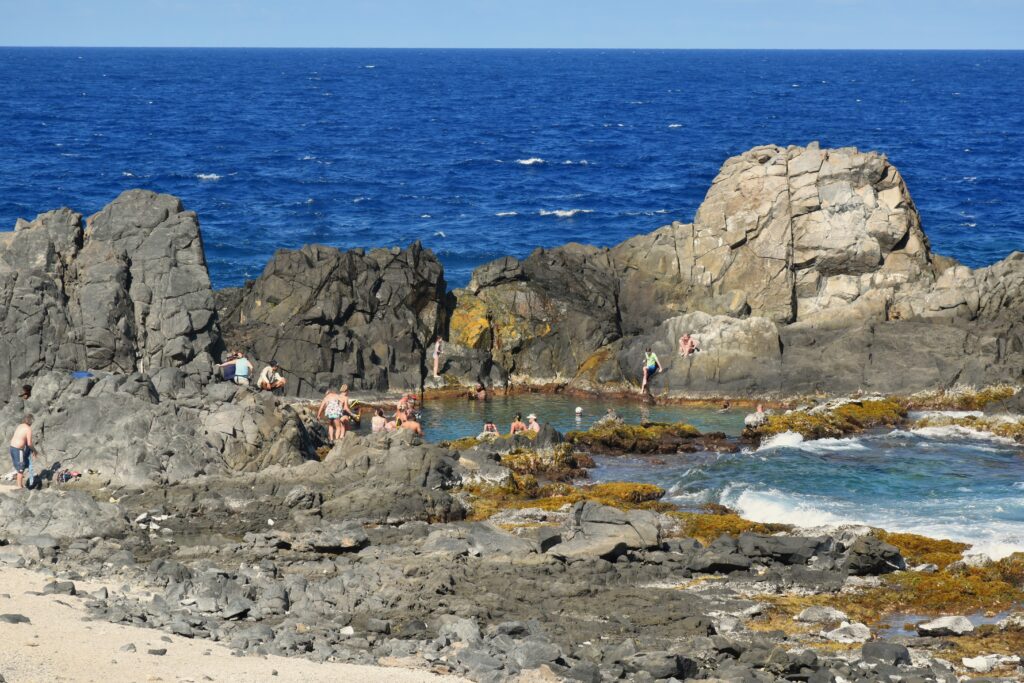
🚙 Good to know: if you specifically want to visit Conchi, don’t automatically take a regular rental car onto the unpaved route. You need suitable transportation for the rougher route, and your rental company’s conditions also determine where you are allowed to drive.
🌵 For routes, caves, Conchi, transportation and up-to-date practical information, read my separate complete guide to Arikok National Park.
2. 🎨 Walk among the murals of San Nicolas
San Nicolas is one of the places I enjoyed visiting because it feels so different from the hotel zone. In the center you will find large colorful murals, local culture and a much more creative atmosphere.
You can easily explore the street art on your own. That’s why I would not walk around with a strict checklist. Park in or near the center and simply spend a few hours wandering through the streets. Some murals are impossible to miss, while others only stand out when you turn into a side street or look up.
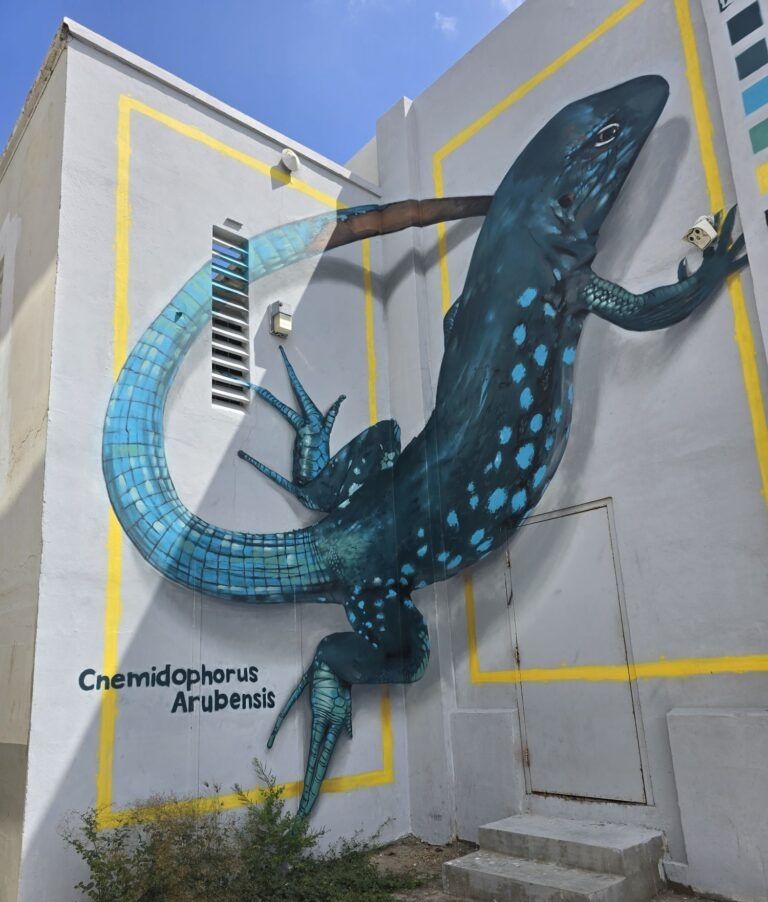
🥥 My favorite combination: start the morning in San Nicolas and then drive toward Baby Beach. This way you combine culture and street art with a relaxed afternoon by the sea without unnecessary backtracking.
🎨 Read my complete San Nicolas guide for the murals, practical tips and my ideal day plan combined with Baby Beach.
3. 🏖️ Discover how different Aruba’s beaches really are
A beach day may not immediately sound like an “activity”, but in Aruba I definitely would not lump all beaches together. During my stay and the years in which I returned, I noticed just how different places such as Eagle Beach, Palm Beach, Baby Beach and Arashi can be.
- Eagle Beach: my choice if you mainly want peace, space and a wide sandy beach.
- Palm Beach: livelier, with restaurants, water sports and plenty of facilities nearby.
- Baby Beach: a great combination with San Nicolas and a nice place for a relaxed afternoon.
- Arashi Beach: one of my favorite places for snorkeling.
- Boca Catalina and Tres Trapi: small, but interesting if marine life matters more to you than a large sandy beach.
- Mangel Halto: a completely different atmosphere and especially interesting for snorkeling and the mangrove surroundings.
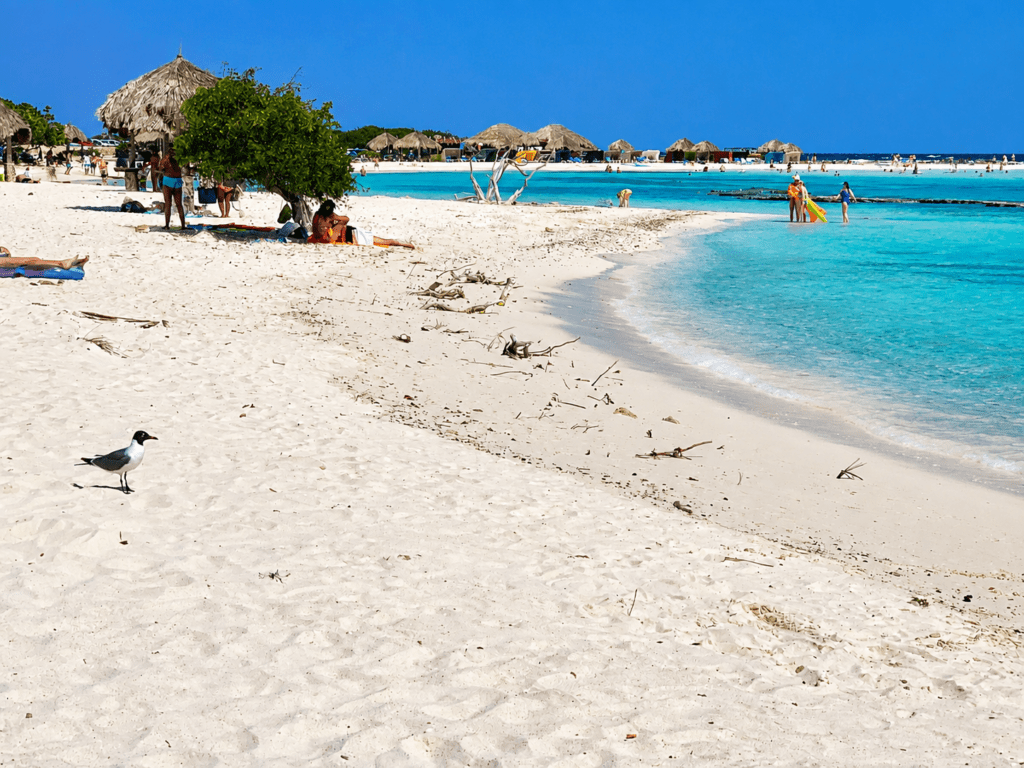
🏖️ I compare the beaches in more detail in my guide to the best beaches in Aruba, including which beach I would choose for swimming, snorkeling, relaxation, families and sunsets.
4. 🤿 Go snorkeling at Arashi, Boca Catalina or Tres Trapi
Snorkeling is one of those activities that, for me, simply belongs to Aruba. You do not always need to book an organized excursion either. At several places along the west and northwest coast, you can enter the water directly from shore.
Arashi Beach has stayed with me personally because I saw, among other things, a sea turtle there during one of my stays. Boca Catalina and Tres Trapi are also well-known places to enter the water with a snorkel and mask.
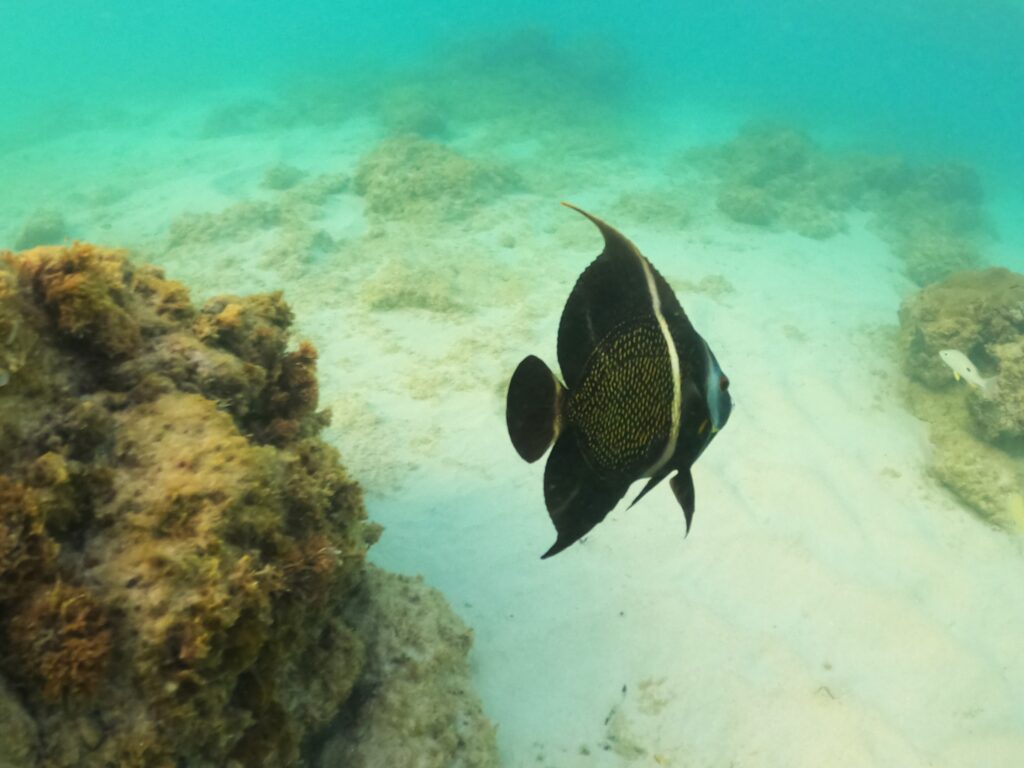
If you want to snorkel for longer or get farther from shore, a boat or catamaran trip can be interesting. Aruba is also known among divers for several wrecks, including the Antilla.
🤿 My tip: go snorkeling early in the day if possible and always check the conditions first. Aruba has many calm bays, but especially along the rugged north and east coast, not every place is suitable for simply entering the water.
5. 🏙️ Spend a few hours in Oranjestad
I would not necessarily plan an entire day for Oranjestad, but I definitely think a few hours in the capital are worthwhile. The colorful buildings, shops, harbor and Dutch-Caribbean influences give the city a completely different character from Palm Beach.
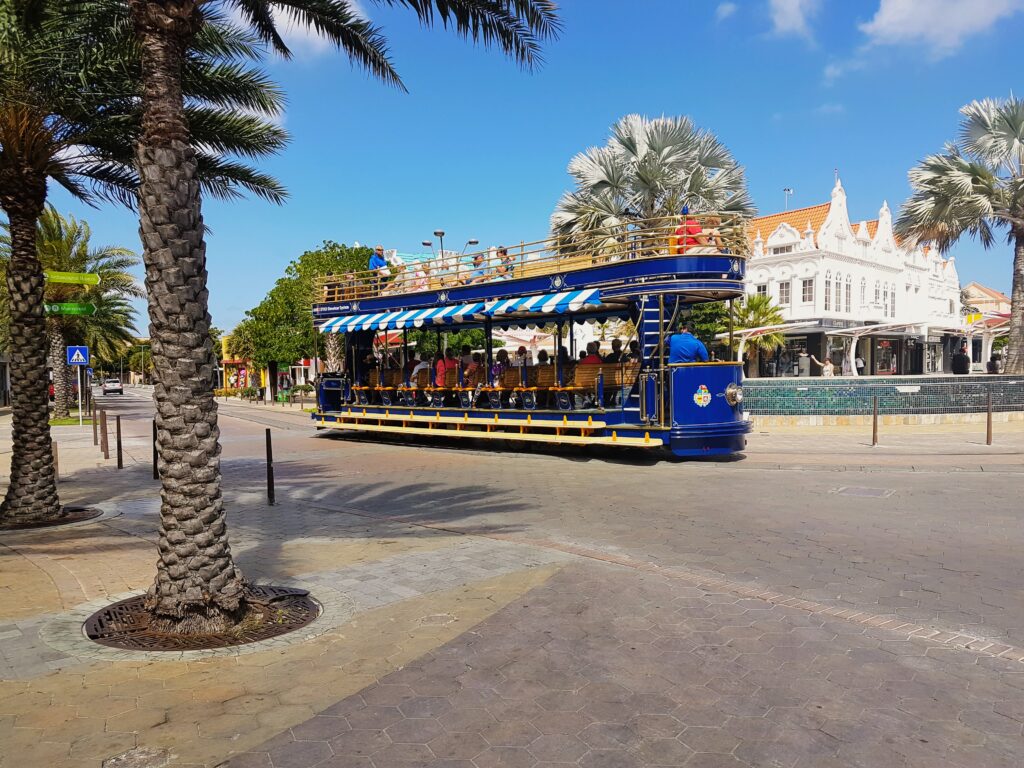
I would mainly wander through the center, walk toward the harbor and stop somewhere for food or a drink along the way. Fort Zoutman is interesting if you also want to learn a little about Aruba’s history.
🚢 Useful tip: on days when several cruise ships are in port, the center can be noticeably busier. If you prefer to walk around more quietly, it can be worth checking in advance which ships are scheduled to be in port that day.
6. 🌅 Drive to the California Lighthouse
The California Lighthouse stands on the northwest side of Aruba. The lighthouse was named after the ship S.S. California and is a well-known stop on a scenic drive around the island.
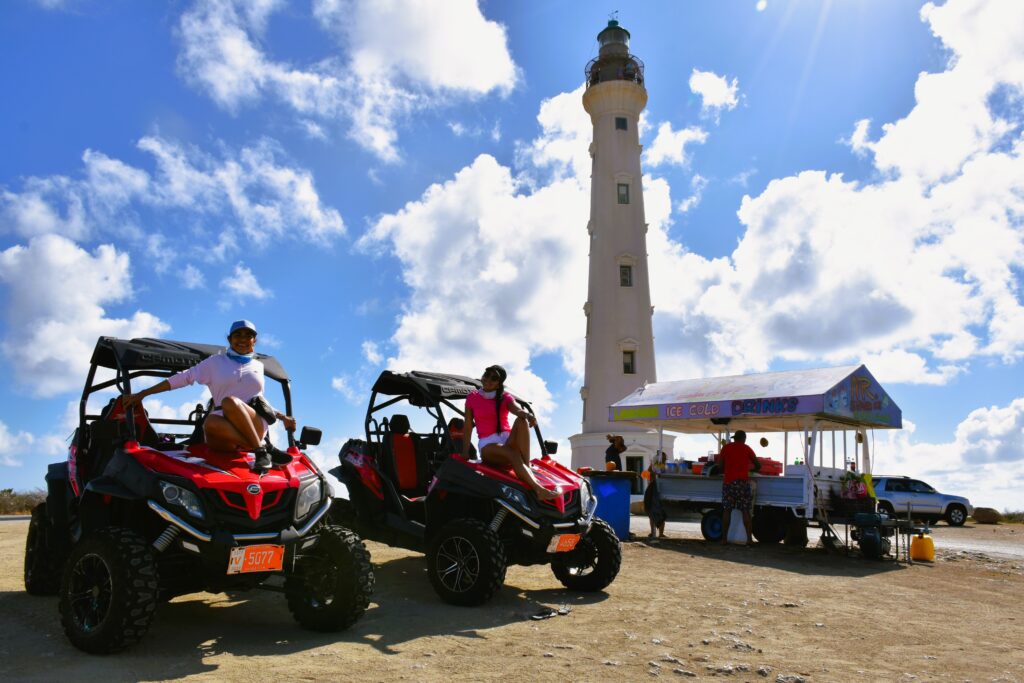
For me, the appeal is not only the lighthouse itself, but especially its location. You can look out over a much drier and more rugged part of Aruba, while Arashi Beach and the sand dunes are nearby.
💡 Good to know: you can visit the area around the lighthouse without necessarily going to the top. If you want to climb the tower, check the current opening hours and admission fee in advance. According to Aruba’s official tourism website, the lighthouse is currently open daily and an entrance fee is charged to climb it.
The sand dunes at Hudishibana are also beautiful to see, but do not drive a vehicle across them. Explore the dunes on foot only.
7. ⛪ Stop at Alto Vista Chapel
Alto Vista Chapel is a small yellow chapel in the dry landscape of Noord. The history of Alto Vista goes back to 1750, when Aruba’s first Roman Catholic chapel was built at this location. The current chapel is a later reconstruction. Its peaceful setting among cacti and close to the rugged north side makes it a pleasant short stop.
I would not plan Alto Vista as a separate excursion. Combine the chapel with California Lighthouse and a drive along the north coast. That way, this short stop fits much more naturally into your day.
🧭 My tip: the north is especially enjoyable because the route itself is part of the day. You do not need to spend an hour at every stop. Sometimes twenty minutes to look around before continuing is exactly enough.
8. 🥾 Climb Hooiberg
If you also want to do something active during your vacation, Hooiberg is an easy way to break up your beach days with a short climb. The hill is fairly central in Aruba, is about 165 meters high and reaching the top involves climbing around 600 steps.
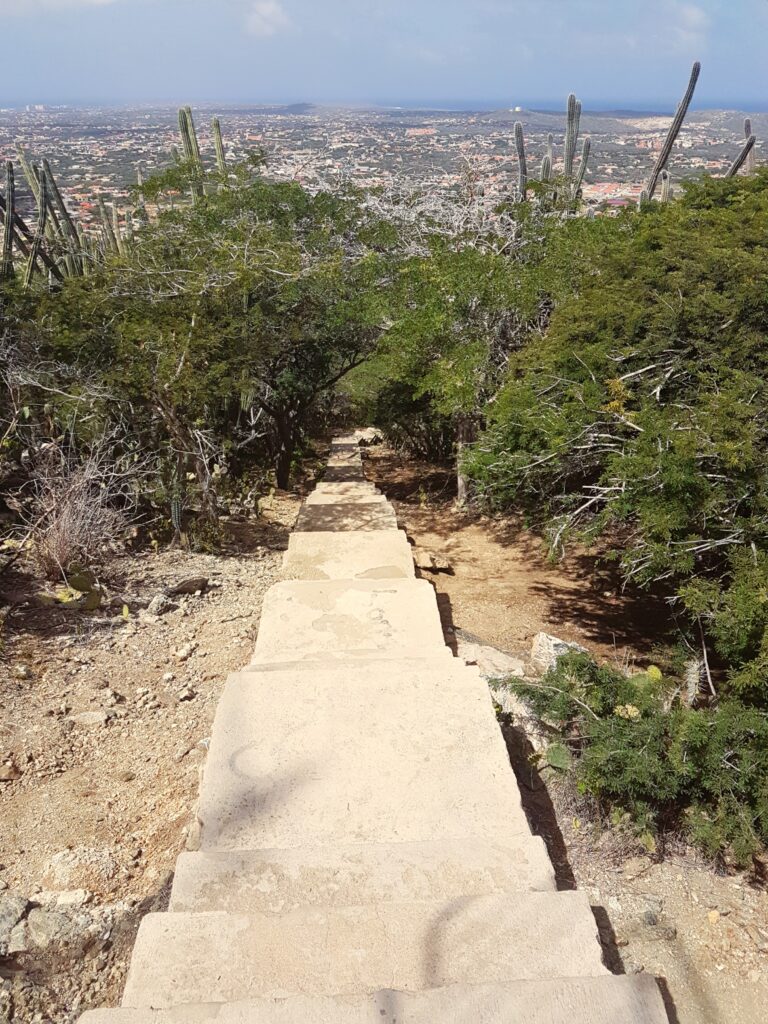
At the top you are rewarded with wide views over much of the island. Still, do not underestimate the climb: under the Aruban sun and heat, hundreds of steps feel very different from doing the same at home.
☀️ My advice: do this early in the morning or later in the day. Personally, I would not voluntarily climb hundreds of steps in full sun around midday. Bring water and wear shoes that are comfortable for walking.
9. 🌊 See Natural Bridge and the rugged north coast
The north coast once again shows just how strong the contrast in Aruba can be. This part of the island feels completely different: no long rows of beach chairs and calm turquoise water, but waves crashing against rocks and a much rougher landscape.
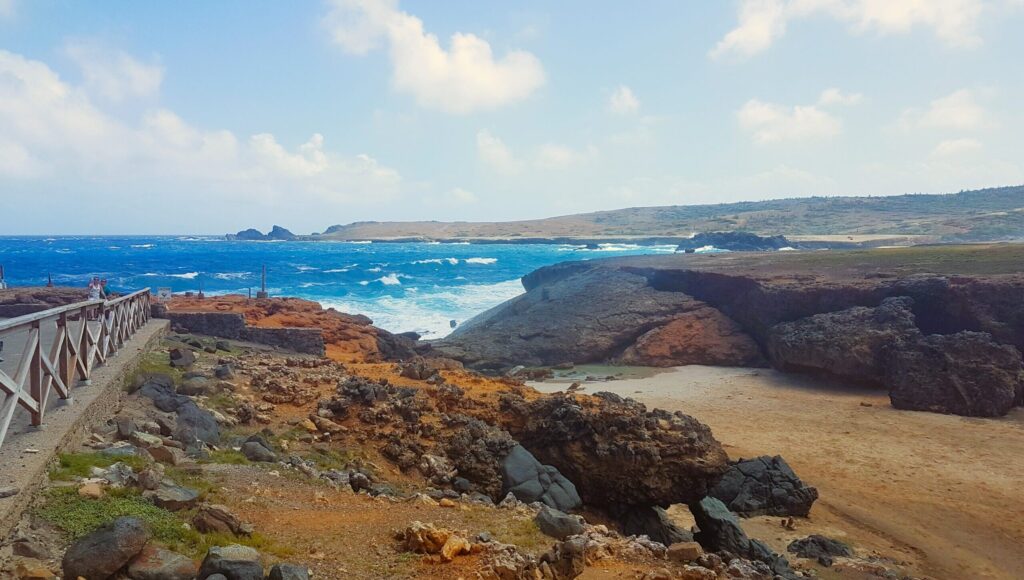
There is one important thing to know at Natural Bridge: the famous large natural bridge shown in older photos collapsed in 2005. The remains are still visible, and the smaller Baby Bridge nearby is still intact.
⚠️ Be careful: the sea on this side of Aruba can be extremely powerful. Treat the north coast mainly as a place for sightseeing and photography, and do not enter the water simply because it looks inviting.
10. 🏚️ Discover Aruba’s gold-mining past
Across Aruba you can still find several remains from the period when gold mining played a role on the island. The best-known sites are the Bushiribana Gold Mill Ruins on the north side and the Balashi Gold Mill Ruins near Spanish Lagoon.
I find these kinds of stops especially interesting because they make a scenic drive more varied. You see more than beaches and nature and also learn something about the island’s economic history.
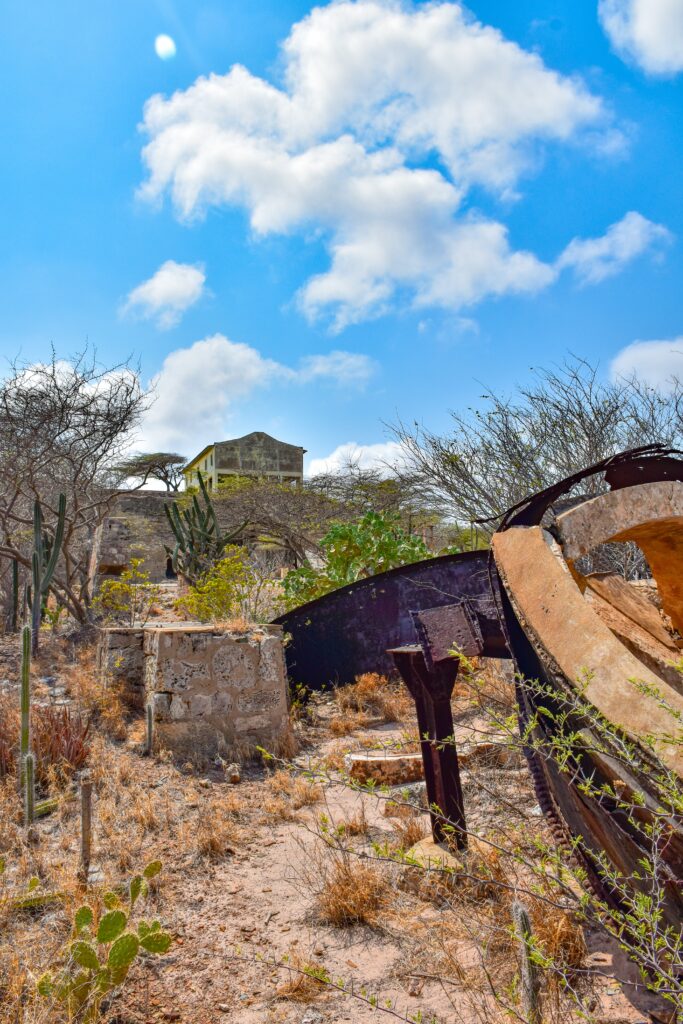
The Balashi smelter dates from 1899 and closed in 1916. The ruins are freely accessible. Bushiribana, meanwhile, sits beautifully in the rugged north-coast landscape and therefore fits well into a route that also includes Natural Bridge.
11. 🪨 Stop at Ayo or Casibari Rock Formations
Ayo and Casibari show another side of Aruba’s dry interior. Huge boulders are stacked throughout the landscape and create short walks and viewpoints.
If you are short on time, I would not necessarily visit both on the same day. Choose one and combine it with a route through central Aruba or with other attractions nearby.
📸 Good to know: Ayo is also interesting because of its historic rock drawings. Treat places like this with respect and do not touch the drawings.
12. 🌊 Try a water sport
Thanks to the wind and warm seawater, water sports are a natural part of Aruba. Around Palm Beach you will find many operators offering parasailing, jet skiing and other activities on the water.
The area around Fisherman’s Huts is a well-known place for windsurfing. Boca Grandi in the south is especially popular with kitesurfers. If you are a beginner, choose a lesson or organized activity instead of simply renting equipment and seeing how it goes.
Personally, I do not need to book a paid activity every day. The combination works best for me: one day actively exploring and the next day simply taking snorkeling gear and entering the water on my own.
13. ⛵ Take a boat or catamaran trip
If you want to see Aruba from the water for a change, a catamaran or sailing trip is a fun alternative. Some tours combine sailing with snorkeling stops, while others focus on sunset.
For me, a trip like this would be especially interesting after spending a few days driving around the island yourself. From the sea you get another view of the coastline, and for once you do not need to plan or drive anything yourself.
🌊 Want to book an activity on the water? Compare what suits you best before booking: snorkeling, a catamaran trip, sunset at sea or another excursion.
14. 🦩 Flamingos on Renaissance Island: fun, but not free
One of Aruba’s most famous images on social media is the flamingos on Renaissance Island. It is important to know that this is not a public beach. The island belongs to Renaissance Wind Creek Aruba Resort, and access is linked to a hotel stay or to a limited number of day passes when available.
I would therefore see this as an extra activity if it fits your budget and plans, not as something you absolutely need in order to experience Aruba properly. The island has plenty of beautiful beaches and special places that you can visit without buying such a day pass.
🦩 My advice: if you specifically want to go for the flamingos, check Renaissance’s current access rules and prices beforehand. Do not rely on information from older blogs because availability and conditions can change.
15. 🍽️ Make local food part of your day
An activity does not always have to be an excursion for me. During my longer stay, I found that food is also a good way to discover different parts of the island.
There is an enormous amount of choice around Palm Beach, but during a vacation I would also deliberately eat outside the hotel zone. Places that have stayed with me include Zeerovers in Savaneta for fish and shrimp, The West Deck in Oranjestad and Eduardo’s Beach Shack around Palm Beach for something lighter.
Also try local dishes or snacks such as pastechi, keshi yena or fresh fish. You do not need to reserve every meal weeks in advance. Some of the nicest moments happen when you simply decide to stop somewhere while you are out exploring.
16. 🌅 Deliberately plan an afternoon with no plans
This may sound strange in an article full of activities, but it might be my most important personal tip. During a one-week or ten-day vacation, it is tempting to fill every day with sightseeing. Yet Aruba is actually very well suited to doing the opposite.
Choose a beach, take your snorkel, stay at lunch longer than planned or drive toward the west coast at the end of the afternoon for sunset. Because I first lived in Aruba for six months and then returned almost every year, I never had to tick off the island during one short vacation. That is exactly why I came to appreciate the slower pace more and more.
🌴 Poco poco: you do not have to “complete” Aruba. For me, part of the island’s charm is found in the moments when there is nothing spectacular on the schedule.
🗺️ How I would divide the activities over three days
Wondering what to do in Aruba if you only have a few days for activities? I would mainly combine sights geographically. That way you can see a lot without driving back and forth across the island every day.
Day 1 – Wild Aruba: Arikok
- Start early at Arikok National Park.
- Explore caves, viewpoints and the rugged coastline.
- If you want to visit Conchi, arrange suitable transportation or a tour in advance.
- End the day quietly at a beach that is suitable for swimming.
Day 2 – South Aruba: culture + beach
- Start in San Nicolas and walk among the murals.
- Have lunch in or around San Nicolas.
- Optionally stop at Rodger’s Beach or Boca Grandi.
- Spend the afternoon at Baby Beach.
Day 3 – North and west coast
- Snorkel early at Arashi, Boca Catalina or Tres Trapi.
- Continue to California Lighthouse.
- Combine this with Alto Vista Chapel and possibly part of the north coast.
- Finish the day at Eagle Beach or Palm Beach for sunset and dinner.
These are of course not mandatory routes. Ultimately, one of Aruba’s advantages is that you can easily adapt them to the weather, your energy level and what you feel like doing at that moment.
✈️ Build your own Aruba trip or compare a package deal?
After choosing your activities, the practical question usually comes next: do you book your flight, hotel and car separately, or first compare the cost of a package vacation? I would compare both. That quickly shows which option is most interesting for your travel dates.
Prices, availability and destinations can change. Always check the current conditions with the provider.
🎯 Things to do in Aruba: which activity suits you?
| You are mainly looking for | My choice |
|---|---|
| Nature and rugged landscapes | 🌵 Arikok National Park |
| Culture and photography | 🎨 San Nicolas |
| Snorkeling from shore | 🤿 Arashi / Boca Catalina / Tres Trapi |
| A peaceful beach day | 🏖️ Eagle Beach |
| Atmosphere and water sports | 🌊 Palm Beach |
| A short active challenge | 🥾 Hooiberg |
| Scenic drive and viewpoints | 🚗 North Aruba |
| Culture + beach in one day | 🎨 San Nicolas + Baby Beach |
| Let someone else organize things | ⛵ Catamaran or boat trip |
| Instagram experience | 🦩 Renaissance Island |
🧭 My practical tips for activities in Aruba
- Start active days early: hiking, Hooiberg and Arikok are more comfortable before the sun is at its strongest.
- Always bring water: especially outside the hotel zones, shade is not guaranteed.
- Use sun protection: the wind can make it harder to notice how strong the sun is.
- Plan by area: combine sights that are close to one another and avoid unnecessary driving back and forth.
- Check rental conditions: an SUV or 4×4 does not automatically mean you are allowed to drive every unpaved route.
- Do not swim everywhere: the north and east coasts in particular can be rough.
- Check current prices and opening hours: entrance fees, tours and access conditions can change.
- Book popular tours in time: especially if you are traveling during a busy holiday period.
- Leave room in your schedule: do not try to fill every vacation day with a paid activity.
❓ Frequently asked questions about things to do in Aruba
What are the must-do things in Aruba?
If you ask me what to do in Aruba on a first trip, I would definitely visit Arikok National Park, combine San Nicolas with Baby Beach for a day, explore several beaches and go snorkeling somewhere. That immediately shows you several very different sides of the island.
What can you do for free in Aruba?
Many beaches are freely accessible, and walking among the murals of San Nicolas, visiting Alto Vista Chapel, the Balashi Gold Mill Ruins and several viewpoints does not cost anything by itself. Some attractions, nature areas, tours and private islands do charge admission or require a ticket.
Do you need a rental car for activities in Aruba?
Not for everything. Around Palm Beach you can do a lot on foot, and you can also use taxis, buses or organized tours. If you want to independently combine Arikok, San Nicolas, Baby Beach, snorkeling spots and the north side, I find a rental car much more practical.
How many days do you need to explore Aruba?
For a beach-only vacation, a shorter trip can be enough. If you want to explore several parts of the island, I would allow at least about a week. For a first visit, I personally prefer around 10 days because that gives you time to alternate activities with quieter days.
What can you do in Aruba besides lying on the beach?
Visit Arikok, walk through San Nicolas or Oranjestad, climb Hooiberg, take a scenic drive along the north coast, go snorkeling, try a water sport or book a boat trip. Despite its small size, Aruba offers plenty of variety for a vacation where the beach is only one part of the experience.
What are fun things to do with kids in Aruba?
That depends on their age and swimming ability, but calm beaches such as Baby Beach, a short island drive, Oranjestad and the more accessible parts of Arikok can work well. For walks and nature activities, pay particular attention to the heat, sun and bringing enough water.
Can you explore Aruba on your own or do you need tours?
You can easily explore a large part of Aruba independently. Tours are especially useful when transportation is difficult, you want explanations from a local guide or you are doing an activity that requires special equipment. For Natural Pool (Conchi), some off-road routes, boat trips and water sports, an organized activity can therefore be a good choice.
✨ My advice: discover Aruba one area at a time
When I look back on my six months living in Aruba and the many visits afterward, it is not one individual attraction that makes the island special to me. It is the variety. What to do in Aruba therefore depends mainly on which side of the island you want to discover that day: one day you are standing among cacti in Arikok, the next you are walking among murals in San Nicolas and after that you are in the water with a snorkel at Arashi.
That’s why I would not try to work through the longest possible list. Choose a few activities that genuinely suit you, combine places that make geographical sense and leave room for the beach and spontaneous stops.
For a first trip, my own basic list would be simple: Arikok, San Nicolas + Baby Beach, snorkeling on the northwest coast, a drive through the north and a few hours in Oranjestad. After that, add whatever you are most excited about.
🌴 Want to continue planning your stay, transportation, beaches and practical details? Go back to my complete Aruba travel guide. My Aruba tips are based on my longer stay in 2020 and the many visits afterward, with my most recent visit in 2026.
Still planning your stay? Read our accommodation and area guide to choose a base that fits your route.
Discover more from DutchieWorldTravel
Subscribe to get the latest posts sent to your email.




5 Comments
Pingback:
Pingback:
Pingback:
Pingback:
Pingback: