
Things to Do in Milan: 15 Sights and Firsthand Tips
What is there to do in Milan besides shopping? Much more than we expected. The Duomo naturally belongs near the top, but our city break became memorable through a mix of famous monuments, quiet courtyards, a ride on a vintage tram, and spontaneous stops at small coffee bars. Here are 15 sights and experiences in Milan, including free activities and our firsthand tips.
Do not try to check them all off in one day. Milan becomes more enjoyable when you leave room for a picturesque street, an espresso at the bar, or a break in Parco Sempione. To combine the stops logically, use our three-day Milan itinerary.
1. See the Duomo from Piazza del Duomo
Even without a ticket, the Duomo is essential. Step back on the square to take in the full facade, then move closer to see the thousands of sculptures, pinnacles, and details. The square is lively and sometimes overwhelmingly busy during the day. At night, the illuminated marble stands out dramatically against the dark sky.
- Cost: the square and exterior are free.
- Best time: early morning for fewer people or after sunset for the lighting.
- Tip: watch your belongings and ignore persistent sellers.
2. Visit the interior and rooftop terraces
Tickets may include the cathedral, museum, archaeological area, and terraces. On the roof, you stand close to Gothic decorations and look across Milan. Reserve a time slot if this is a priority, and wear clothing that covers shoulders and knees. Find the details in our Duomo and Galleria guide.
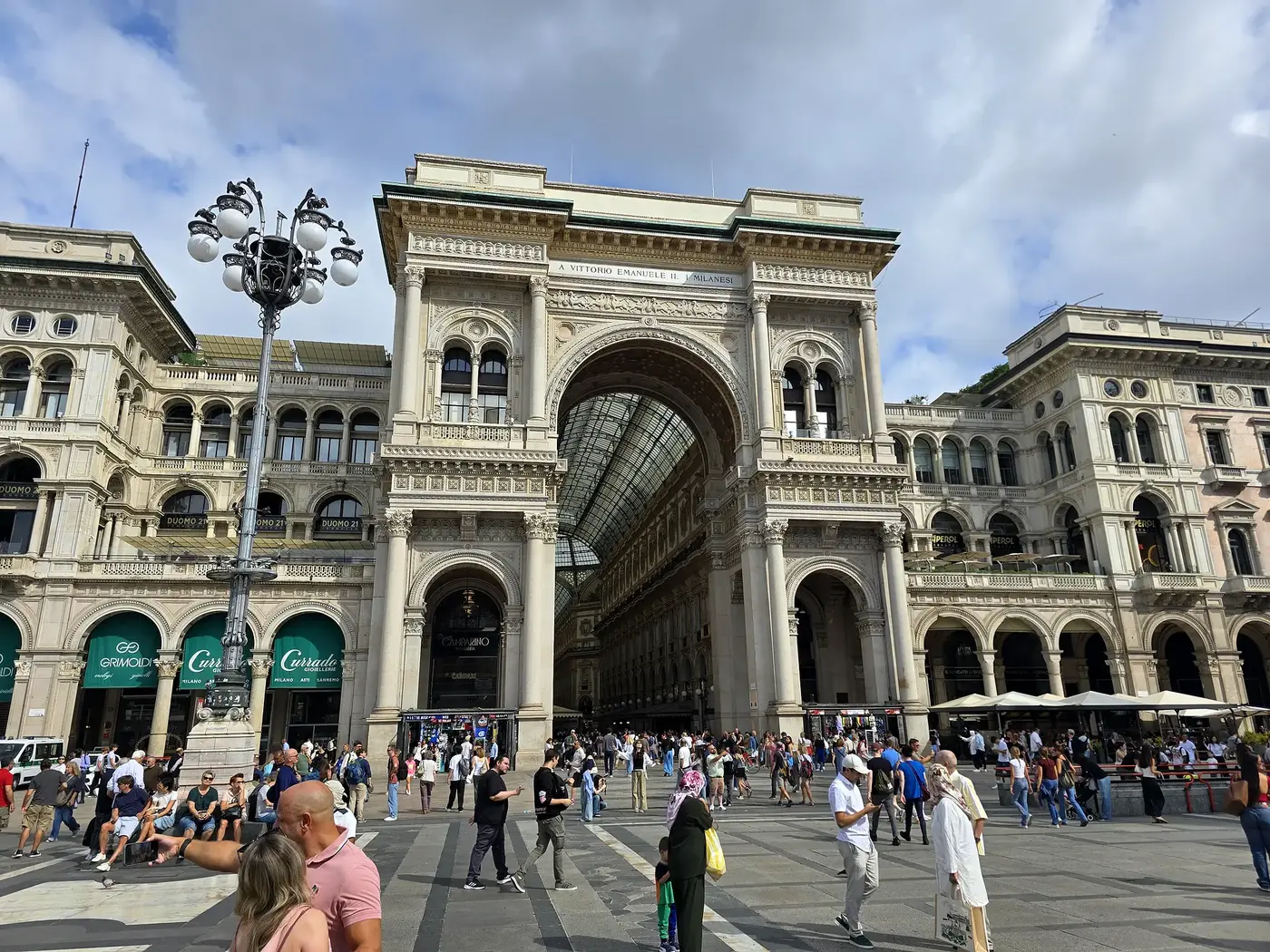
3. Walk through Galleria Vittorio Emanuele II
The monumental arcade beside the Duomo feels almost like a palace. Look beyond the storefronts to the glass roof and mosaic floor. Shopping and restaurants are expensive, but walking through is free. Even if luxury brands do not interest you, the architecture is worth the detour.
4. Continue to Teatro alla Scala
The opposite side of the Galleria opens onto Piazza della Scala. The famous opera house looks relatively modest from outside. See the square for free or buy admission to the theater museum. Check whether the auditorium is visible during your visit because rehearsals may restrict access.
5. Get deliberately lost in Brera
Brera naturally slowed our pace. Streets such as Via Fiori Chiari and Via Madonnina have cobblestones, warm facades, plants, small stores, and inviting terraces. Pinacoteca di Brera is here too, but you do not need a museum ticket to appreciate the neighborhood.
The smaller streets have enjoyable coffee bars. Order a caffè for an espresso and drink it standing at the bar. It may take only five minutes, but it felt more like Milan to us than a long break at an international chain.
6. Explore Castello Sforzesco
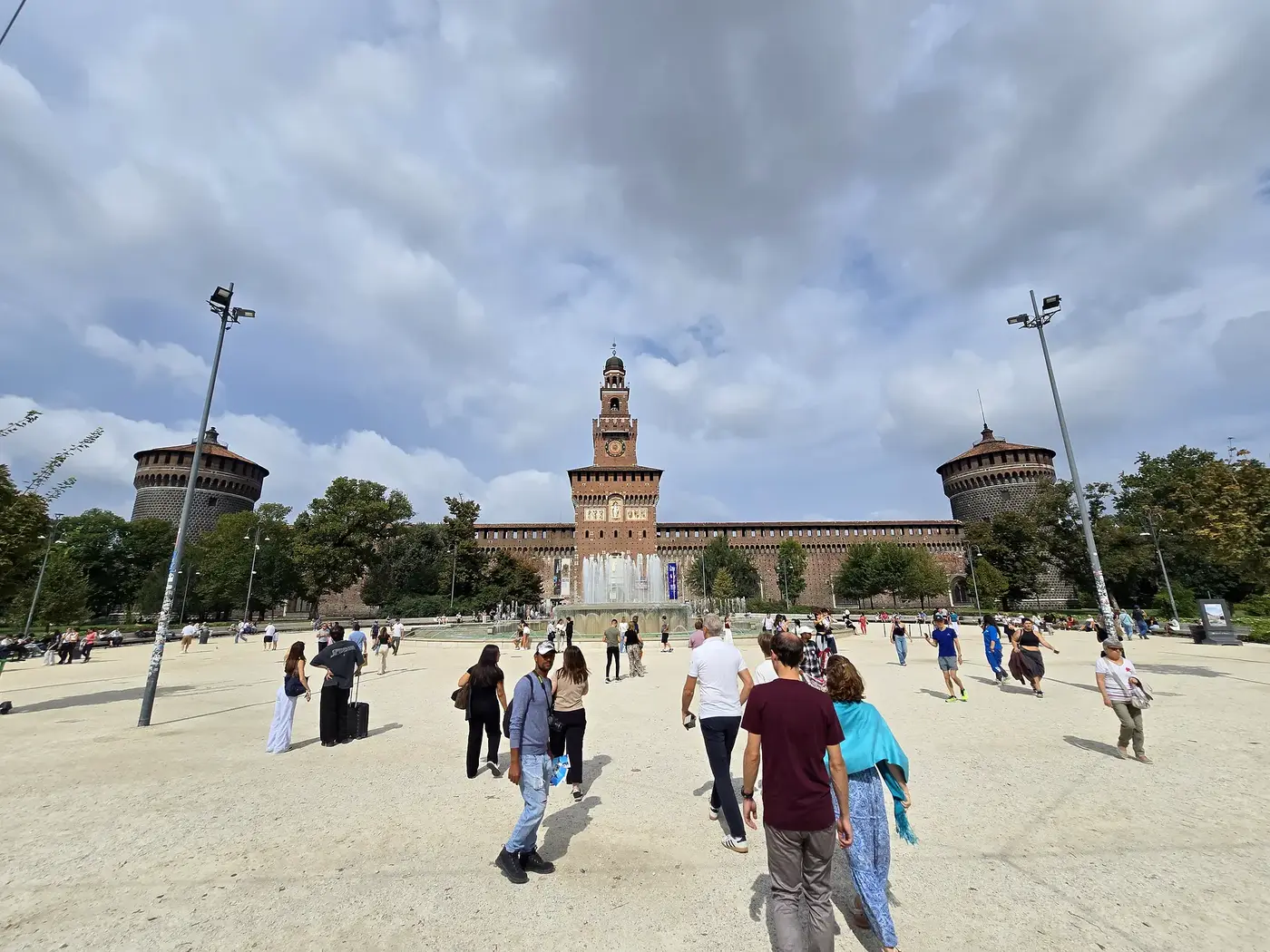
Walk from the center along Via Dante to Castello Sforzesco. The fountain and Torre del Filarete make an immediate impression. The courtyards are free; the museums require a ticket, making the castle suitable for a smaller budget too.
7. Walk through Parco Sempione
Parco Sempione begins behind the castle. Its ponds, lawns, and greenery provide a welcome break from the busy center. The park is free and naturally connects Castello Sforzesco with Arco della Pace.
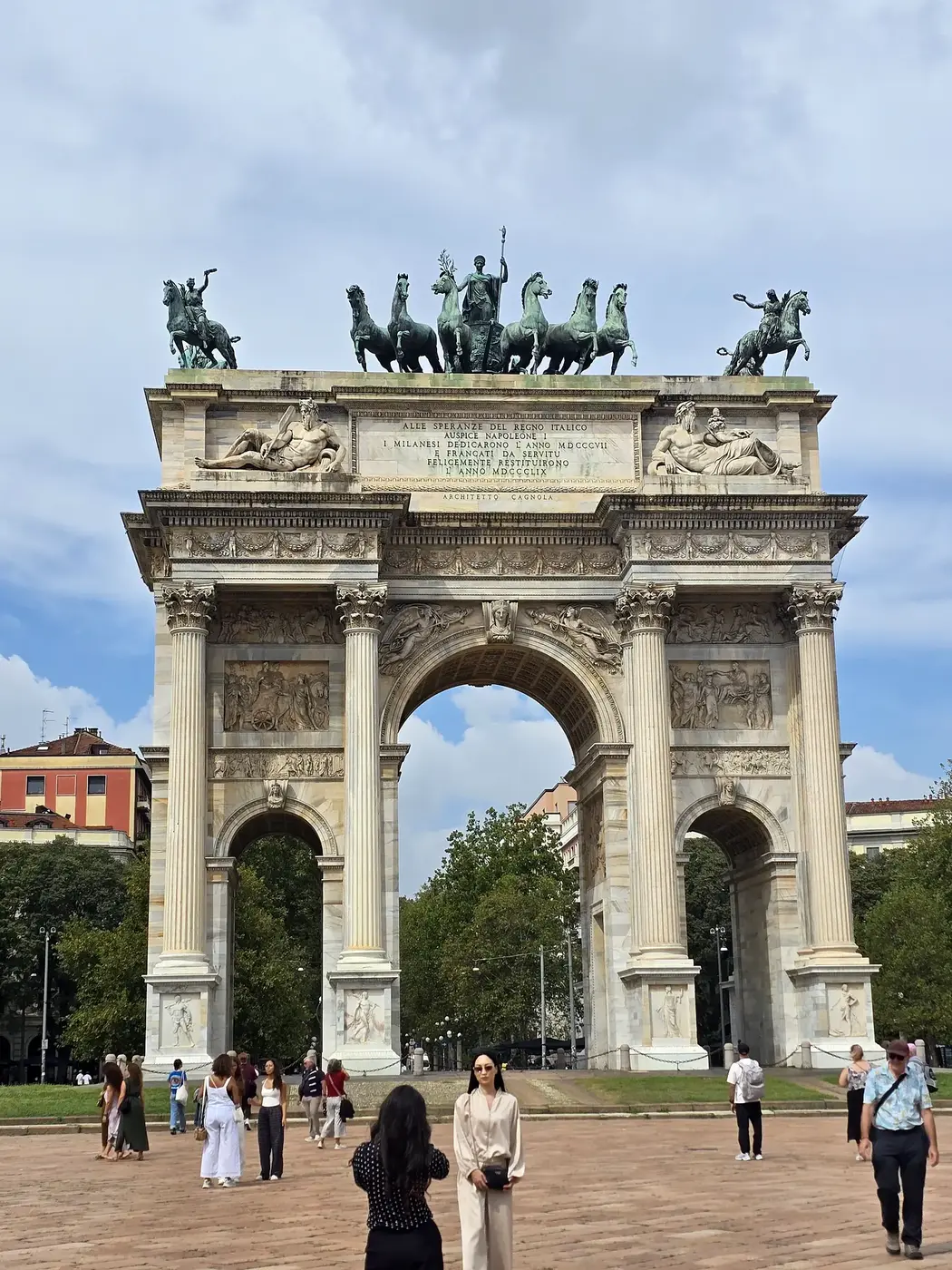
8. See Arco della Pace
Arco della Pace stands at the far end of the park. It is beautiful up close, but we liked the long view through the park just as much. Watch for tram 1: the combination produced one of our favorite photographs. Follow our complete walk from Castello Sforzesco to Arco della Pace.
9. Ride historic tram 1
Tram 1 is regular public transportation but feels like an attraction. Classic Carrelli trams often operate here, with wooden benches, large windows, and vintage details. The central route passes Piazza della Scala, the Duomo area, Cairoli, Castello Sforzesco, and Arco della Pace.
Tap a separate contactless debit or credit card for each person when boarding. Equipment and routes may change during construction, so check the ATM app. Our Milan public transportation guide explains the payment rules.
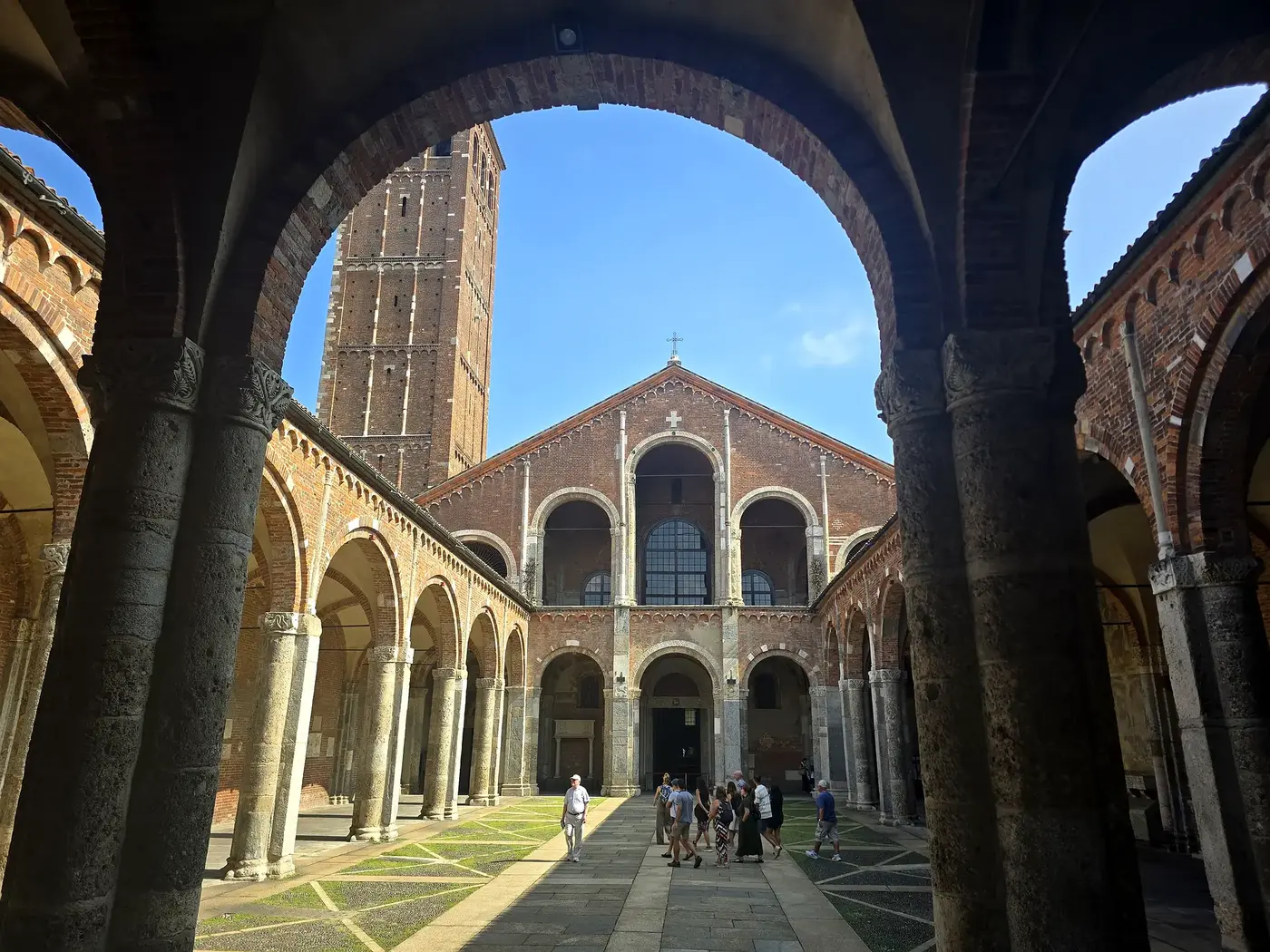
10. Find quiet at Basilica di Sant’Ambrogio
Sant’Ambrogio is one of Milan’s oldest and most important churches. Its brick courtyard, arcades, and restrained interior contrast sharply with the Duomo. Admission is normally free outside services. Dress respectfully and expect hours to change around religious events.
11. Visit Santa Maria delle Grazie
Many people come only for Leonardo da Vinci’s The Last Supper, but notice the church and monastery too. Museo del Cenacolo Vinciano always requires advance reservations, including for free admission. Conservation limits viewing to about 15 minutes, and current instructions ask you to arrive 30 minutes early.
12. Enjoy aperitivo along the Navigli canals
Navigli is most lively in late afternoon and evening. Cafes and restaurants line the water and serve aperitivo. Compare menus and ask what the drink includes, since the offering ranges from a few snacks to a large buffet.
13. See modern Milan at Porta Nuova
For a completely different cityscape, visit Piazza Gae Aulenti and Porta Nuova. Modern towers include Bosco Verticale, two residential buildings covered in greenery. Exploring the square and neighborhood is free and provides an interesting contrast for architecture enthusiasts.
14. Taste something typically Milanese
For us, a city break is incomplete without local food. Try saffron risotto alla Milanese, cotoletta alla Milanese, or ossobuco. Panzerotto makes a quick meal. Restaurants around Piazza del Duomo often charge for the view; walk a few streets farther if price matters more than location.
15. Return to the Duomo at night
Our final tip is free and needs almost no planning: return to Piazza del Duomo after dinner. Lighting reveals different details in the facade and the mood constantly shifts. It may remain busy, but for us it was a fitting end to a day in Milan.
Free things to do in Milan
- See the Duomo exterior and Piazza del Duomo.
- Walk through Galleria Vittorio Emanuele II.
- Explore the courtyards of Castello Sforzesco.
- Cross Parco Sempione to Arco della Pace.
- Wander through Brera’s smaller streets.
- Visit Basilica di Sant’Ambrogio outside services.
- See the exterior of Santa Maria delle Grazie.
- Explore Porta Nuova and view Bosco Verticale.
Our priorities when time is limited
With one day, combine the Duomo, Galleria, Brera, Castello Sforzesco, and Parco Sempione. Ride tram 1 for part of the return and revisit the Duomo after dinner. With two days, add Sant’Ambrogio, Santa Maria delle Grazie, and Navigli. For a relaxed visit, three days remains our preference.
How to combine the 15 sights without rushing
The list becomes much more manageable when grouped by neighborhood. The Duomo, Galleria, Teatro alla Scala, and Brera form one central route. Castello Sforzesco, Parco Sempione, Arco della Pace, and tram 1 create a second route. Sant’Ambrogio and Santa Maria delle Grazie fit naturally together on another half day. Porta Nuova and Navigli sit in different directions, so add them according to your interests rather than forcing both into an already full schedule.
Reservations should determine the order only when necessary. The Last Supper needs a fixed time slot, and the Duomo rooftop is easier with advance booking. The squares, neighborhoods, park, and castle courtyards remain flexible. Keep those open parts around your reservations so a line, coffee break, or interesting side street does not make the entire day feel late.
Choosing the best season and time of day
Spring and early fall generally offer the most comfortable walking weather. Summer can be hot, especially on the exposed Duomo roof and broad squares, so plan indoor sights around midday and carry water. Winter brings shorter days, but the early evening light works beautifully around the Duomo and Arco della Pace. Rain makes the Galleria and museums useful alternatives, while Parco Sempione is more enjoyable in dry conditions.
Early morning is best for photographs with fewer people at the Duomo and castle. Late afternoon suits the walk toward Arco della Pace and naturally leads into aperitivo. Navigli is liveliest after work and into the evening. If nightlife is not important, visit the canals before the busiest dinner hours and choose a quieter meal elsewhere.
Getting between the different areas
You can walk most of the central route, but the metro saves time between Porta Nuova, Navigli, and the western churches. Tram 1 works especially well between the Sempione area and the center. Use one contactless card or device per traveler, and always tap out of the metro with the same method. Keep some battery available for the ATM app, particularly when construction or events cause detours.
Some links on this page are affiliate links. If you book through one of them, we may earn a small commission at no extra cost to you. This helps support our website.
Discover more from DutchieWorldTravel
Subscribe to get the latest posts sent to your email.


One Comment
Pingback: