
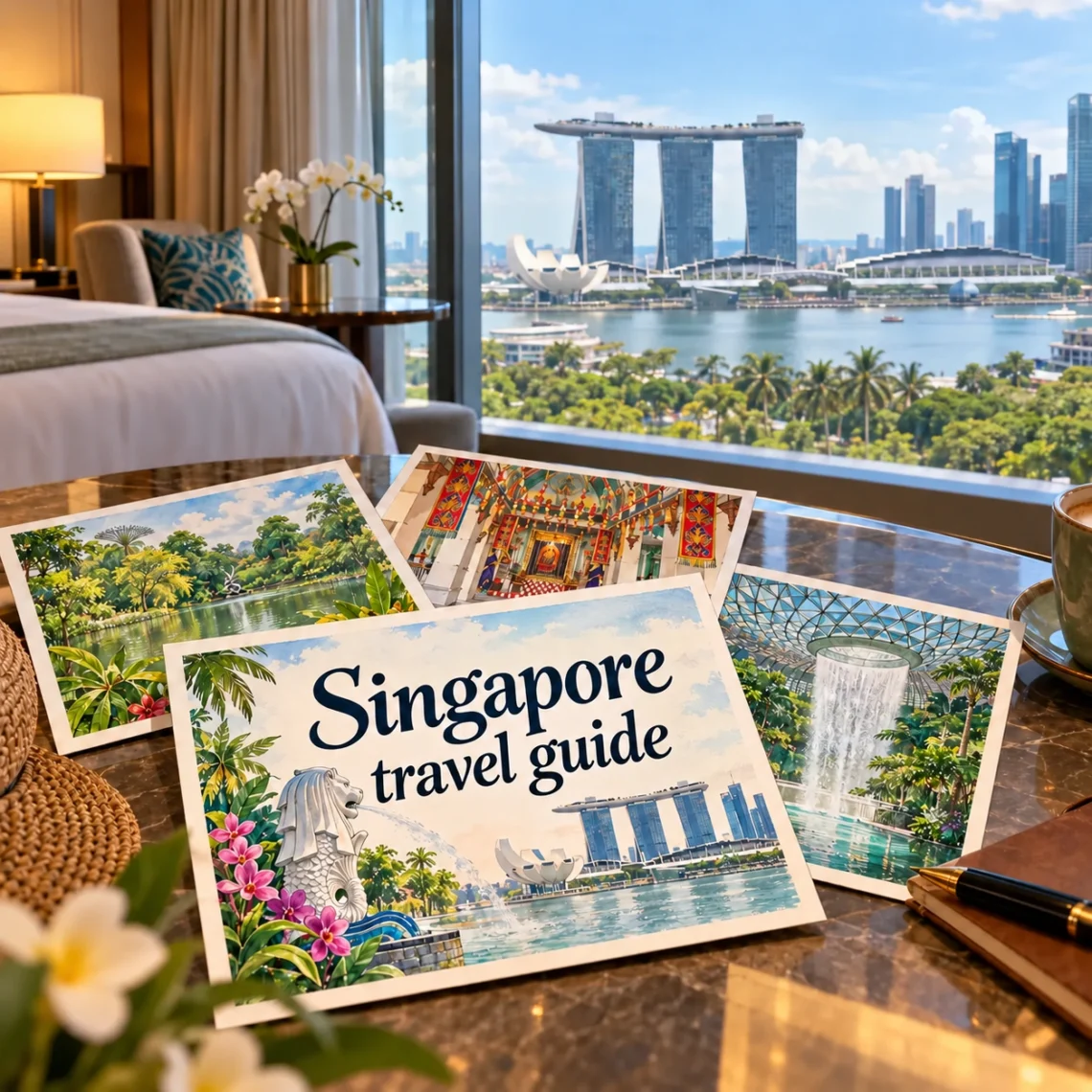
Singapore Travel Guide: Sights, Transport and Itinerary
Planning your first trip to Singapore? This Singapore travel guide brings together the sights we explored in March 2025—from Marina Bay’s skyline and the glowing Supertrees to colorful neighborhoods, Sentosa and Jewel Changi Airport. You’ll find practical routes, transportation tips, budgets and advice on where to stay, plus ideas for combining the city with a relaxing stay on Bintan.
This article contains affiliate links. Booking or buying through them supports our website at no extra cost to you.
We visited Singapore in March 2025, then spent several days on Bintan. The combination worked well: Singapore’s energy and variety first, followed by nature and relaxation on the Indonesian island.
Quick tip: allow at least three full days. Four or five lets you explore neighborhoods, gardens and Sentosa alongside Marina Bay without rushing.
Contents
- Why visit Singapore?
- Singapore’s main sights
- How many days do you need?
- An extra hiking day: MacRitchie and TreeTop Walk
- Where to stay
- Getting around
- What does Singapore cost?
- Practical information
- Hawker centres and food courts
- Changi Airport to downtown
- Daily budget
- When to visit and tropical rain
- Children and accessibility
- Common first-visit mistakes
- Combining Singapore and Bintan
- Frequently asked questions
Why visit Singapore?
Singapore is compact enough for a city break but varied enough for several days. Marina Bay showcases its modern skyline; Little India and Kampong Glam offer colorful streets, religious buildings, markets and a different atmosphere. Gardens by the Bay and the Botanic Gardens show how much space the city gives to greenery.
It suits travelers combining culture, architecture, food and attractions. Families have plenty to choose from on Sentosa and at Jewel; couples and photographers will enjoy Marina Bay and the Supertrees around sunset.
Singapore’s main sights
Marina Bay
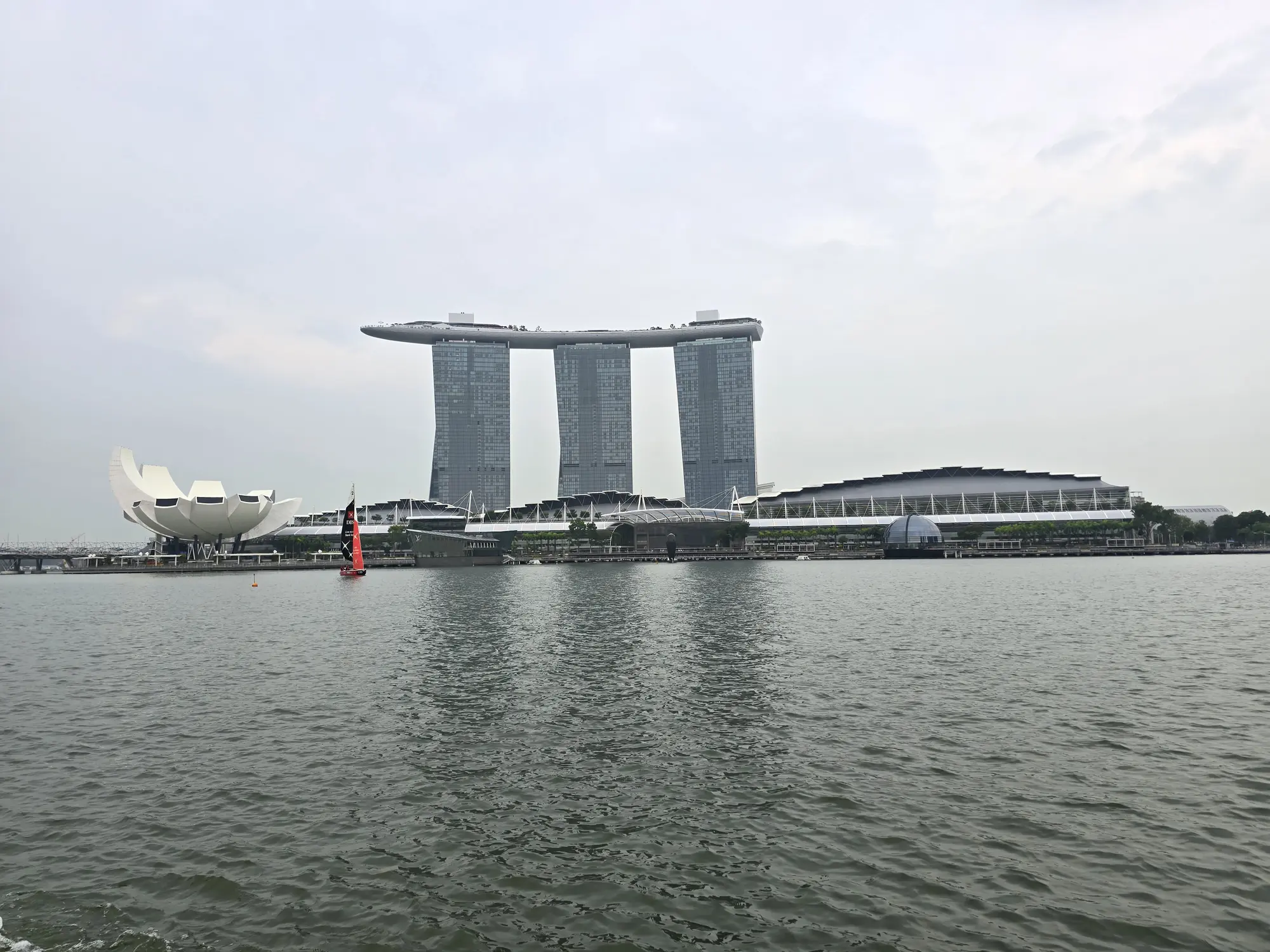
Marina Bay is Singapore’s most recognizable scene, with Marina Bay Sands, waterfront walks, the Merlion and viewpoints close together. Daylight highlights the architecture; evening lighting and shows transform the area. Allow much of a day and evening for Marina Bay and Gardens by the Bay together.
Plan Marina Bay and Gardens by the Bay as one route, staying after sunset for illumination and shows.
Gardens by the Bay
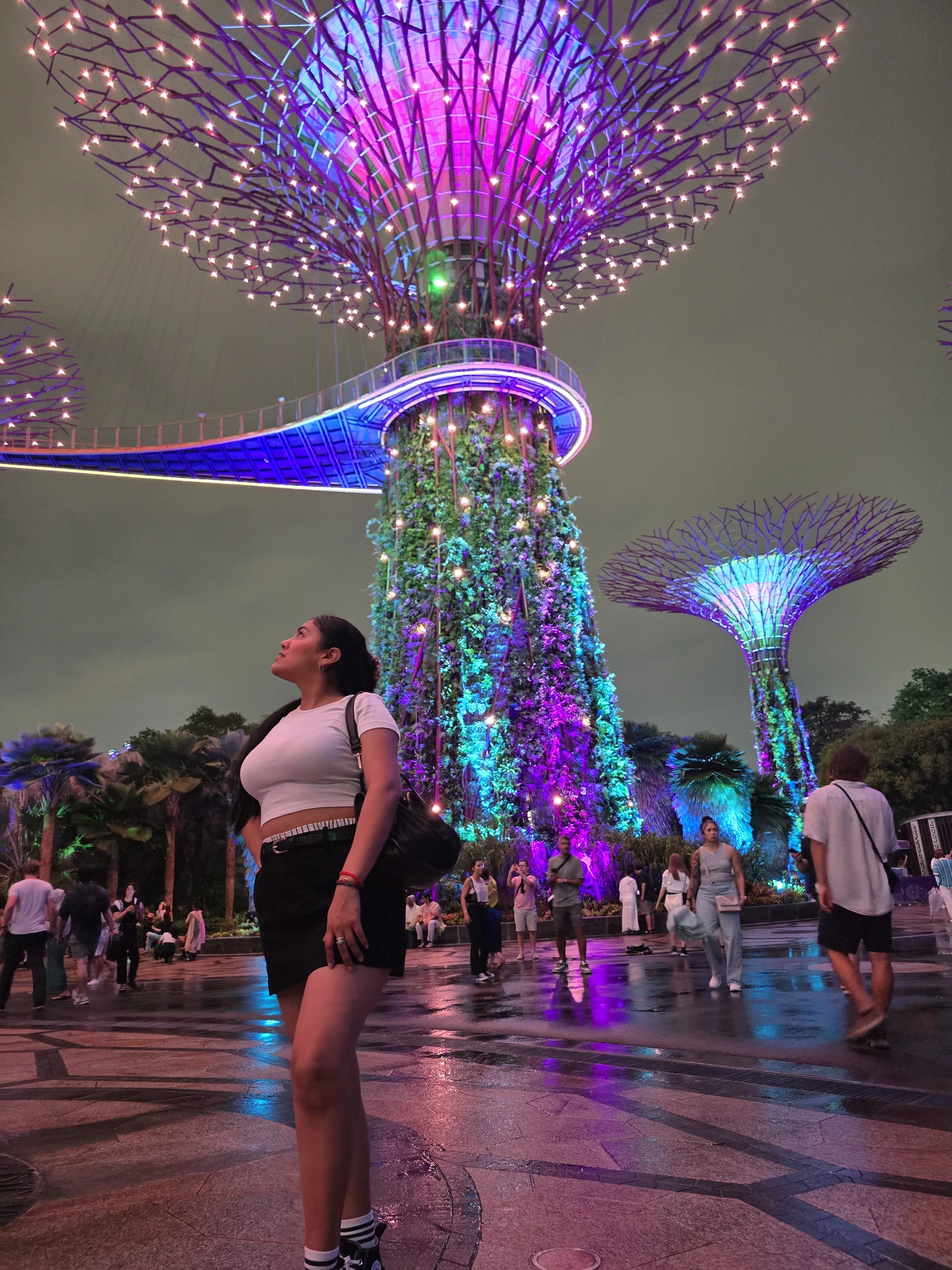
Outdoor gardens and Supertree Grove are freely accessible. Cloud Forest, Flower Dome and OCBC Skyway require tickets. Free gardens, indoor attractions and an evening show make it easy to spend several hours here. Check current hours and maintenance dates.
Little India and Kampong Glam
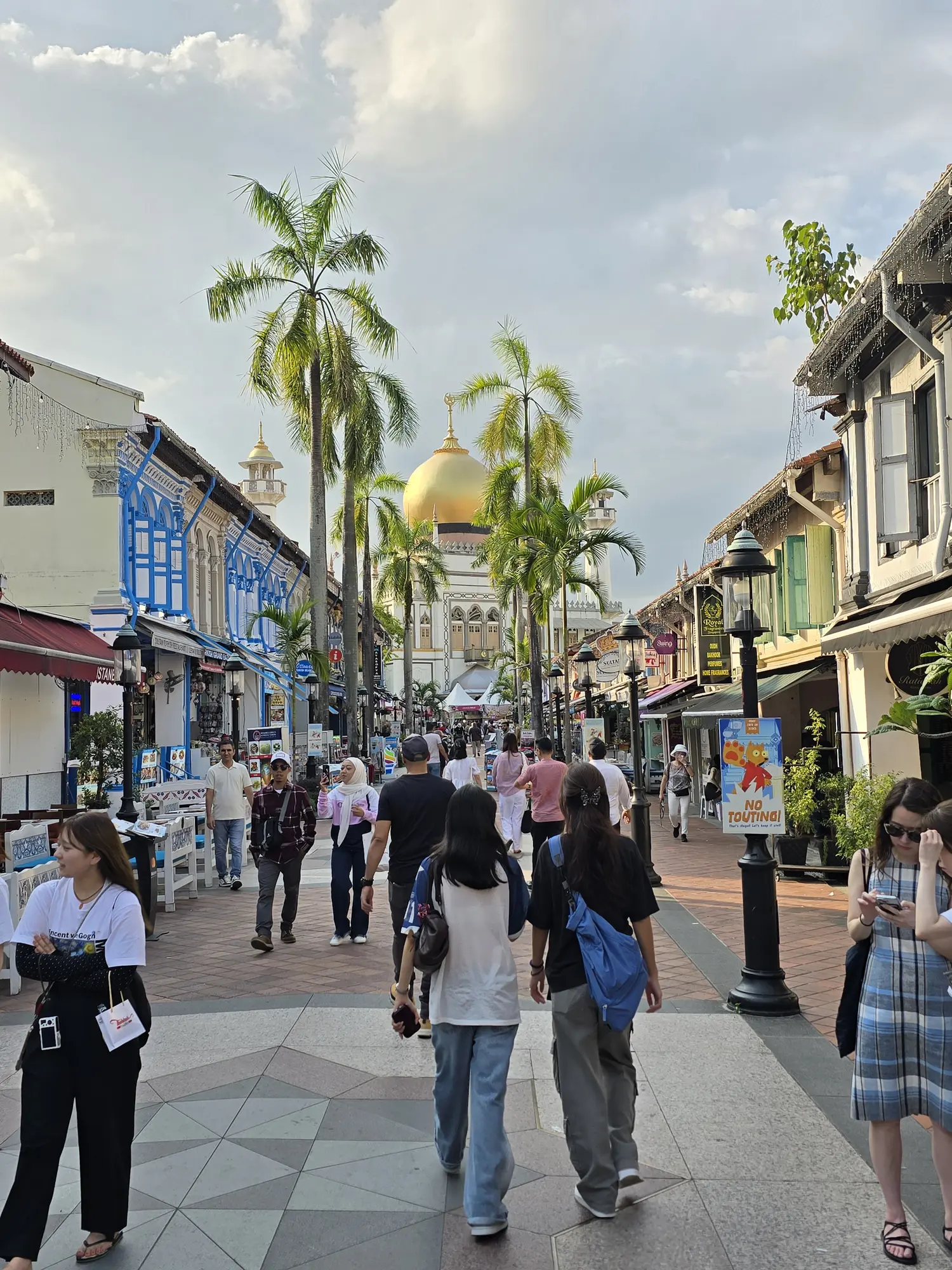
These nearby neighborhoods fit into one day but feel distinct. Little India has colorful facades, temples, shops and Indian food. Kampong Glam reflects Malay and Islamic history, with Sultan Mosque and lively Haji Lane’s shops, cafes and street art.
Combine Little India and Kampong Glam in one day. Start early, allow time for places of worship, and follow their dress requirements.
Sentosa and Universal Studios
Sentosa is Singapore’s leisure island, with beaches, attractions, viewpoints, Universal Studios Singapore and Singapore Oceanarium. Universal Studios can take almost a full day. Avoid squeezing in too many paid attractions: travel, lines and tropical heat make tight schedules tiring.
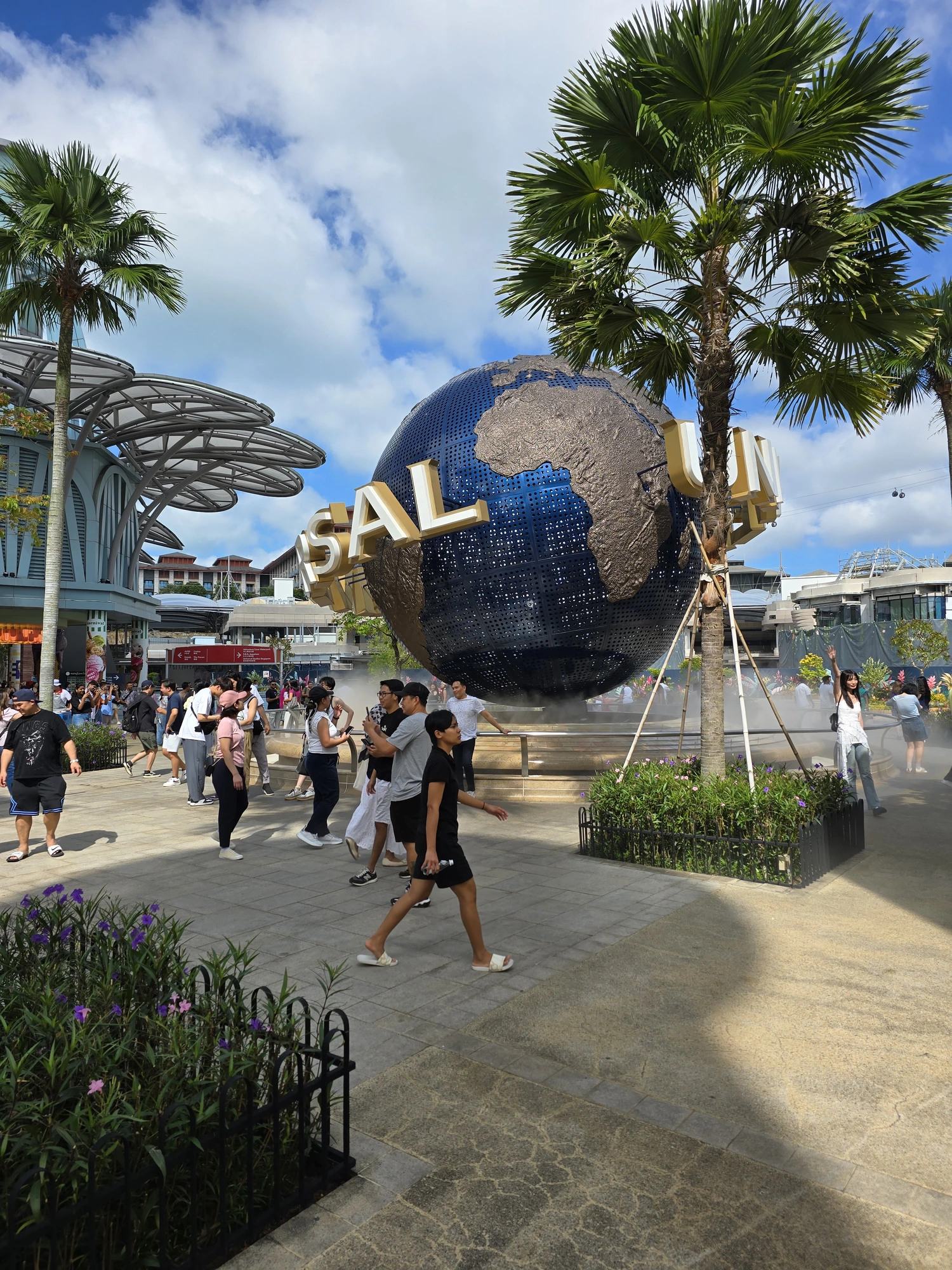
Allow enough time for Sentosa and Universal Studios Singapore, choosing your priority attractions in advance.
Singapore Botanic Gardens
The Botanic Gardens offers a quiet contrast to downtown. General admission is free; National Orchid Garden costs extra. Come early for more comfortable temperatures and bring water. Two to four hours works for a relaxed visit.
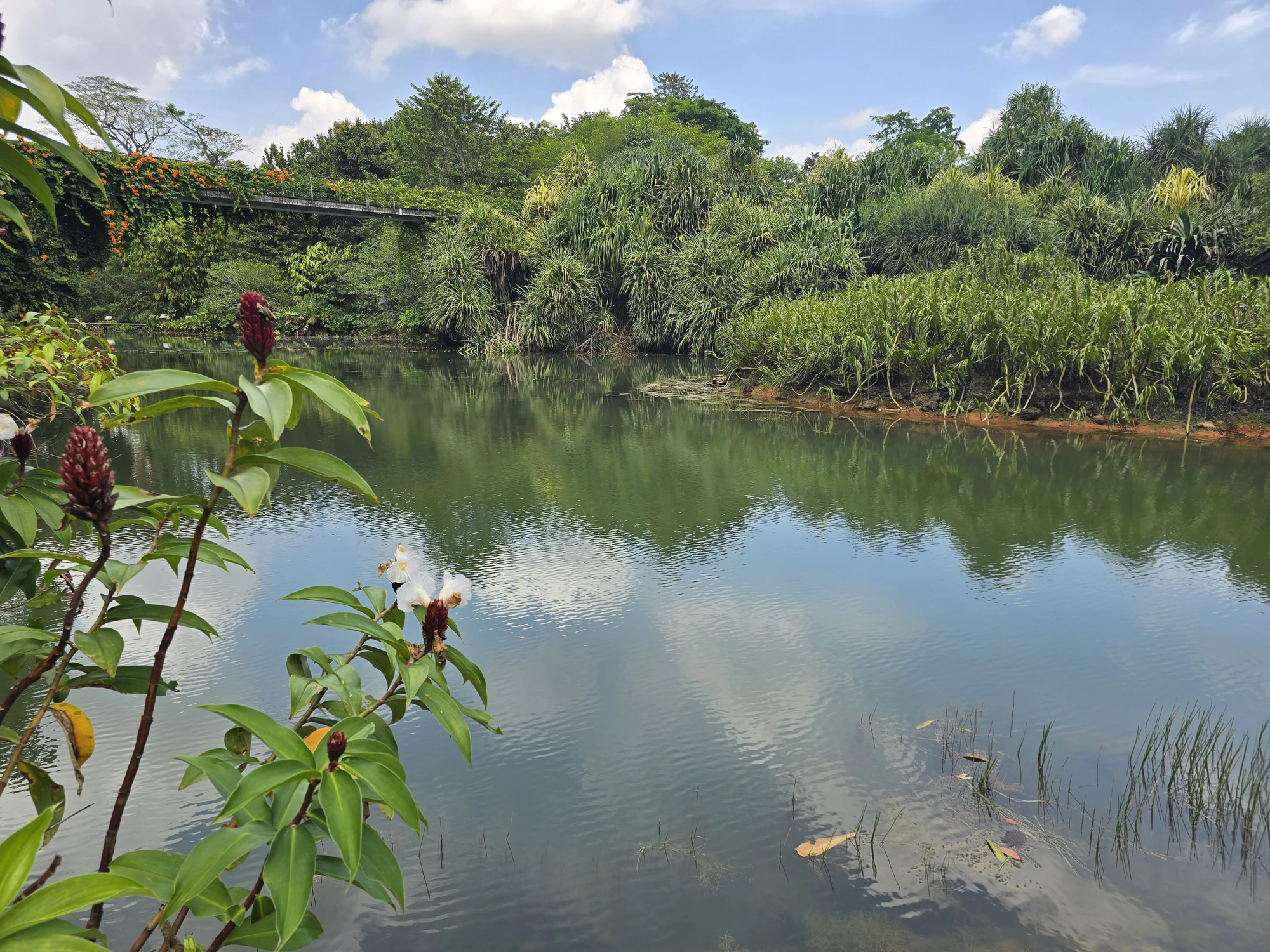
Visit Singapore Botanic Gardens in the morning and check National Orchid Garden’s current hours.
Jewel Changi Airport
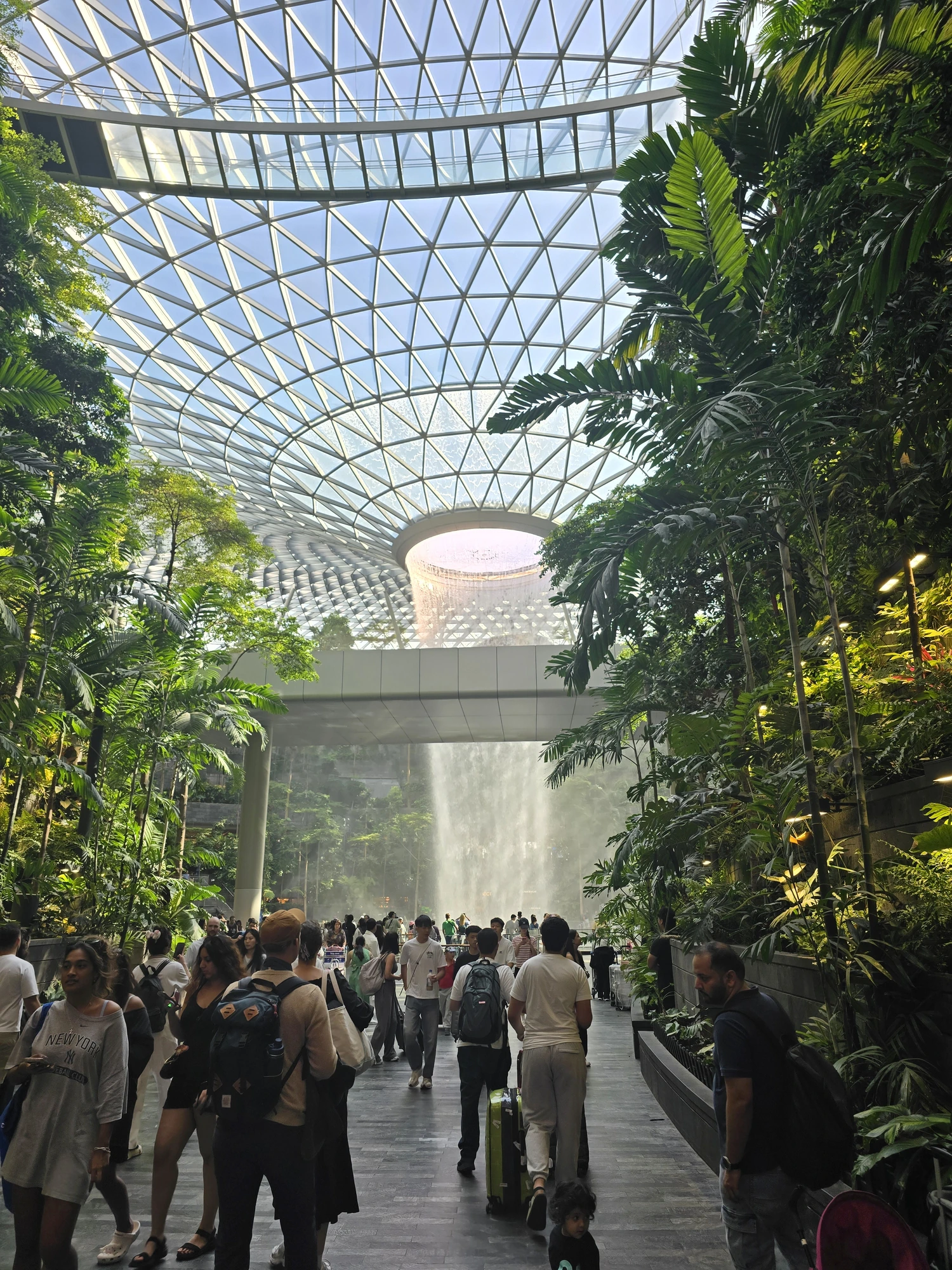
Jewel is more than an airport mall. Rain Vortex, terraces, restaurants and Canopy Park make it a worthwhile attraction. Arrival or departure day can work, but don’t underestimate terminal distances. Always leave enough time for baggage, security and immigration.
Use our Jewel Changi Airport guide to plan around your flight and check your departure terminal.
Changi Airport Butterfly Garden
If time allows after departure immigration, visit the free Butterfly Garden. It is in Terminal 3’s transit area, levels 2 and 3, open 24 hours. Flowering plants, tropical greenery and a waterfall accompany a variety of butterflies, depending on the season.
Follow transit signs toward Terminal 3 and Butterfly Garden. From other terminals, check current airside Skytrain and walking connections. The garden isn’t in Jewel or directly accessible from public arrivals: you need transit-area access as a departing or connecting passenger.
Our Jewel and Changi Airport guide explains the Butterfly Garden and free airport gardens in more detail, with terminal connections.
How many days do you need?
Three full days cover the main highlights. Four offers a better balance; five is useful for Sentosa, extra museums or quieter neighborhoods.
- Day 1: Marina Bay, Merlion Park and Gardens by the Bay, staying for evening lighting.
- Day 2: Little India, Kampong Glam and perhaps the Civic District or Clarke Quay.
- Day 3: Botanic Gardens, then Orchard Road or another neighborhood.
- Day 4: Sentosa, with Universal Studios or Singapore Oceanarium.
- Day 5: Jewel, museums, a food tour or revisiting a favorite area more slowly.
- Optional day 6, or replace day 5: hiking at MacRitchie Reservoir and TreeTop Walk.
Don’t plan solely by map distances. Heat and humidity make walking more demanding. A midday break or indoor attraction makes the hottest hours easier.
An extra hiking day: MacRitchie and TreeTop Walk
If you enjoy walking and nature, add a day at MacRitchie Reservoir and Central Catchment Nature Reserve. Tropical forest and waterside trails feel very different from Marina Bay and busy neighborhoods. You may encounter birds, lizards and other wildlife.
The best-known feature is TreeTop Walk, a suspension bridge about 250 meters long and up to around 25 meters above the forest floor. The official Windsor Nature Park route is approximately 7 kilometers, taking three to four hours. NParks rates it moderate to difficult. Add transportation, breaks and any reservoir circuit.
You may spot monkeys. Long-tailed macaques occur regularly, while the rare banded leaf monkey also lives in the area. Monitor lizards, skinks, turtles and many birds are found here too. Keep your distance, never feed wildlife and secure food: macaques can become bold when they smell it.
- Start early to avoid the worst heat and humidity.
- Bring plenty of water, rain protection and sturdy shoes.
- Stay on marked trails and avoid entering the forest during thunderstorms.
- TreeTop Walk closes Mondays, except public holidays.
- NParks lists last bridge entry at 4:45 p.m.
- The route is less suitable for young children, pregnant visitors, people uncomfortable with heights, limited mobility or certain heart conditions.
Planning advice: don’t treat MacRitchie as a quick stop. Allow at least half a day, preferably a relaxed extra day, rather than rushing the hike.
Check current trails and hours on the official NParks TreeTop Walk page.
Where to stay
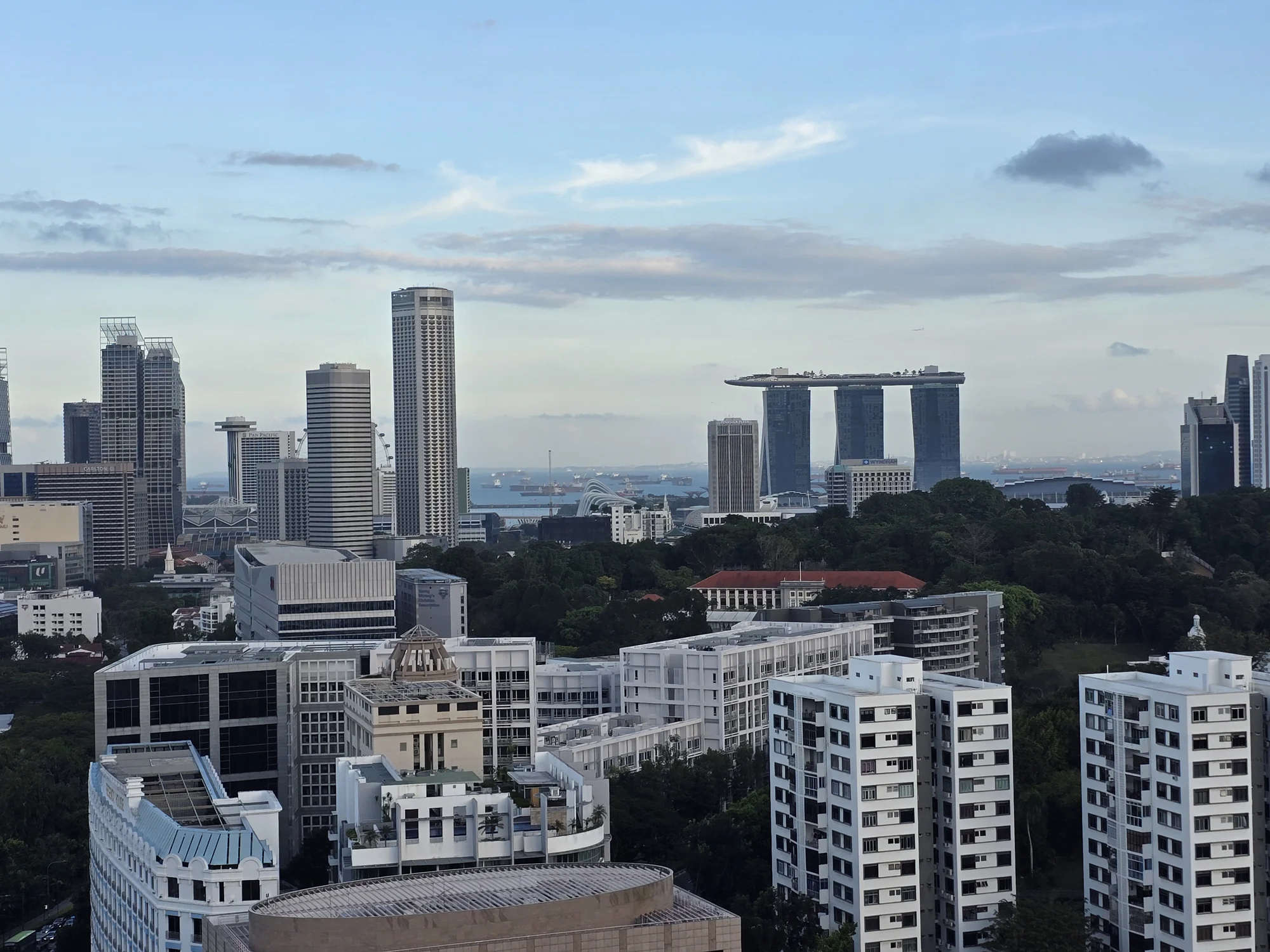
Your best area depends on your plans. Marina Bay is striking and central but usually expensive. Bugis offers practical transportation; Chinatown combines atmosphere and central access. Little India is lively and can offer better value. Changi mainly suits late arrivals, early departures and long connections.
Compare MRT distance and travel time, not just room rates. Our Where to stay in Singapore guide compares the main areas.
Getting around
MRT and public buses are the most practical options for most visitors. Official information lists contactless bank cards and mobile wallets among payment methods. Use the same method to tap in and out. SimplyGo currently charges foreign-issued Mastercard and Visa users S$0.60 per day of use; your bank may charge additional fees.
Taxis and ride-hailing help with luggage, rain or late arrivals. Most days need only MRT and walking. Nearby-looking sights can require longer walks because of roads, malls and elevation changes.
What does Singapore cost?
Singapore costs more than many Southeast Asian destinations, especially for hotels and alcohol. Public transportation and hawker meals can be affordable. Accommodation and paid attractions therefore drive much of your budget.
- Food: eat regularly at hawker centres and local food courts.
- Transportation: use MRT and buses instead of taxis for every journey.
- Activities: combine free neighborhoods, promenades and gardens with one paid attraction a day.
- Hotels: compare areas and access before room rates.
Prices and packages change. Check official attraction information and the final booking page shortly before your trip.
Practical information
Climate and clothing
Singapore is tropical year-round, with heat, humidity and frequent rain. Pack breathable clothing, comfortable shoes, sunscreen and a compact umbrella. A light extra layer helps in heavily air-conditioned interiors.
Safety and local rules
Singapore is well organized, but take normal precautions. Watch belongings in crowds, use official transportation and respect local rules. Smoking, littering and prohibited-product rules and penalties may be stricter than you expect.
Arrival requirements
Foreign visitors generally need the free SG Arrival Card within three days of arrival, including arrival day. It is not a visa. Check the official Immigration & Checkpoints Authority for conditions specific to nationality and travel documents.
Internet and eSIM
Mobile data helps with directions, hours and transportation apps. Install an eSIM before departure and activate the plan according to the provider’s instructions.
Use ICA’s official SG Arrival Card, which is free and not a visa, submitting within three days including arrival day. Also check SimplyGo’s foreign bank card conditions. This practical information was checked October 5, 2026.
Hawker centres and food courts
Food is central to a Singapore trip. Restaurants cover almost every budget, but hawker centres let you try local dishes without a formal meal each time. Look for chicken rice, laksa, satay, roti prata and chili crab. Quality varies: notice popular stalls and those specializing in one dish.
Popular centres become crowded at lunch and dinner. A tissue packet or small item on a table may reserve a seat, a custom called “chope.” Get your food and be prepared for cash or local payments at smaller stalls; larger food courts more often accept international cards.
Build meals into the neighborhood you’re exploring rather than a separate end-of-day obligation. This saves travel and brings you closer to local food culture.
Changi Airport to downtown
MRT, taxis and ride-hailing connect Changi to accommodation. MRT is usually cheapest and practical for daytime arrivals without too much baggage. Transfers depend on destination, so check the hotel’s nearest station rather than just its neighborhood name.
A taxi or prebooked transfer is easier late at night, with children or several suitcases. Busy periods can bring waits and higher prices. For very late arrivals or early departures, check whether public transportation operates.
Visit Jewel only if baggage and flight times allow. It is at the airport but outside departure security, so leave enough time for your terminal and gate.
Early bag drop or storage
At level 1 Jewel Early Check-in Lounge, participating airlines may process flights and checked bags earlier than regular counters. Depending on airline, windows can range from around three to up to 24 hours before departure. Conditions vary by airline, flight and destination: check Changi’s current list. It isn’t available for every flight.
Paid storage is available if early check-in isn’t possible. Jewel’s level 1 facility beside Early Check-in Lounge is officially open 24 hours, with locations in terminals too. Bags are security-screened; charges depend on size and weight. This lets you explore without luggage if your connection allows.
A free Skytrain view of Jewel
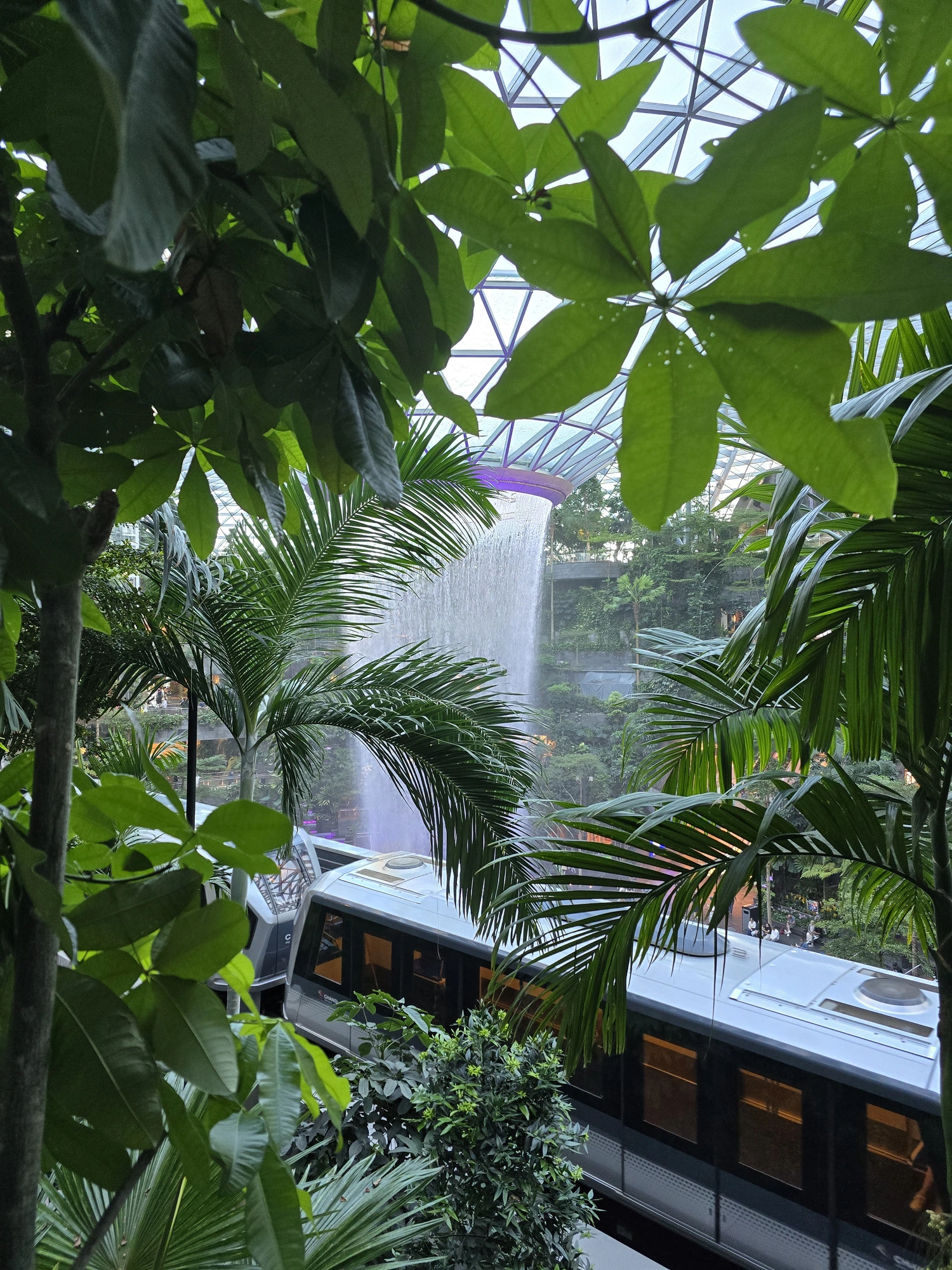
The free T2–T3 Skytrain passes through Jewel without a station inside. Its brief views of the building and Rain Vortex are a bonus on a terminal transfer, rather than a substitute for visiting. Travel only where flight timing and access permissions allow.
Daily budget
As rough daily planning figures per person, allow S$90–150 for budget travel, S$200–350 for midrange comfort and S$450+ for luxury. These include an indicative accommodation share, excluding international flights. Solo travel and several costly attractions may increase spending.
| Per-person expense | Budget | Midrange | Luxury |
|---|---|---|---|
| Accommodation | S$50–80 | S$120–180 | S$250+ |
| Food and drinks | S$25–40 | S$50–90 | S$120+ |
| Local transportation | S$6–12 | S$10–30 | S$40+ |
| Attractions | S$0–30 | S$40–80 | S$100+ |
These Singapore dollar figures are planning ranges, not fixed prices. Hotel rates vary seasonally, and sharing a double room lowers per-person costs. Mix free areas and gardens with paid attractions and check ticket rates before departure.
When to visit and tropical rain
Singapore is warm and humid all year, with no guaranteed dry season. A heavy shower needn’t ruin the day. Pair outdoor and indoor activities: gardens with cooled conservatories, or a neighborhood walk with a museum, mall or long lunch as backup.
Start outdoor visits early for fewer crowds and easier temperatures. Save indoor attractions for the hottest hours and carry an umbrella. Thunderstorms can temporarily close outdoor attractions and viewpoints, so keep plans flexible.
Children and accessibility
Extensive public transportation and indoor venues make Singapore practical for families. Sentosa, Universal Studios, Oceanarium, Jewel and Botanic Gardens offer variety. With young children, plan fewer stops and breaks for food, cooling down and rest.
MRT stations and major attractions have elevators and accessible routes; official tourism information describes MRT trains and public buses as wheelchair-accessible. Individual walks can still be demanding due to distance, crowds, heat and slopes. Check the specific accessible entrance and maintenance notices.
Common first-visit mistakes
- Overloading each day: heat, rain and lines make rigid plans tiring.
- Only seeing Marina Bay: other neighborhoods reveal an important side of the city.
- Rushing Jewel around a flight: baggage, terminals and immigration take extra time.
- Booking everything rigidly: reserve popular slots but leave room for weather changes.
- Choosing hotels by price alone: distance from MRT can add daily travel.
- Underestimating rules: check import, smoking and public behavior requirements.
Combining Singapore and Bintan
Bintan offers nature and relaxation after the city. In March 2025, we sailed from Tanah Merah Ferry Terminal to Bandar Bentan Telani and spent three nights at Mayang Sari Beach Resort. We combined beach time with a mangrove tour and an island tour visiting Blue Lake and temples.
Read our Singapore and Bintan itinerary and practical Singapore to Bintan ferry guide.
Frequently asked questions
Is three days enough?
Three full days cover major highlights; four gives better balance. Add a fifth for more Sentosa time or a slower pace.
Do you need a car?
No. MRT, buses, taxis and ride-hailing are more practical for a normal city trip. Driving and parking add little benefit.
Can you drink tap water?
Singapore’s tap water meets national drinking water standards and can be drunk directly. A refillable bottle is useful.
Is Singapore good for a stopover?
Yes. One or two nights allow Marina Bay and a neighborhood. For a full visit, aim for three full days. On a short connection, Jewel is often more practical than downtown, provided entry and time requirements are met.
Is Singapore worth visiting?
Singapore’s strength is variety: futuristic architecture, historic areas, tropical gardens, theme parks and diverse food. Three days covers essentials; four or five offers a calmer, fuller experience. Group nearby sights and leave time for heat, rain and spontaneous stops.
Discover more from DutchieWorldTravel
Subscribe to get the latest posts sent to your email.


You May Also Like
Guayaquil in 1, 2, or 3 Days: Complete Itinerary

Sentosa and Universal Studios Singapore: Complete Guide