
History of Aruba: From the Caquetío to One Happy Island
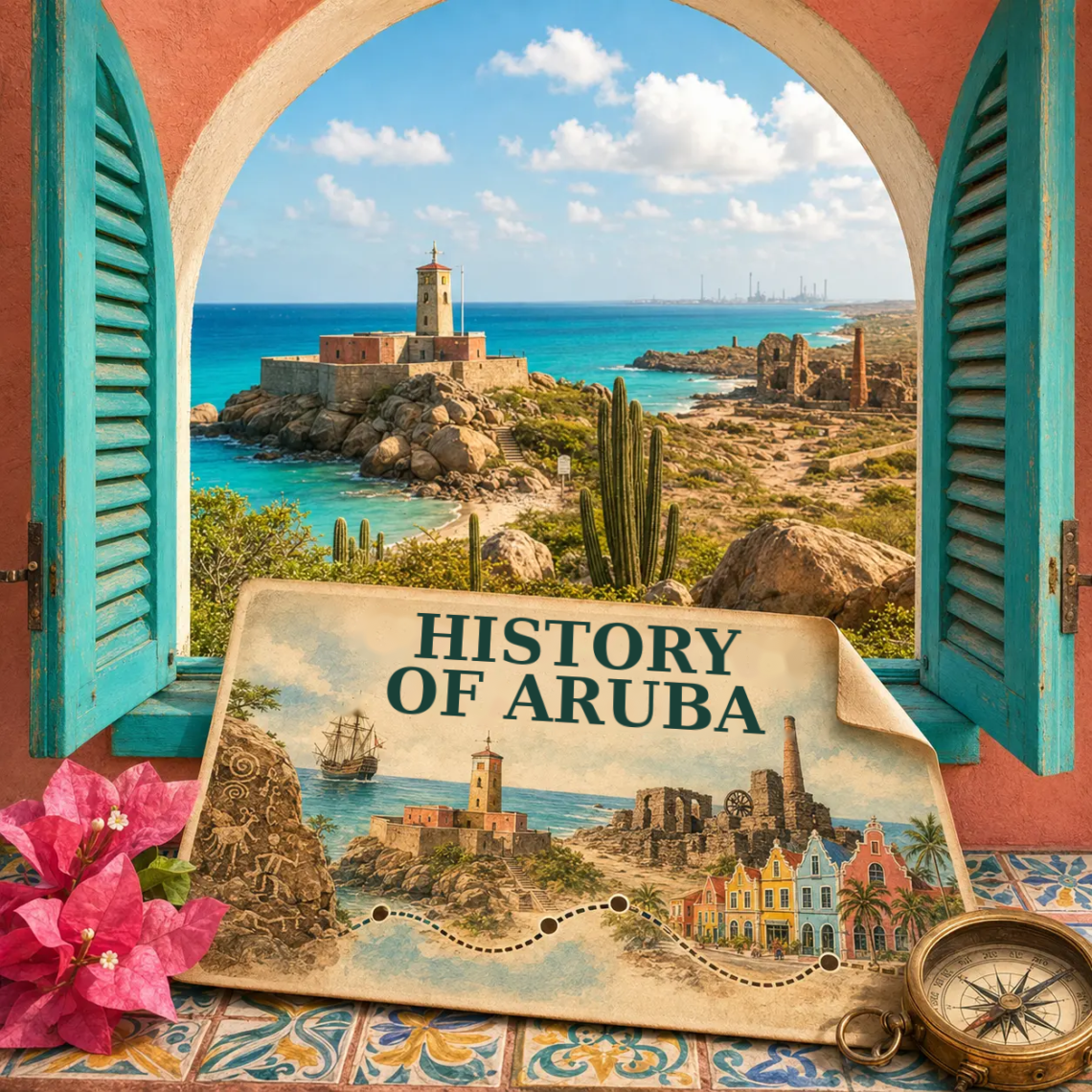
If you know Aruba only for its white-sand beaches and resorts, you have seen just one part of the island. The history of Aruba stretches from early Indigenous communities and the Caquetío to Spanish and Dutch colonial rule, gold and aloe, the oil refinery, Status Aparte, and the rise of tourism.
Much of that past is still visible. You can find rock drawings in caves, gold-mill ruins in the dry landscape, colonial buildings in Oranjestad, and industrial heritage around San Nicolas. In this guide, I follow Aruba’s history chronologically and point out places you can visit yourself.
Spending time on Aruba made me appreciate these layers more deeply. Once you understand why several languages, foods, musical traditions, and communities meet on such a small island, familiar places begin to look different.
This page contains affiliate links. If you book through them, we may earn a commission at no extra cost to you. Learn more.
An important note: Aruba’s past is multicultural, but it also includes colonization, forced labor, and deportation. A responsible history should acknowledge both the island’s resilience and cultural richness and these difficult chapters.
A short timeline of Aruba’s history
| Period | Major development |
|---|---|
| Early settlement | Archaic communities live through fishing, hunting, gathering, and small-scale farming |
| Around AD 900–1000 | Caquetío communities arrive from the South American mainland |
| 1502–1505 | Spanish expeditions reach and colonize Aruba |
| 1636 | The Dutch West India Company takes the ABC islands |
| 19th century | Gold, phosphate, and aloe become important industries |
| 1924–1927 | The Lago and Arend refineries are established |
| 1942 | Aruba is attacked during World War II |
| 1986 | Aruba gains Status Aparte within the Kingdom of the Netherlands |
| Late 20th century onward | Tourism develops into the main economic sector |
Aruba’s first inhabitants
The earliest known inhabitants are often described as Archaic peoples. They reached Aruba by canoe from the region that is now Venezuela and Colombia. Communities lived near the coast and inland, fished, hunted, gathered food, and cultivated crops. Tools were made from stone and shell.
Around AD 900 to 1000, Caquetío communities reached the island. They belonged to a wider cultural world along the coast of present-day Venezuela, lived in larger villages, and cultivated crops including corn and cassava. Archaeologists have found pottery, burial urns, ornaments, and everyday objects.
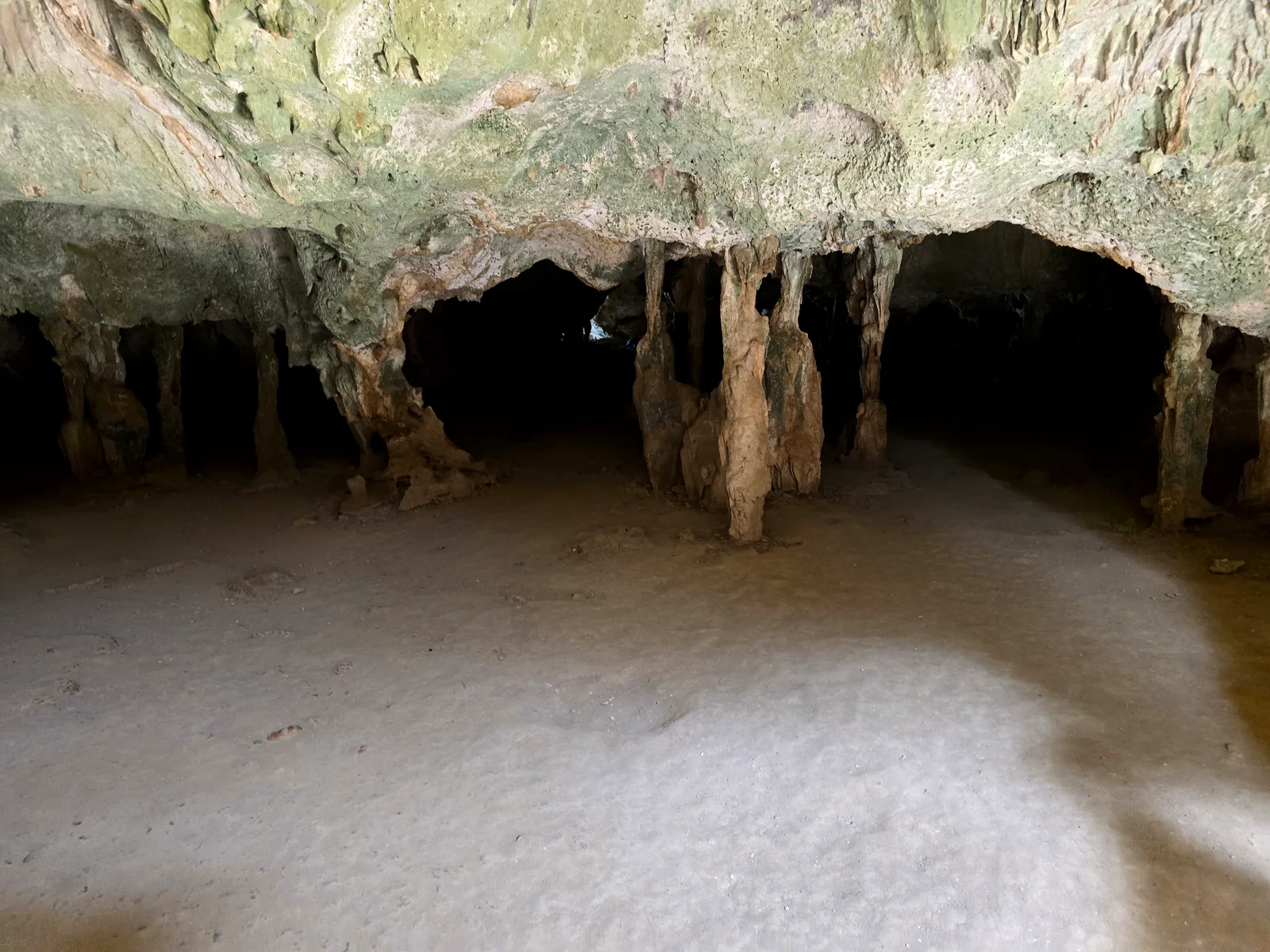
Rock drawings at places such as Fontein Cave and Ayo Rock Formation are tangible traces of Indigenous presence. Not every drawing can be assigned confidently to one group, which is why careful museum interpretation matters.
The Spanish period
Spanish expeditions reached Aruba between 1502 and 1505. Because they did not initially find large deposits of precious metals or pearls, the Spanish labeled Aruba, Bonaire, and Curaçao the Islas Inútiles, or “useless islands.” That name did not mean the islands or their inhabitants were left alone.
In 1514, Indigenous residents from the ABC islands were captured and deported to Hispaniola as enslaved laborers. From 1520, Juan de Ampiés allowed groups to return to the heavily depopulated islands. Caquetío people were still living on Aruba when European control changed again.
Dutch and British rule
In 1636, the Dutch took control of the ABC islands. Their location near the South American coast was strategically important during the Eighty Years’ War with Spain. Aruba was used for livestock and agriculture, and Indigenous labor was used to establish farms and tend animals.
Dutch control was not uninterrupted. During the Napoleonic Wars, Britain governed Aruba from 1806 until 1816. The island then returned to Dutch rule. Over time, European, South American, African, and Caribbean influences contributed to a complex society.
Gold, phosphate, and aloe
Aruba’s economy changed during the nineteenth century. Gold mining led to mills and processing sites whose ruins remain visible at Bushiribana and Balashi. Phosphate extraction and aloe cultivation also became important, and Aruba grew into a well-known producer of aloe products.
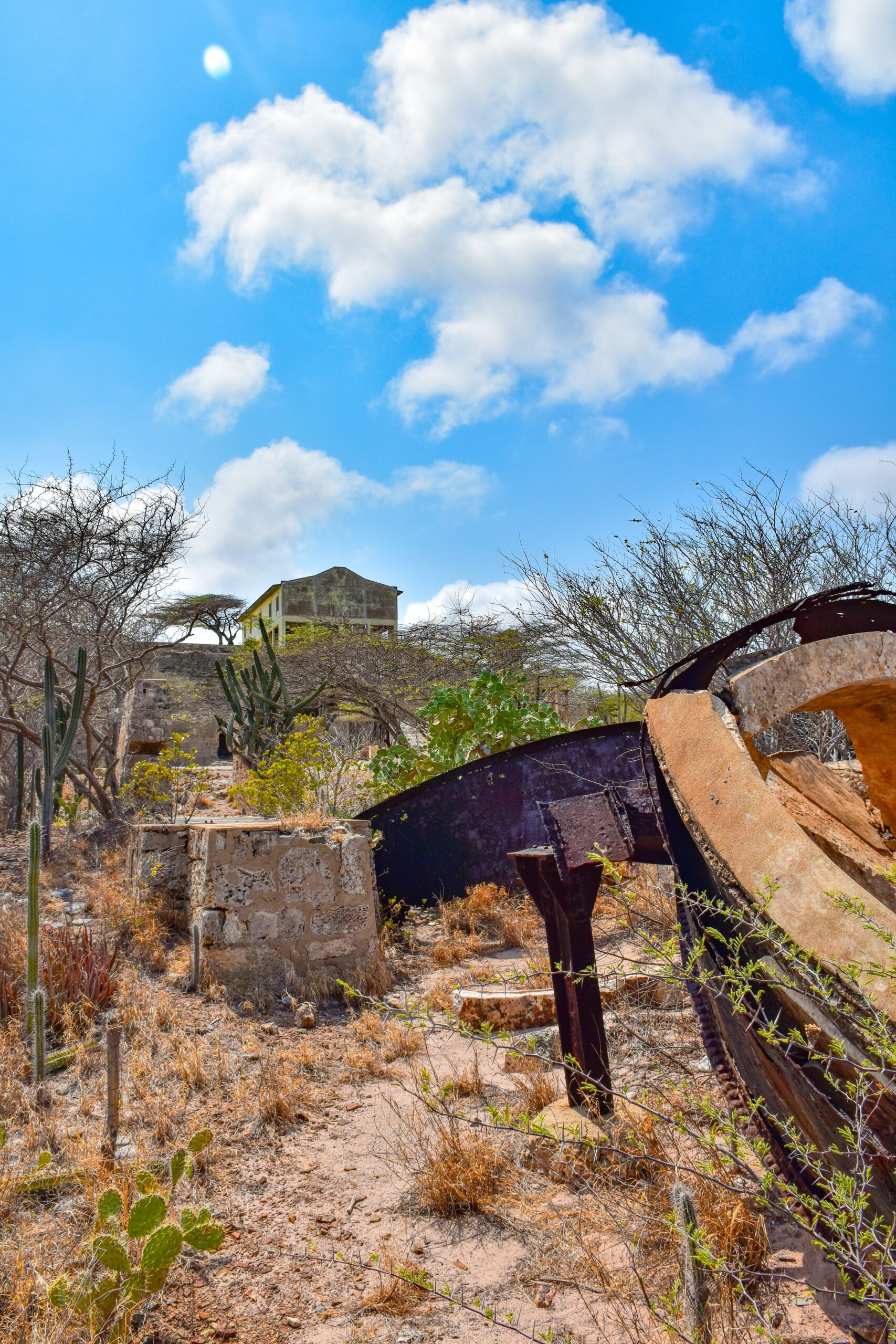
The ruins stand in exposed, rocky landscapes. They are accessible, but treat them as heritage: do not climb fragile walls or leave anything behind. Combine Balashi with Spanish Lagoon, or Bushiribana with the north coast. You can find more natural and historical sites in my Arikok National Park guide.
The oil refinery and the growth of San Nicolas
A dramatic shift began in the twentieth century. Lago Oil & Transport Company was established in 1924, followed by Arend Petroleum in 1927. Both processed oil from Venezuela. The Lago complex near San Nicolas expanded into one of the world’s largest refineries of its time.
Workers arrived from other Caribbean islands, North and South America, and Europe. San Nicolas developed a strong English-speaking Caribbean character. Music, food, religion, and traditions traveled with those communities, helping shape modern Aruban culture.
San Nicolas today is not only a place of industrial heritage. It has also become a center for art and murals. Follow my guide to San Nicolas, street art, and the city’s history.
Aruba during World War II
The refinery made Aruba strategically important. During the German occupation of the Netherlands, the island supplied aviation fuel to the Allies. In February 1942, German submarines attacked tankers and installations around Aruba and Curaçao. The direct attack on the refinery failed, but people were killed and ships were lost at sea.
The war strengthened Aruba’s international importance. The refinery and the migration connected to it also created lasting social and cultural change.
How Aruba Carnival developed
Carnival shows how different communities created a distinctly Aruban tradition. Social clubs held costume celebrations from the 1920s, and American and Caribbean influences later grew around the refinery. After World War II, English-speaking Caribbean workers in San Nicolas organized public celebrations and brought steel bands, brass bands, masquerade, and musical traditions from islands such as Trinidad and Jamaica.
Small street festivals came together in 1954, followed by the first island-wide public Carnival and official Carnival Queen in 1955. Grand Parades became a regular tradition by 1957. The Aruban Carnival Foundation was founded in 1966, symbolically at 11:11 a.m. on November 11, and the Lighting Parade began in 1981.
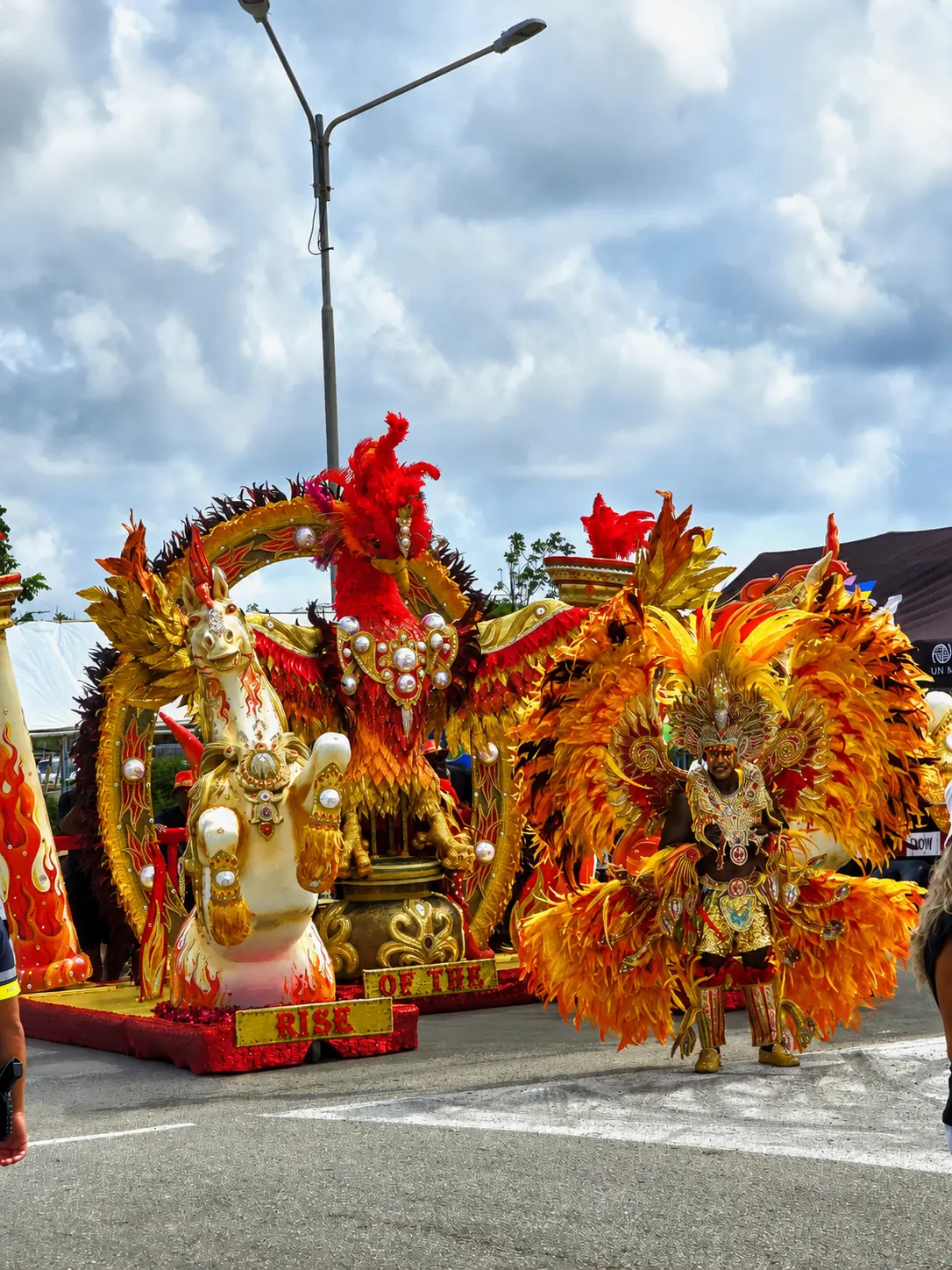
This is the historical overview. For music, King Momo, parade locations, and practical visitor advice, read my separate guide to Aruba Carnival.
Status Aparte and Betico Croes
Another defining chapter was Aruba’s campaign for a separate position within the Kingdom. Politician and activist Gilberto “Betico” Croes played a central role. On January 1, 1986, Aruba left the Netherlands Antilles and became an autonomous country within the Kingdom of the Netherlands under the arrangement known as Status Aparte.
Full independence was originally planned, but that step was postponed indefinitely and later removed from the agreement. Aruba manages its domestic government, laws, and policy, while defense and foreign affairs are Kingdom responsibilities.
From refinery economy to tourism
The closure of the Lago refinery in 1985 was a severe economic shock. Tourism had existed since the 1950s, but it expanded rapidly afterward. Hotels and resorts grew along Palm Beach and Eagle Beach, the airport expanded, and Aruba marketed itself internationally as a dependable sun-and-beach destination.
Tourism created jobs and prosperity, but also raised questions about land, nature, water use, housing, and the balance between residents’ quality of life and visitor growth. Modern Aruba is therefore more than a simple success story; it continues to negotiate how tourism, heritage, and sustainability fit together.
Papiamento and a multicultural identity
History lives on in Aruba’s languages. Papiamento is the mother tongue of many Arubans and reflects Portuguese, Spanish, Dutch, African, and Indigenous influences. Dutch, English, and Spanish are also widely used, and conversations can move naturally between languages.
Cuisine, music, architecture, and festivals reveal the same mixture. Aruba was not shaped by one culture, but by centuries of contact, migration, coercion, trade, and collaboration.
Historic places you can visit
- National Archaeological Museum Aruba: the best starting point for Indigenous artifacts and early settlement.
- Fort Zoutman and Willem III Tower: a recognizable historic complex in Oranjestad.
- Fontein Cave: a cave with rock drawings in Arikok National Park.
- Ayo Rock Formation: enormous boulders and archaeological traces.
- Bushiribana Gold Mill Ruins: exposed ruins on the rugged north coast.
- Balashi Gold Mill Ruins: remains of gold processing near Spanish Lagoon.
- San Nicolas: refinery history, Caribbean culture, murals, and museums.
- Aruba Aloe Museum and Factory: the story of one of the island’s historic industries.
- Alto Vista Chapel: religious heritage in the dry northern landscape.
A rental car makes it easier to combine several locations, but do not overfill one day. Read my advice on getting around Aruba and bring plenty of water and sun protection to Arikok.
Aruba is much more than a beach
Aruba’s history explains why the island is so multilingual and culturally diverse today. Indigenous roots, Spanish and Dutch colonization, gold and aloe, the Lago refinery, migration, Carnival, Status Aparte, and tourism have all added another layer.
My own experiences on Aruba became richer once I started recognizing those layers. Visit at least one museum, cave, gold ruin, or historic district and the island will look different afterward.
Use my complete Aruba travel guide to combine history with beaches, nature, and local culture.
Source check: The chronology and central historical facts were checked against Aruba Tourism Authority and information from Aruban heritage locations. Historical interpretation continues to evolve, and museums may provide additional nuance.
Still planning your stay? Read our accommodation and area guide to choose a base that fits your route.
Discover more from DutchieWorldTravel
Subscribe to get the latest posts sent to your email.



One Comment
Pingback: