
Aruba Carnival: History, Parades & Practical Tips
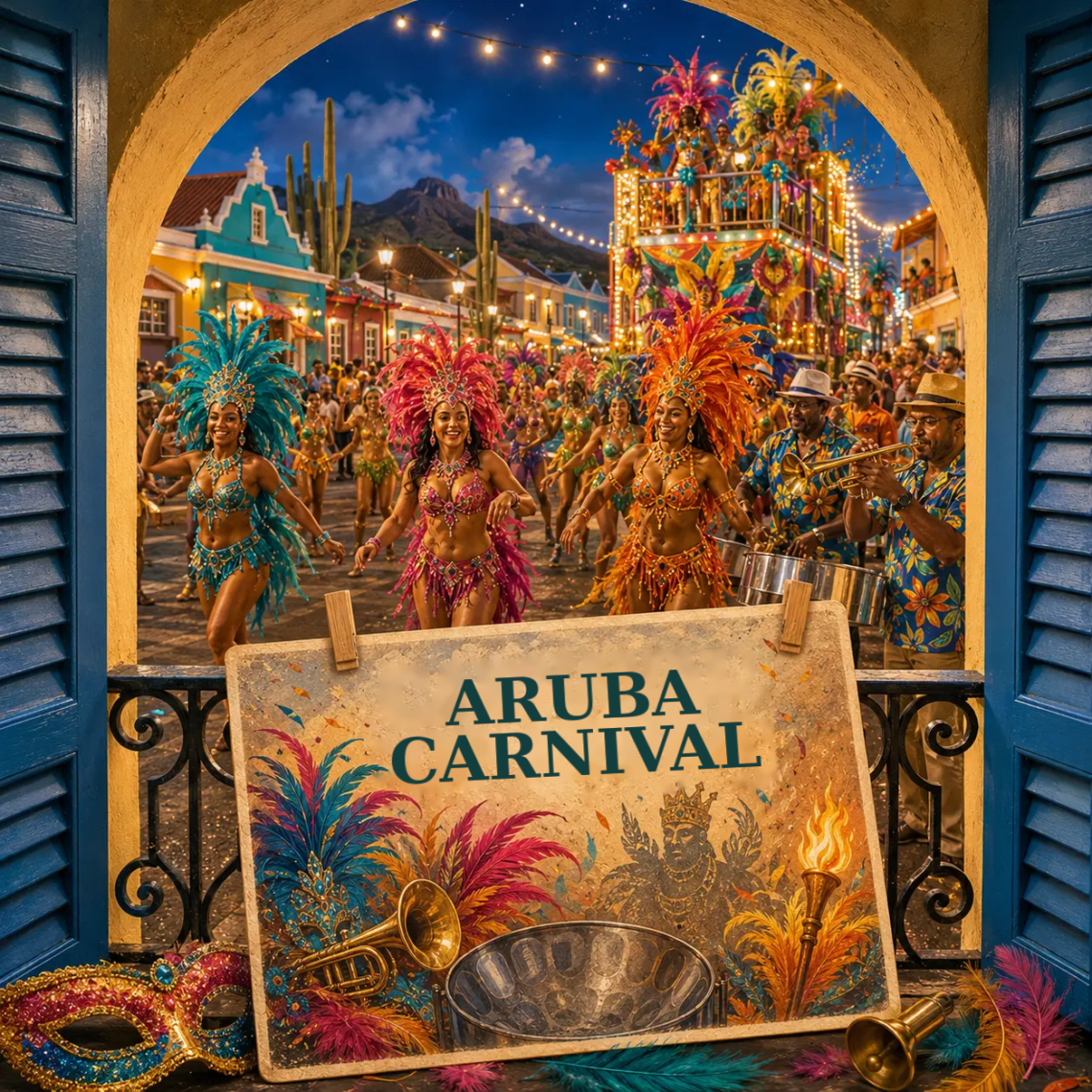
Aruba Carnival is much more than one colorful parade. It is a season of music competitions, elections, children’s parades, jump-ups, illuminated processions, and two major Grand Parades. Costumes take months to create, and families, neighborhoods, and Carnival groups work toward the finale together.
For visitors, Carnival offers a rare opportunity to experience Aruba beyond its beaches and resorts. It also requires preparation: dates and routes change every year, streets close, and the heat, crowds, and loud music can be intense. This guide explains how Aruba Carnival developed, which events matter, and how to join the celebration respectfully.
I have attended Carnival parades in Aruba several times, and they remain some of my favorite experiences on the island. I personally enjoy Aruba’s open-air celebration more than Carnival in the Netherlands: the Caribbean music, elaborate costumes, warmth, and connection between performers and spectators create a very different energy.
This page contains affiliate links. If you book through them, we may earn a commission at no extra cost to you. Learn more.
Always check current dates: Carnival follows the Christian calendar leading into Lent. Consult the official Aruba Tourism Authority or Aruba Carnival Foundation schedule for every trip; never copy the previous year’s dates.
What makes Aruba Carnival special?
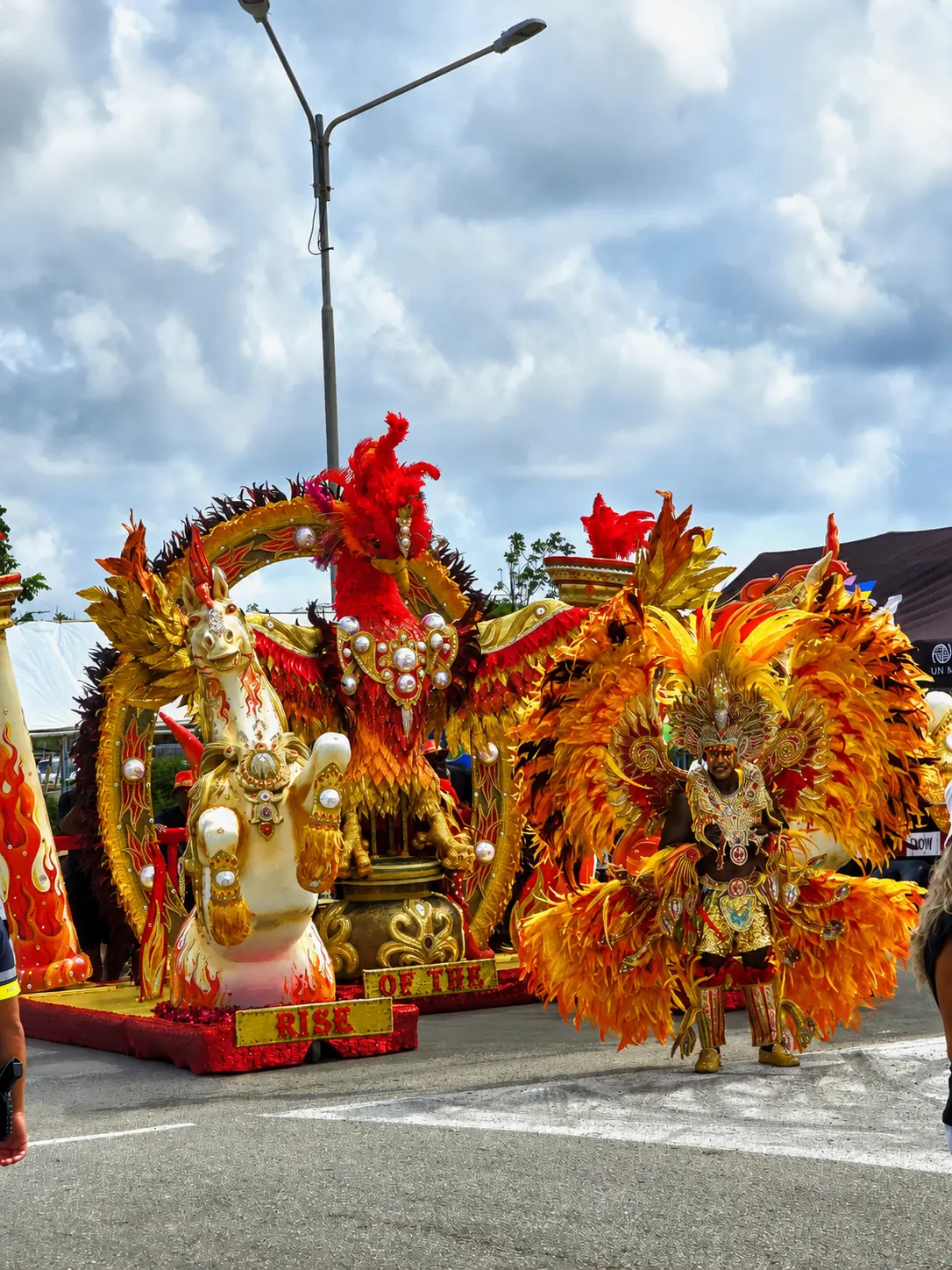
Aruba blends European Carnival customs with strong influences from Trinidad and other English-speaking Caribbean islands. You will hear soca, calypso, roadmarch, and brass music, and see feathers, beads, lights, enormous headdresses, and decorated floats. Competition is important: groups are judged on costumes, theme, dance, music, floats, and presentation.
Yet Carnival is not only about winning. Groups raise funds, choose themes far in advance, and spend months making costumes and floats. Children grow up with the tradition and many adults return to the same group each year. The parade therefore does not feel like a show staged exclusively for tourists; it is a community celebration that welcomes visitors as respectful spectators.
The history of Aruba Carnival
The earliest predecessors were private costume parties held by social clubs during the first half of the twentieth century. Documented celebrations reach back to the 1920s. Tivoli Club in Oranjestad held a pre-Lenten celebration in February 1944.
After World War II, Carnival gained a different character. Many immigrants from Trinidad, Jamaica, and then-British Guiana worked at the Lago refinery near San Nicolas. They brought steel bands, brass bands, masquerade, and the energy of Trinidadian Carnival. A public parade celebrating the Allied victory became an important point in that development.
In 1954, several street celebrations began to come together. In 1955, clubs and districts coordinated the first island-wide public Carnival, including an official Carnival Queen. By 1957, two Grand Parades had become established: first San Nicolas and then Oranjestad.
The Aruba Carnival Foundation was created at 11:11 a.m. on November 11, 1966. That symbolic date and time remain associated with the opening of a new season. Tivoli’s famous Lighting Parade was added in 1981.
To understand the Indigenous period, refinery, Status Aparte, and the broader setting, continue with my complete history of Aruba.
When is Aruba Carnival?
The season is ceremonially opened on November 11, but most major events take place in January and February. The finale depends on Ash Wednesday, so it moves each year. The busiest events usually fall in the final weeks before Lent.
If Carnival is the main purpose of your trip, confirm the key dates before booking. Reserve accommodations and transportation early because popular weekends can sell out or become more expensive. My guide to the best time to visit Aruba explains the wider seasonal picture.
The main Carnival events
Torch parades and jump-ups
Festive processions and jump-ups move through the streets during the season, led by music trucks and dancing groups. Some events are free to watch, while organized parties, special zones, or participation may require a ticket or registration.
Queen, Prince & Pancho
The Carnival Queen represents Carnival at events and parades, with additional elections for youth and children’s queens. Prince and Pancho form a humorous ceremonial duo whose performance combines presentation, current affairs, comedy, and audience interaction.
Calypso, roadmarch, caiso, and soca
Music competitions help select the songs you hear throughout the parades. Calypso and caiso may include social commentary and humor, while roadmarch and soca emphasize the rhythms that move groups along the route. You do not have to understand every lyric to feel how much a winning song means.
Lighting Parade
The Lighting Parade is an evening procession in which costumes and floats glow with thousands of lights. Cooler temperatures can make this a comfortable first Carnival experience. Photography is more challenging, but the combination of light, music, and movement is unforgettable.
Jouvert Morning
Jouvert starts very early and has the atmosphere of a morning street party. In Aruba, it is also associated with pajama celebrations. It is looser and more party-focused than the formal Grand Parades. Check the start time, route, and age guidance; it will not suit every traveler or family.
San Nicolas Grand Parade
The San Nicolas parade reflects the city’s strong Caribbean history and often feels intensely local. Return on a quieter day to explore the murals and museums with my guide to San Nicolas.
Oranjestad Grand Parade
The Oranjestad parade is normally the major finale. Groups, music, floats, and costumes move through the capital for hours. It is spectacular but also hot, crowded, and logistically complicated. Choose a viewing area beforehand and do not expect easy parking or street crossings shortly before the start.
The burning of King Momo
At the end of the season, an effigy of King Momo is burned, symbolizing the end of the Carnival spirit before Lent. It also carries a promise: when the next season begins, the spirit of Carnival returns.
San Nicolas or Oranjestad: which parade should you choose?
| San Nicolas | Oranjestad | |
|---|---|---|
| Character | Strong local and English-speaking Caribbean tradition | The major finale in the capital |
| Scale | Large, often somewhat easier to navigate | Very large and usually busier |
| Combine with | Street art, Baby Beach, and local culture | Historic center, shopping, and harbor |
| Best for | Local atmosphere and cultural context | Maximum spectacle |
If your dates allow it, both Grand Parades are worth experiencing. They share groups and traditions, but their setting and atmosphere are different.
Practical tips for visitors
- Check the official route: starting points, direction, and times can change every year.
- Arrive early: good viewing spots and parking fill long before the parade.
- Bring sun protection: shade, a hat, and sunscreen are essential during the day.
- Stay hydrated: carry water while respecting local rules for coolers and glass.
- Use hearing protection: music trucks and brass bands can be very loud, especially for children.
- Wear comfortable shoes: expect to stand and walk for hours.
- Plan restroom stops: restaurants and portable toilets may have long lines.
- Keep valuables close: apply the same precautions as at any crowded event.
- Do not step into a group: respect participants, barriers, judges’ zones, and instructions.
- Ask before close-up photos: particularly with children and outside the parade.
Transportation and road closures
Large parades close sections of San Nicolas and Oranjestad for hours. A place that looks close on a map may become difficult to reach because of barriers. Park outside the immediate route and expect a substantial walk. If you use a taxi, agree on a realistic pickup point beyond the closed area.
With a rental car, do not leave immediately behind the final float when everyone else is trying to depart. Waiting for the crowd to thin can be far more relaxed. Read my guide to buses, taxis, and rental cars in Aruba.
How much does Carnival cost?
You can normally watch the major public parades free along the route. Your main costs are transportation, food, drinks, and perhaps chairs or access to an organized viewing area. Concerts, parties, stands, and participation in a group may require payment.
- Allow extra transportation money because road closures can change taxi routes.
- Accommodation can cost more around major weekends.
- Buy official tickets only from trustworthy organizers.
- If you want to join a group, make contact early; costumes and group fees can be substantial.
Aruba Carnival with children
Children’s parades are often more suitable than a long Grand Parade or early-morning Jouvert. Choose shade and an easy exit if a child becomes tired. Bring hearing protection, water, snacks, and sunscreen. Put a phone number on young children’s clothing and agree on a recognizable meeting point with older children.
How to experience Carnival respectfully
Do not view costumes as mere decoration: participants may have invested months of work, money, and creativity. Give groups space, do not block the route for a photo, and never touch costumes or headdresses. Use trash bins and avoid confetti or glitter that can reach the sea and natural areas.
A few words of Papiamento are appreciated. Bon carnaval! is an easy way to wish everyone a happy Carnival.
Is Aruba Carnival worth the trip?
Yes—especially if you want to experience Aruba as a culture and community. The parades are colorful, but their real strength comes from the combination of history, music, craftsmanship, and months of cooperation. Even one Lighting Parade or Grand Parade shows a very different side of the island from a standard beach vacation.
For me, the atmosphere and community connection are exactly why Aruba Carnival stands out. Plan carefully, check the calendar, book early, and schedule enough rest.
Combine Carnival with my guide to other things to do in Aruba and the 7-, 10-, or 14-day itinerary.
Source check: The history and established traditions were checked against Aruba Tourism Authority and VisitAruba. Event names, routes, times, tickets, and rules may change each season; always use the official current schedule.
Still planning your stay? Read our accommodation and area guide to choose a base that fits your route.
Discover more from DutchieWorldTravel
Subscribe to get the latest posts sent to your email.




4 Comments
Pingback:
Pingback:
Pingback:
Pingback: