

Guayaquil Airport to the Galápagos: Complete Transfer Guide
Guayaquil’s airport is a common gateway to the Galápagos, but the island check-in process includes extra steps beyond a normal domestic flight. This guide explains how to plan the airport transfer, Transit Control Card, biosecurity inspection, entry fee, luggage, and your arrival island without relying on a tight connection.
Check current conditions: Safety conditions can change quickly. Review the U.S. Department of State travel advisory for Ecuador shortly before booking and again before departure, and ask your hotel about the current local situation.
Some links in this guide are affiliate links. If you book through one of them, we may earn a commission at no extra cost to you. It helps support Dutchie World Travel.
Guayaquil Airport basics
José Joaquín de Olmedo International Airport serves the city and many Galápagos departures. Keep 30–60 minutes as a broad planning allowance between leaving the terminal with luggage and reaching a city hotel; this is not a fixed taxi time. Traffic, baggage, and the exact address determine the real journey. Use an official desk or a transfer arranged by your accommodation and confirm the vehicle before entering.
Arriving internationally
After immigration, baggage claim, and customs, find the agreed driver or official transportation desk. Exchanging money or arranging a SIM takes additional time. Do not sacrifice an already tight onward connection; an overnight stay is often calmer when flights are on separate bookings.
Why a Galápagos connection is different
A regular domestic flight generally involves check-in and security. Galápagos travel adds registration, payment, and biosecurity steps. Procedures and accepted payment methods can change, so recheck your airline, the Galápagos National Park, and the Consejo de Gobierno immediately before departure.

Step by step before the flight
- Complete or verify the current Transit Control Card registration procedure and save the confirmation.
- At Guayaquil Airport, follow the Galápagos signs and complete any remaining TCT steps.
- Present luggage for the biosecurity inspection before normal baggage drop.
- Check in with the airline and verify the arrival island, passenger name, and bag tag.
- Go through security; keep documents and medication in your carry-on.
- On Baltra or San Cristóbal, complete park-entry and inspection steps and retain the TCT as instructed.
Use the official National Park arrival information for the current sequence. An online registration and proof of payment are not necessarily the same thing.
Transit Control Card and park entry
The TCT and National Park entry are separate charges. At the time this guide was prepared, the official information listed US$20 for the TCT and US$200 for a foreign adult visitor in the standard category. Different rates may apply to children, Ecuadorian residents, certain nationalities, and special statuses. Verify the official entry-fee table for your documents and travel date; do not assume these amounts are included in airfare.
Luggage and biosecurity
Clean hiking shoes, tripod feet, and outdoor gear before packing. Soil and seeds can carry invasive species. Do not pack fresh products without checking, and declare anything uncertain honestly.
- Check food against the official permitted/restricted list.
- Clean soles, bags, and outdoor equipment.
- Keep medication in original packaging.
- Do not remove inspection seals or labels.
- Pack liquids and batteries according to airline rules.
The official Galápagos biosecurity list is the appropriate place to verify products.
How much connection time?
Our planning margin: aim to be at the airport around three hours before a Galápagos departure. This is a cautious allowance for registration, inspection, and check-in—not an official minimum. Always follow your airline’s current deadlines.
Avoid a tight self-transfer. International delays, immigration, luggage collection, and re-checking can consume hours. When tickets are separate, an overnight stay in Guayaquil often protects the expensive island portion. Even on one itinerary, confirm whether luggage is checked through or must be presented again.
| Connection | Practical approach |
|---|---|
| International arrival + separate Galápagos ticket | Prefer an overnight stay; a missed separate flight may not be protected |
| Domestic connection on one booking | Confirm where baggage inspection and re-checking happen |
| Galápagos return + international flight | A mainland night adds resilience |
| Morning boat from Isabela + Baltra flight | Stay on Santa Cruz the previous night rather than forcing a tight boat-flight link |
Baltra or San Cristóbal?
Confirm the arrival island before buying the flight. Baltra serves Santa Cruz, but Puerto Ayora still requires ground transportation, a short channel crossing, and another drive. San Cristóbal Airport is closer to Puerto Baquerizo Moreno. Choose based on your island itinerary; the wrong airport can add an unnecessary boat day.
Start with our 7-, 10-, and 14-day Galápagos itineraries and inter-island transportation guide.
Arriving on Baltra
After the park formalities, follow the bus and channel-crossing route toward Santa Cruz. Allow roughly two hours of planning space for waiting, transfers, and the drive to Puerto Ayora, then verify the actual arrangement with your provider. Keep water, sun protection, and small bills accessible, and schedule your first major excursion for the next day.
Arriving on San Cristóbal
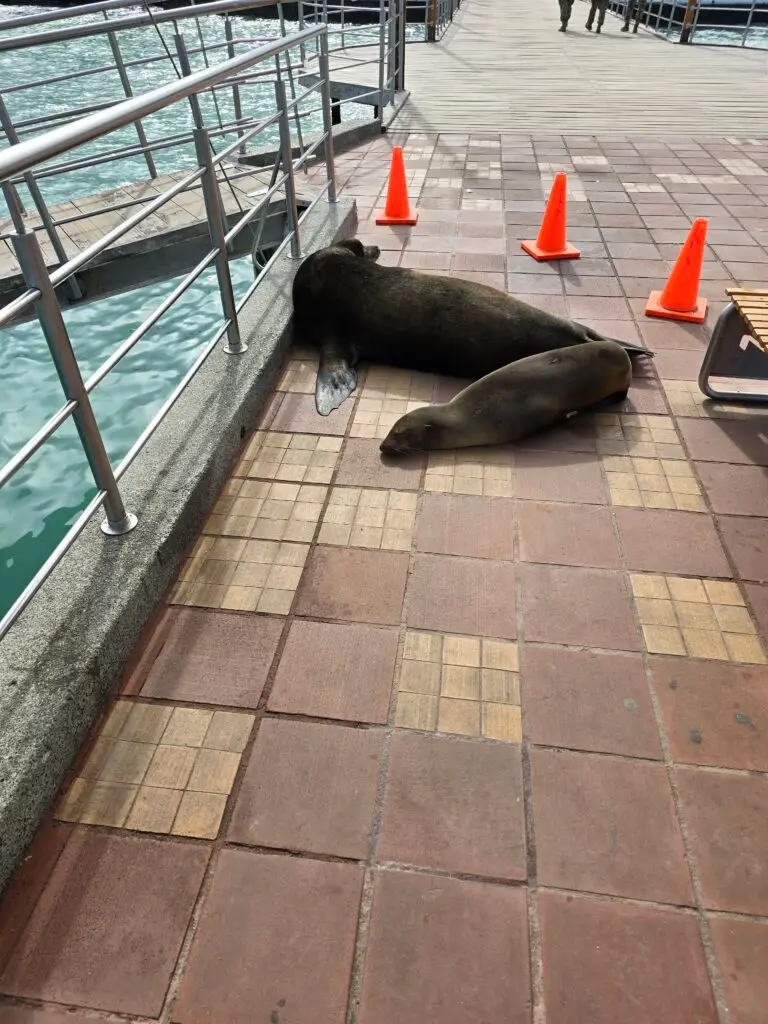
The airport is closer to town, but you should still confirm your hotel transfer and report delays. Give sea lions space around the waterfront and docks immediately after arrival.
One night in Guayaquil
An airport-area hotel is convenient for a very early departure. If you also want to see the city, choose a well-reviewed property with a dependable transfer in an appropriate area. Read where to stay in Guayaquil or compare places to stay in Guayaquil on Expedia; confirm early transportation and breakfast in advance.
Carry-on checklist
- Passport and flight confirmation
- Accommodation or itinerary details if requested
- Required cash distributed securely
- Medication and supporting documents
- A light layer for air conditioning
- Refillable bottle to fill after security
- One day of essentials in case checked luggage is delayed
Book the correct flight
Compare not only price and departure time, but also arrival island, fare eligibility, baggage allowance, and change rules. Some booking systems display fares linked to residency conditions. Ask the airline to confirm in writing when a rate is unclear.
If a flight is delayed or canceled
Ask the airline immediately what happens to onward transportation and accommodation, notify your island hotel or tour operator, and keep receipts. Insurance that covers missed connections and prepaid excursions is particularly valuable for this route.
Final check 48 hours before departure
- Flight status and terminal information
- Airline baggage allowance
- Current TCT procedure
- Current park-entry amounts and payment methods
- Biosecurity restrictions
- Transfer at Baltra or San Cristóbal
- Guayaquil hotel pickup time
Also read the Galápagos rules and essential tips.
Using a long layover
A hotel day room, meal, or short city stop can work when the layover is genuinely generous. Store luggage only with an official service or your hotel, arrange the return ride before leaving, and calculate the city departure time from the airport deadline—not the flight’s departure time. Immigration, traffic, the TCT process, biosecurity, and check-in can all reduce usable hours.
Understanding the Baltra-to-Puerto Ayora transfer
Landing on Baltra does not mean arriving in Puerto Ayora. After airport and park formalities, travelers usually follow a sequence of ground transport, a short channel crossing, and another drive across Santa Cruz. Private transfer descriptions should state which segments are included. Keep small bills, water, and sun protection handy; checked luggage may not be accessible during every part of the journey.
When San Cristóbal is the better arrival
San Cristóbal Airport is much closer to Puerto Baquerizo Moreno than Baltra is to Puerto Ayora. It can be the better starting point when your itinerary centers on San Cristóbal or an inter-island route beginning there. Do not choose it solely because the airport-to-town transfer is easier; compare the complete island itinerary, tour dates, and return flight.
Flying to the Galápagos with children
Divide responsibilities before reaching the airport: one adult handles passports, TCT, payments, and airline questions while the other keeps children and baggage together. Pack allowed snacks only after checking biosecurity rules. Keep medication, a change of clothes, and essential child supplies in carry-on baggage. Build extra time for restrooms and unexpected lines.
Organize documents in airport order
- Passports and any required immigration status documents
- Flight confirmation with correct arrival island
- Current TCT registration or confirmation
- Accommodation and itinerary details if requested
- Evidence of onward or return travel when required
- Payment methods for current fees
- Insurance information and emergency contacts
Keep digital and offline copies, but never leave sensitive documents in an unlocked gallery or shared device. Separate the passport needed at the counter from backup copies.
Frequently asked questions
Are the TCT and park fee included in the ticket? Usually they are separate unless the booking explicitly states otherwise. Verify for your fare.
Can you pay every fee by card? Payment methods change and terminals can fail. Check official instructions and carry the permitted backup form of payment.
Can food be taken to the islands? Only products allowed by current biosecurity rules. Check the official list and declare uncertainty.
Should you book a tour for arrival day? Avoid an expensive fixed activity shortly after landing. Baltra transfers take time and flights can change.
Do you keep the TCT? Follow current instructions and retain it for departure unless an authority tells you otherwise.
Updated September 12, 2026. Personal experiences are identified where relevant; always recheck current prices, opening hours, procedures, road conditions, and travel advisories.
Discover more from DutchieWorldTravel
Subscribe to get the latest posts sent to your email.


You May Also Like

Guayaquil Safety and Transportation: Practical Travel Tips

Cuenca in 2 or 3 Days: Complete Itinerary
