

What to Eat in Guayaquil: Local Dishes and Food Tips
Guayaquil is one of the best places to discover Ecuador’s coastal cooking. Fish, shellfish, rice, green plantain, peanuts, cassava, and citrus appear in countless combinations. Through repeated visits—and meals both in simple restaurants and with family—we came to appreciate how much everyday food reveals about the city.
Check current conditions: Safety conditions can change quickly. Review the U.S. Department of State travel advisory for Ecuador shortly before booking and again before departure, and ask your hotel about the current local situation.
Some links in this guide are affiliate links. If you book through one of them, we may earn a commission at no extra cost to you. It helps support Dutchie World Travel.
Why Guayaquil is a rewarding food city
The city sits close to the coast, river, and agricultural areas. That makes seafood, rice, peanuts, cassava, and several preparations of verde, or green plantain, central to local menus. A busy lunch counter may teach you more about daily Ecuadorian cooking than an international hotel restaurant.

Dishes to try
Encebollado
A substantial fish soup with cassava and pickled onion, often eaten in the morning or at lunch. Garnishes vary; add lime, herbs, or crunchy toppings gradually so you can taste the base first.
Ceviche
Coastal Ecuador has versions made with shrimp, fish, or shellfish, generally served with more liquid than some Peruvian styles. Choose a busy, well-reviewed place with rapid turnover for raw or lightly cooked seafood.
Bolón de verde
Mashed green plantain formed into a filling ball with cheese, pork, or both. It is a hearty breakfast; ask about the filling if you are vegetarian.
Patacones, tigrillo, and other verde dishes
Patacones are twice-fried plantain rounds served as a snack or side. Tigrillo and other dishes also use verde as the base, making plantain one of the clearest signatures of coastal food.
Seafood and rice
Look for arroz con camarones, grilled fish, seafood stews, and the day’s catch. Ask about portion size; sharing one plate and trying another later can be more enjoyable than over-ordering at the first stop.
Arroz con menestra
Rice with lentils or beans, commonly paired with meat, chicken, or fish and fried plantain. It is simple, filling, and typical of local lunch restaurants.
Cangrejo criollo and other shellfish
Crab is a social, hands-on meal. Ask about availability and any closed season. Never assume a protected or unavailable species can be served.
Seco
A family of flavorful stews made with chicken, beef, goat, or other ingredients, usually served with rice. Despite the name, seco is not a dry dish.
Our experience eating in Guayaquil
Because my fiancée grew up in Guayaquil and we have visited Ecuador several times, we tried local food in restaurants and at family homes. Ecuadorian ceviche remains a standout for me: fresh, bright, and one of my favorite parts of coastal cuisine.
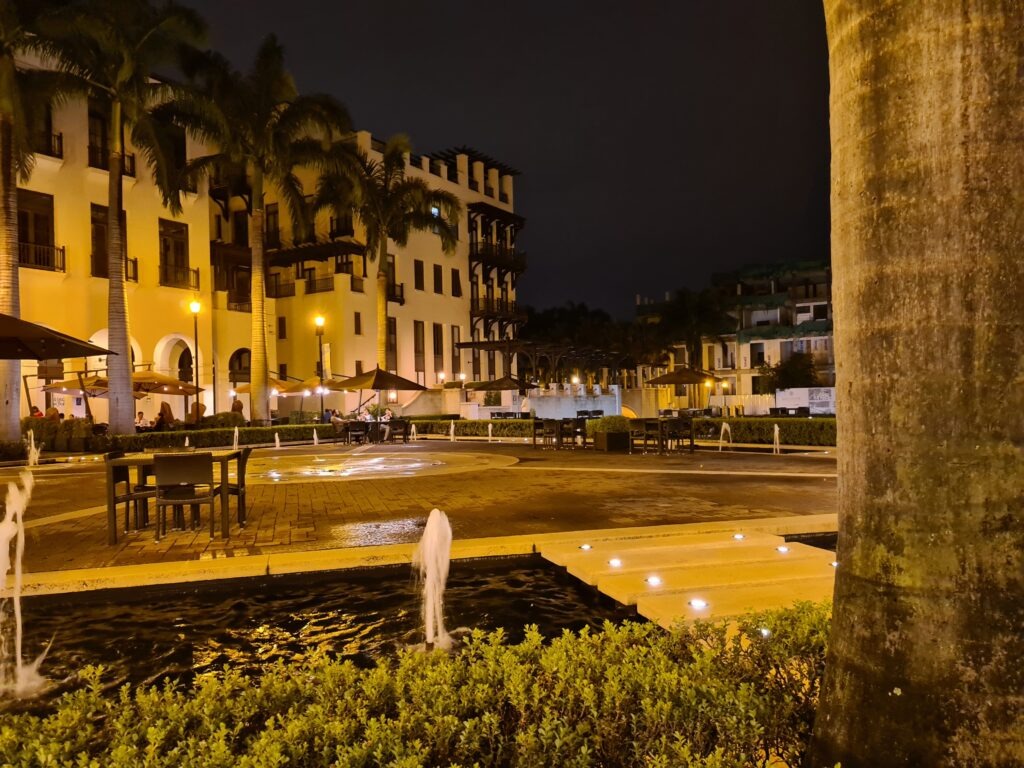
We also visited Plaza Lagos more than once and enjoyed its restaurants and atmosphere at the time. It is in Samborondón, outside Guayaquil city, so this is a memory—not a current recommendation to travel there without checking the exact advisory.
Breakfast, lunch, and dinner
Traditional breakfast can be surprisingly substantial, with bolón, eggs, cheese, or soup. Many restaurants serve a fixed-price menú del día at lunch, often including soup, a main course, and a drink. Dinner may begin later than many U.S. travelers expect, though tourist areas usually serve earlier.
Use lunch to try local food at good value and choose dinner near your accommodation. Have the restaurant arrange a taxi if walking back is not locally advised.
Drinks and sweets
Fresh fruit juices are common; ask whether water and ice are safely prepared. Coffee ranges from simple house coffee to specialty offerings. Desserts and snacks may feature banana, coconut, milk, or sweet dough.
Before a boat or flight
Choose familiar, easily digested food before a Galápagos flight or long bus ride. Save raw seafood for a day without a tight connection, and check island biosecurity rules before packing snacks.
Where to eat
Restaurants around Malecón 2000 and Puerto Santa Ana fit naturally into the riverfront itinerary. For lunch, look for good turnover; for dinner, prioritize an easy ride back. Markets and simple lunch restaurants offer a different experience, but ask for a current, specific recommendation instead of choosing a random market from the map.
Use the riverfront walking guide to place meal stops, and compare places to stay in Guayaquil on Expedia if you want your hotel near the areas where you plan to eat.
Useful Spanish for ordering
- ¿Qué recomienda? — What do you recommend?
- ¿Cuál es el plato del día? — What is today’s special?
- Sin picante, por favor. — Not spicy, please.
- ¿Tiene mariscos? — Does it contain shellfish?
- Soy vegetariano/a. — I am vegetarian.
- La cuenta, por favor. — The check, please.
| Spanish | English | Common use |
|---|---|---|
| Verde | Green plantain | Bolón, patacones, tigrillo |
| Yuca | Cassava | Soup and sides |
| Camarón | Shrimp | Ceviche and rice |
| Maní | Peanut | Sauces and stews |
| Choclo | Large-kernel corn | Soups and sides |
“A la plancha” means grilled, “frito” means fried, “apanado” means breaded, and “mixto” contains multiple proteins or seafood types. With allergies, ask about stock, sauces, and cooking oil rather than relying on the dish name.
Vegetarian, vegan, and allergy needs
A dish without visible meat may contain broth, lard, or fish. Clearly name every ingredient you avoid. For a serious allergy, carry a Spanish allergy card and discuss cross-contact. A busy kitchen may interpret “just a little” differently from a medical requirement.
Food safety without avoiding local places
- Choose busy places with strong turnover.
- Make sure hot food is hot and cold food is chilled.
- Use bottled or reliably filtered water when uncertain.
- Be cautious with ice, raw seafood, and food left out.
- Clean your hands before eating.
- Start gently if your stomach is not used to new foods.
No checklist guarantees safety. Observe hygiene, storage, and turnover. A popular simple restaurant may be a better choice than an empty place with a polished menu.
What does food cost?
| Example daily choice | Planning amount |
|---|---|
| Breakfast | US$5 |
| Lunch | US$7 |
| Dinner | US$15 |
| Water and coffee | US$5 |
| Example total | US$32 |
This is a budgeting example, not a current menu survey. A simple set lunch can reduce the total, while fresh seafood, alcohol, and several restaurant visits can raise it significantly. Ask whether service and tax are already included before adding a tip.
A food-focused day
- Start with bolón or another local breakfast.
- Pause for coffee or juice during the downtown walk.
- Choose encebollado or a menú del día for lunch.
- Share a plantain-based snack in the afternoon.
- Finish with fish, rice, or ceviche at a well-reviewed restaurant.
You do not need five full meals. Share plates, ask questions, and leave room for a recommendation you discover locally.
Eat more responsibly
Ask which fish is currently available and locally common, avoid protected species, and order only what you will finish. Refill water where a reliable source is available and reduce disposable utensils. Seasonal local ingredients often require less transportation.
Continue planning
Coordinate meals with the Guayaquil itinerary, select a base with our neighborhood guide, and read the complete city guide.
Reading a menu with confidence
“A la plancha” means grilled, “frito” fried, and “apanado” breaded. “Mixto” usually combines several meats or seafood types. “Menestra” refers to a bean or lentil preparation, while “verde” is green plantain rather than a leafy vegetable. If a menu lists only the protein, ask which sides and sauces come with it.
The check, service, and tipping
Ask whether tax and service are already included. Add more only when the service and local custom make it appropriate, avoiding an accidental double tip. Review the amount on a card terminal before tapping or inserting your card, and count change calmly when paying cash. Small bills make market and snack stops easier.
Make allergy requests specific
A phrase such as “no meat” may not exclude chicken stock, lard, fish sauce, or shared cooking oil. A translated allergy card should name the allergen, the seriousness of the reaction, and the need to avoid cross-contact. Show it before ordering, not after the food arrives. If staff are uncertain, choose a simpler dish with ingredients they can confirm.
Choosing seafood responsibly
Ask what is fresh and currently available rather than demanding one species regardless of season. Respect closed seasons and protected species. Busy restaurants with a high turnover are generally easier to assess for raw or lightly cooked seafood. Before a flight, boat trip, or long drive, choose a lower-risk familiar meal and save ceviche for a day with flexibility.
Frequently asked questions
Is Ecuadorian food very spicy? Many dishes are mild, with hot ají served separately so you control the heat.
Can you drink tap water? Conditions and building systems vary. Ask your accommodation; many short-term travelers use sealed bottled or reliably filtered water.
What is a gentle first meal? Freshly cooked rice, soup, grilled protein, or bolón can be a straightforward introduction. Increase raw seafood only when you trust the establishment and feel well.
Can vegetarians eat easily? Yes with questions. Plantain, rice, beans, eggs, cheese, and produce are common, but stocks and fats need confirmation.
What should you eat before the Galápagos flight? A familiar cooked meal and plenty of time are wiser than experimenting with raw shellfish immediately before airport procedures.
Updated September 12, 2026. Personal experiences are identified where relevant; always recheck current prices, opening hours, procedures, road conditions, and travel advisories.
Discover more from DutchieWorldTravel
Subscribe to get the latest posts sent to your email.


You May Also Like

Cuenca in 2 or 3 Days: Complete Itinerary

How Much Does a Galápagos Trip Cost?
