

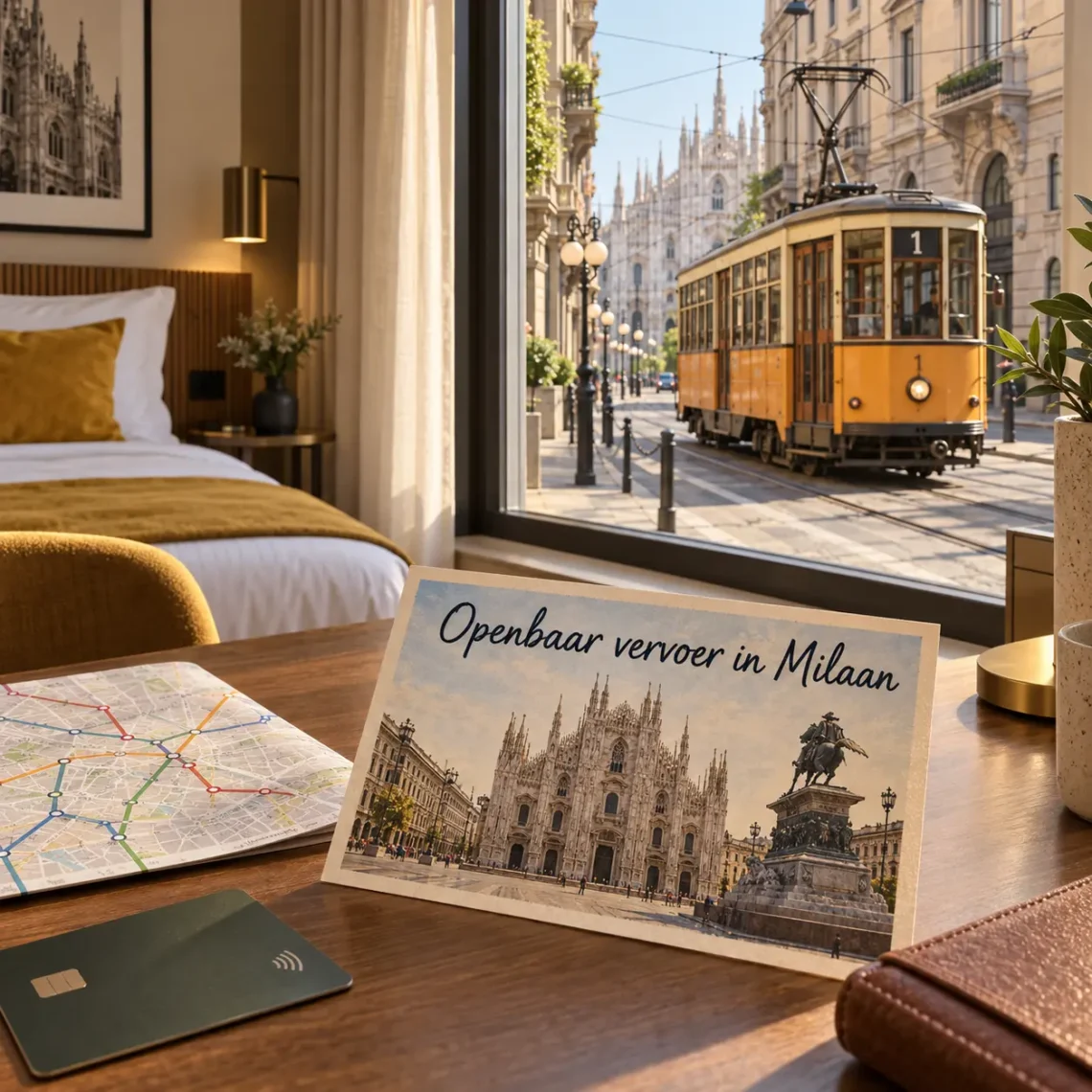
Public Transportation in Milan: Metro, Tram 1, Tickets, and Contactless Payment
Milan’s public transportation was easier to use than we expected. You can walk to many places in the center, but the metro and trams are fast and affordable for longer distances. The biggest convenience is that ATM services usually accept a contactless debit card, credit card, phone, or smartwatch. There is no need to decipher a ticket machine, and the system calculates the appropriate fare automatically.
Our favorite ride was on historic tram 1. It uses the same regular transit system, but you may board a classic tram with a wooden interior that passes several well-known parts of Milan. This guide covers both the route and the payment rules, including mistakes that can lead to extra charges.
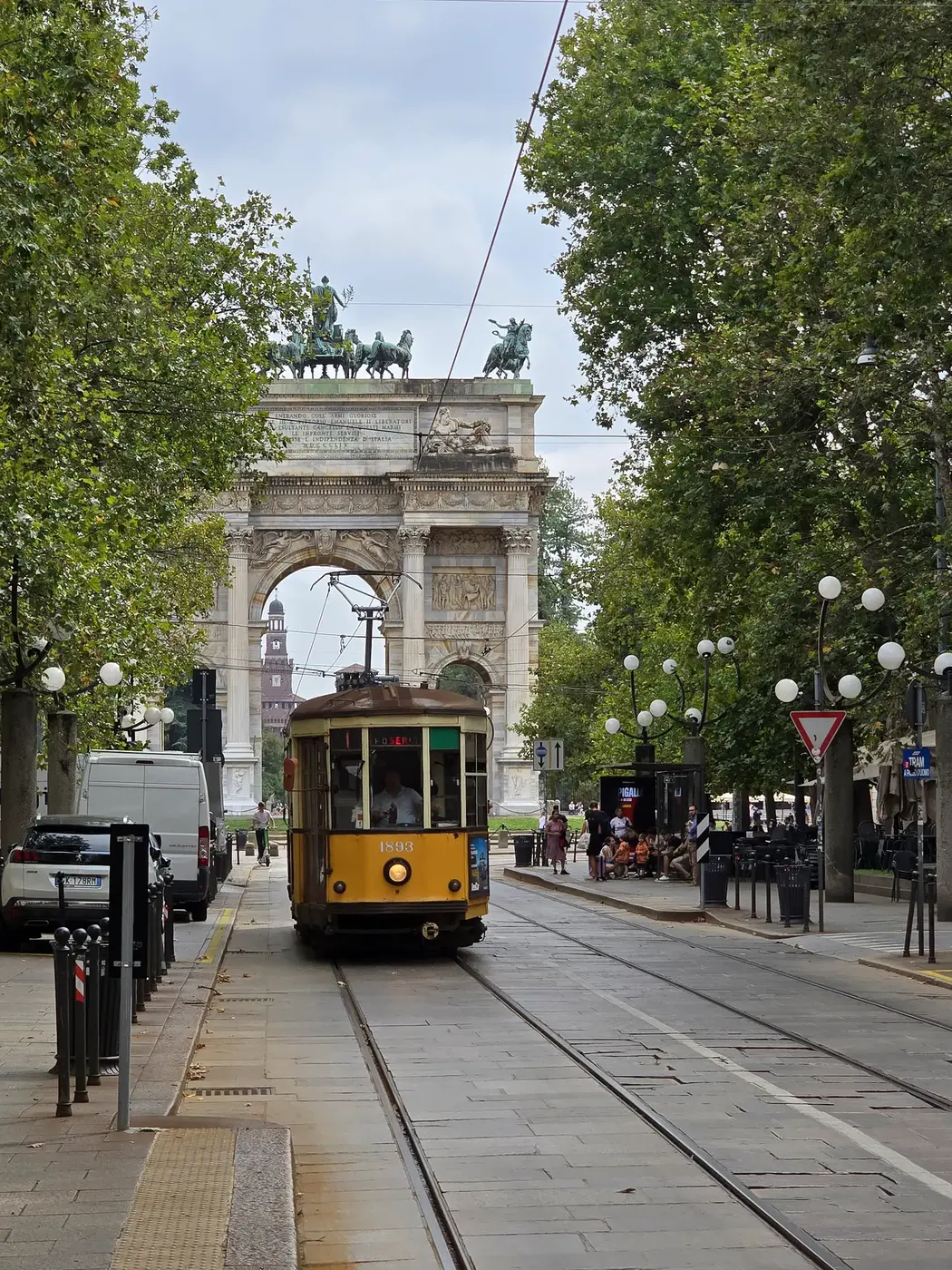
Milan’s public transportation network
ATM operates the city’s metro, trams, buses, and trolleybuses. Metro lines are identified by number and color: M1 red, M2 green, M3 yellow, M4 blue, and M5 lilac. The metro is generally the fastest way to move between neighborhoods. Trams are slower, but they show you more of the city and sometimes stop closer to your destination.
- M1: serves Duomo, Cairoli, Cadorna, and Rho Fieramilano, among other stops.
- M2: serves Centrale, Garibaldi, Cadorna, and Porta Genova.
- M3: connects Centrale and Duomo, among other stations.
- M4: connects Linate Airport with the city and intersects M1 at San Babila.
- M5: useful for Garibaldi and San Siro.
Use the official ATM app for current routes, wait times, disruptions, and accessible stations. Google Maps is useful for initial planning, but the operator’s information should take priority during construction or service changes.
Mobile data is helpful for route planners, digital tickets, and live travel information. First check whether Italy is included in your mobile plan. If it is not, or if you prefer a separate data plan, you can arrange an eSIM before your trip.
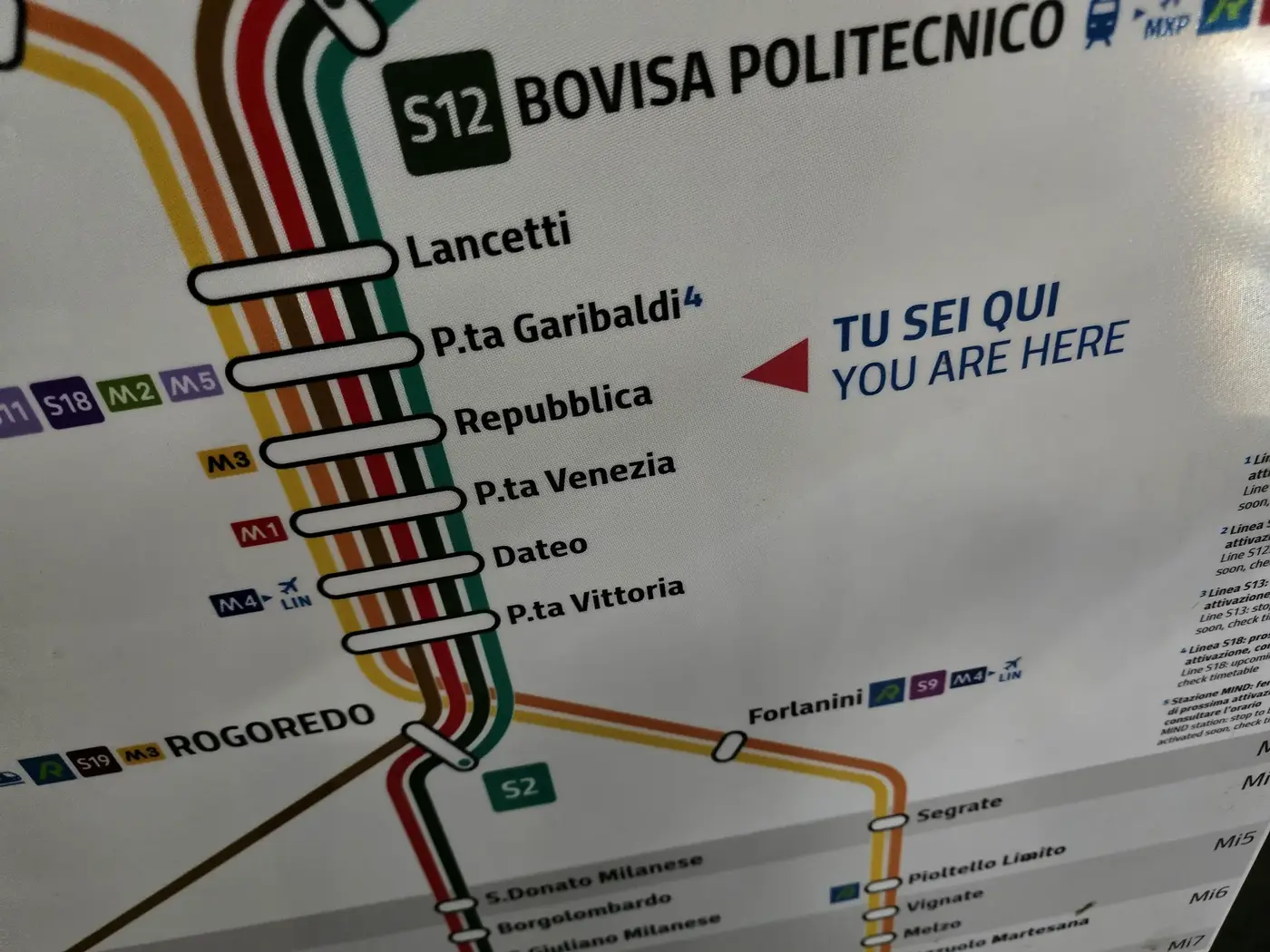
Contactless payment by debit or credit card
Equipped ATM readers accept contactless cards from networks including Mastercard, Visa, American Express, Maestro, and VPay. Mobile wallets such as Apple Pay and Samsung Pay also work when linked to an accepted card. You do not need to register in advance, and ATM does not charge a separate commission for contactless payment.
How it works on the metro
- Tap your card or device at the contactless reader on the entry gate.
- Keep the same card or device accessible.
- Tap out when leaving the metro, even if a gate is open.
- Do not switch to your phone during a transfer if you started with the physical card.
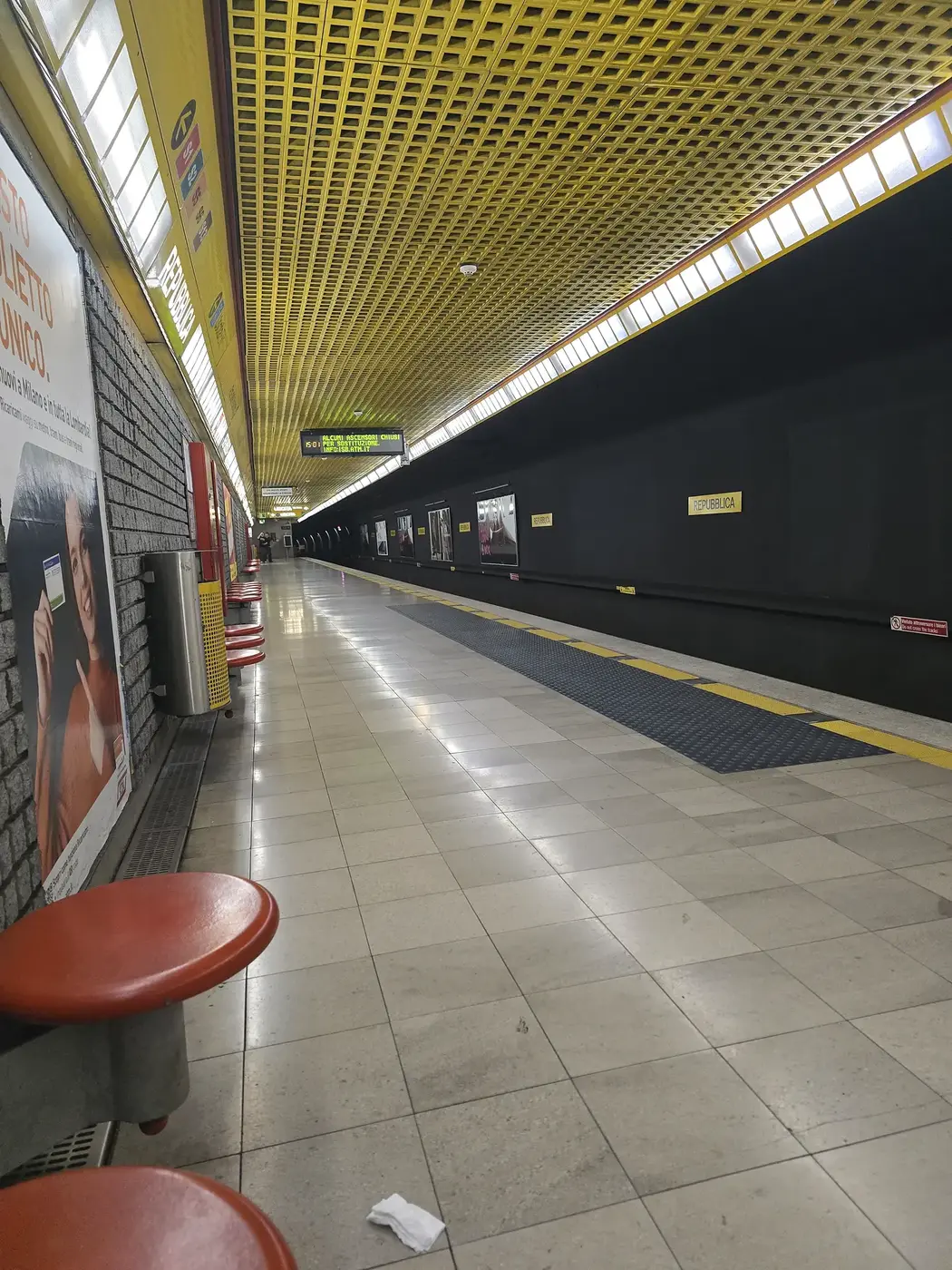
How it works on trams and buses
Within Milan, tap the reader when boarding. On most city trams and buses, you do not tap out at the end. Checking out is required on some routes that leave the city or cross multiple fare zones. ATM currently lists routes including 121, 130, 140, 165, 166, and 327. When traveling beyond the urban zone, check the current instructions on the reader and in the ATM app.
Four rules that prevent extra charges
- One traveler per card: two people cannot travel one after the other using the same card.
- Use the same method: a physical card, phone, and smartwatch count as different payment methods, even if linked to the same account.
- Always tap out of the metro: even when the gate is open.
- No automatic validity on trains: contactless ATM payment is not a Trenord or S-line ticket.
During an inspection, present the card or device you used to tap in. The transaction may not appear on your statement until several days later, often with a description such as “Cless Ticket ATM Milano.”
Milan ticket prices
| Mi1–Mi3 ticket | Price | Validity |
|---|---|---|
| Single ticket | €2.20 | 90 minutes from first validation |
| 24-hour ticket | €7.60 | 24 hours from first validation |
| 3-day ticket | €15.50 | Three consecutive service days, through the end of service on day three |
| 10-ride ticket | €19.50 | Ten separate rides; cannot be shared simultaneously |
With contactless travel, one ride costs the regular fare. Transfers within the validity period do not automatically create a new fare each time. From the fourth paid ride during the same daily period, the system applies the daily rate, so travel within Mi1–Mi3 will not exceed the current €7.60 cap.
Contactless or a travel pass?
For one person using only ATM, contactless payment is usually the simplest choice because you do not need to predict the number of rides. A paper or digital three-day pass can be better value if you travel frequently for three days and use services where contactless payment does not apply. Always check zones and validity.
Separate rules apply to children. Children under 14 travel free within the integrated STIBM area when they meet the conditions and can show identification. Read the current terms on ATM’s official website, especially if a child is traveling without an adult.
Historic tram 1 in Milan
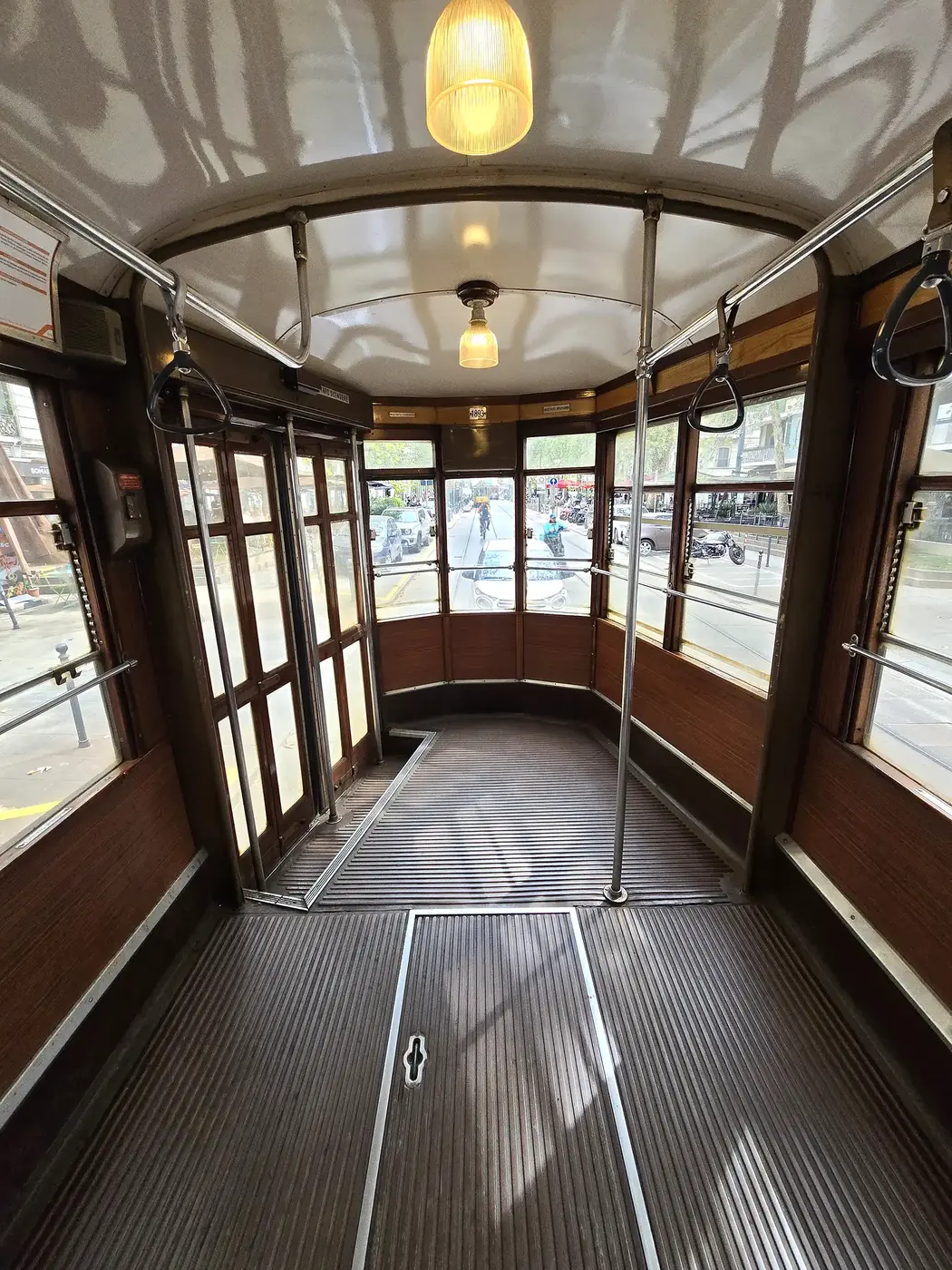
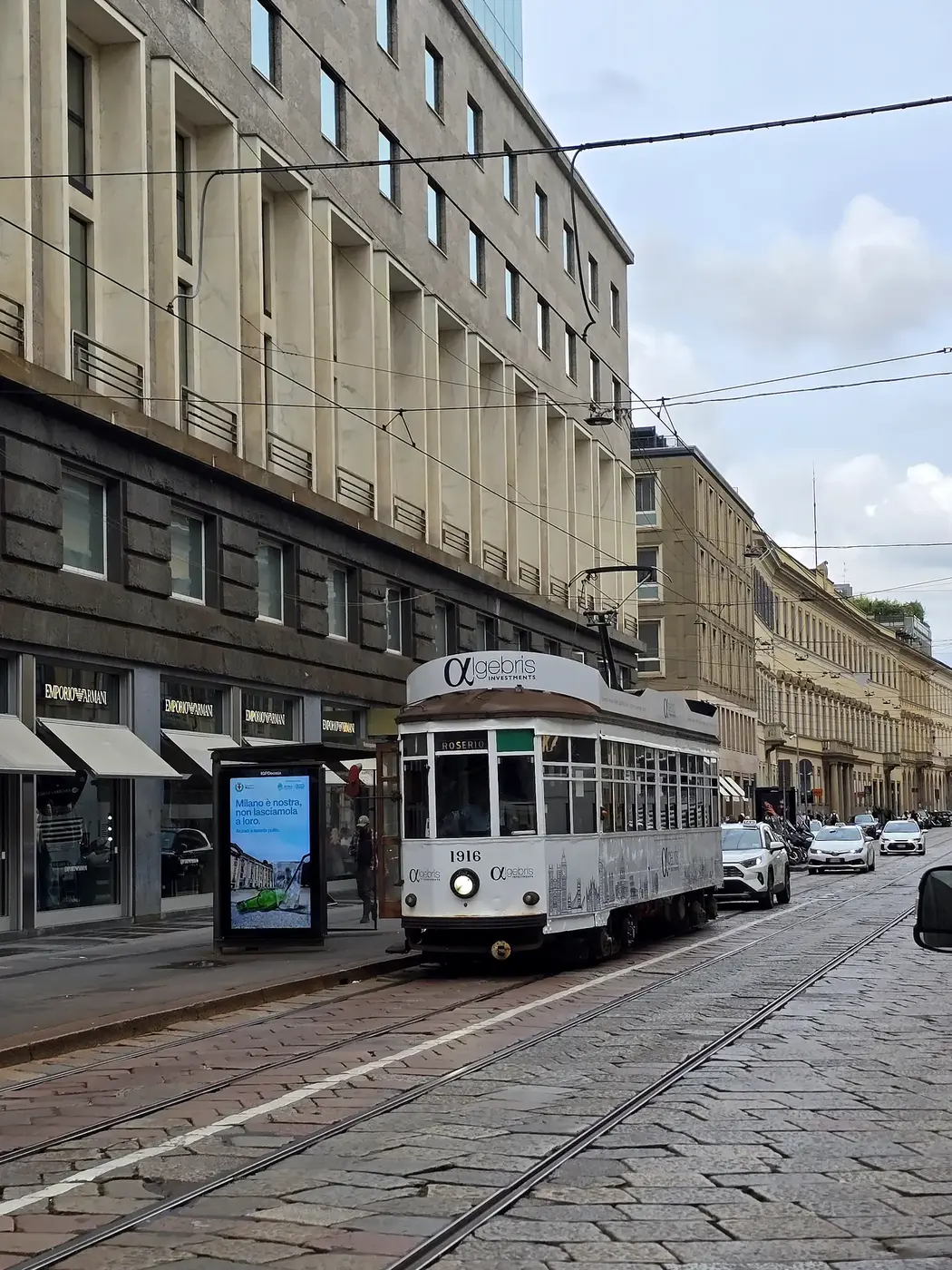
For us, tram 1 was more than transportation. When a classic Carrelli tram approaches, its rounded shape, warm color, and wooden interior immediately stand out. The design was developed in the late 1920s to carry more passengers through the narrow streets of a growing Milan. Nearly a century later, several cars still operate in regular service.
Where does line 1 go?
The standard route connects Greco Rovereto with Roserio/Ospedale Sacco. The full journey takes more than an hour and is unnecessary for most visitors. Its interesting central section passes or approaches:
- the area around Milano Centrale and Piazza Cavour;
- Piazza della Scala and the Duomo area;
- Cordusio and Cairoli;
- Castello Sforzesco;
- Parco Sempione and Arco della Pace;
- the elegant streets around Corso Sempione.
A scenic visitor-friendly section runs from the center via Cairoli and the castle to Arco della Pace. The large windows provide good city views and give your legs a rest after a day of walking. Do not expect a tour or audio guide: this remains public transportation, shared with local passengers.
Is a vintage tram guaranteed?
No. Historic cars often operate on line 1, but ATM can use other vehicles. Construction may also cause temporary detours or a shortened route. Do not build a tight reservation schedule around one particular tram; treat the ride as an enjoyable bonus within your itinerary.
From Milan’s airports to the center
Linate
Metro line M4 connects Linate directly with the city and is usually the simplest, least expensive transfer. At San Babila, transfer to M1 or walk toward the Duomo. The regular ATM fare applies on M4 within the appropriate zones.
Malpensa
The Malpensa Express travels to Milano Centrale and Milano Cadorna. A one-way ticket currently costs about €15. Choose the station that best fits your hotel; Centrale is not automatically the right option for everyone. This train requires a separate ticket rather than an ATM contactless tap.
Bergamo Orio al Serio
Shuttle buses connect Bergamo Airport with Milano Centrale. Travel time varies significantly with traffic. Allow a generous margin on the return journey, especially during rush hour.
Night transportation and safety
Night buses serve several corridors after the metro stops running. Check the current night map and departure times in the ATM app. We felt safe on the routes we used, but paid extra attention to our phones and wallets in crowded metros and trams. Busy doors and escalators are familiar opportunities for pickpockets.
- Do not keep valuables in an open pants or coat pocket.
- Hold your bag in front of you in crowded vehicles.
- At night, choose a car or vehicle with other passengers.
- Check the final destination on the platform, not only the line color.
- Keep enough battery power for navigation and mobile payment.
Our conclusion
You do not need a rental car for a Milan city break. Walking reveals the most enjoyable side streets and coffee bars, the metro covers longer distances quickly, and tram 1 adds character to the trip. Paying contactlessly with one debit or credit card per person made travel especially easy for us. As long as you consistently use the same card and always tap out of the metro, there is very little need to think about tickets.
A rental car is mainly useful if you plan to continue through Italy after Milan.
Check the current ATM contactless rules or follow our three-day Milan itinerary.
Some links on this page are affiliate links. If you book through one of them, we may earn a small commission at no extra cost to you. This helps support our website.
Discover more from DutchieWorldTravel
Subscribe to get the latest posts sent to your email.


3 Comments
Pingback:
Pingback:
Pingback: