
Arikok National Park Aruba – Complete Guide to Conchi, Caves & 4×4
Arikok National Park is one of the places that shows just how much more Aruba has to offer beyond white-sand beaches and turquoise water. As soon as you enter the park, the scenery changes completely: cacti, dry hills, rugged coastline, caves and unpaved tracks replace the resort area.
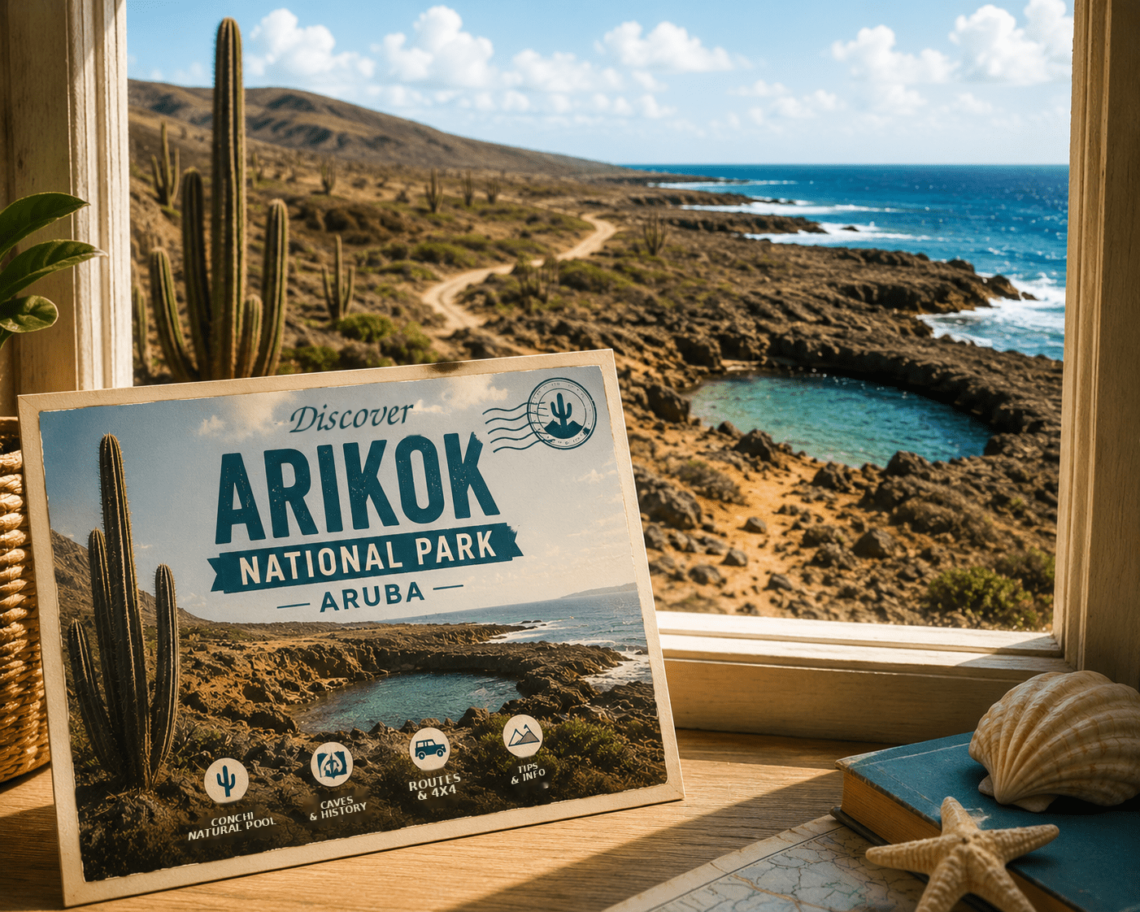
The park covers almost 20% of Aruba and protects an important part of the island’s natural, geological and cultural heritage. Highlights include Natural Pool (Conchi), Quadirikiri Cave, Fontein Cave, Dos Playa and Boca Prins.
This guide will help you decide what to see in Arikok, how much time to allow, whether a regular rental car is suitable, when you need a 4×4 and when a guided tour makes more sense. For more inspiration beyond the park, see my guide to the best things to do in Aruba. You can also compare where to stay in Aruba if you want easy access to Arikok and the rest of the island.
💡 My advice in short: if your priority is the caves, viewpoints and easily accessible parts of Arikok, a regular rental car can take you to many places. If Natural Pool (Conchi) is high on your list, choose a suitable 4×4 or – especially if you have little off-road driving experience – book a guided 4×4 tour.
🌵 Why visit Arikok National Park?
Many visitors come to Aruba for Eagle Beach, Palm Beach and Baby Beach. And for good reason. But Arikok offers a completely different side of the island, with arid landscapes, a wild north-eastern coastline and Aruba’s geological history all around you.
- 🌊 the famous Natural Pool (Conchi);
- 🕳️ Quadirikiri Cave and Fontein Cave;
- 🏖️ the rugged coastline around Dos Playa and Boca Prins;
- 🌵 cacti, dry riverbeds and typical Aruban landscapes;
- 🪨 lava, limestone and quartz diorite formations;
- 🥾 hiking trails through scenery that feels worlds away from the resort area;
- 📜 traces of Aruba’s early inhabitants and historic rock art.
🌴 Still planning your Aruba trip? Read my complete Aruba travel guide with practical tips and experiences from six months on the island.
ℹ️ If you book through an affiliate link, you support our website, and we may earn a commission, at no extra cost to you.
Want to fit Arikok naturally into the rest of your vacation? See my 7-, 10-, or 14-day Aruba itinerary. To better understand the park’s landscape and cultural sites, read more about the history of Aruba.
🗺️ What should you see in Arikok National Park?
1. Natural Pool (Conchi)
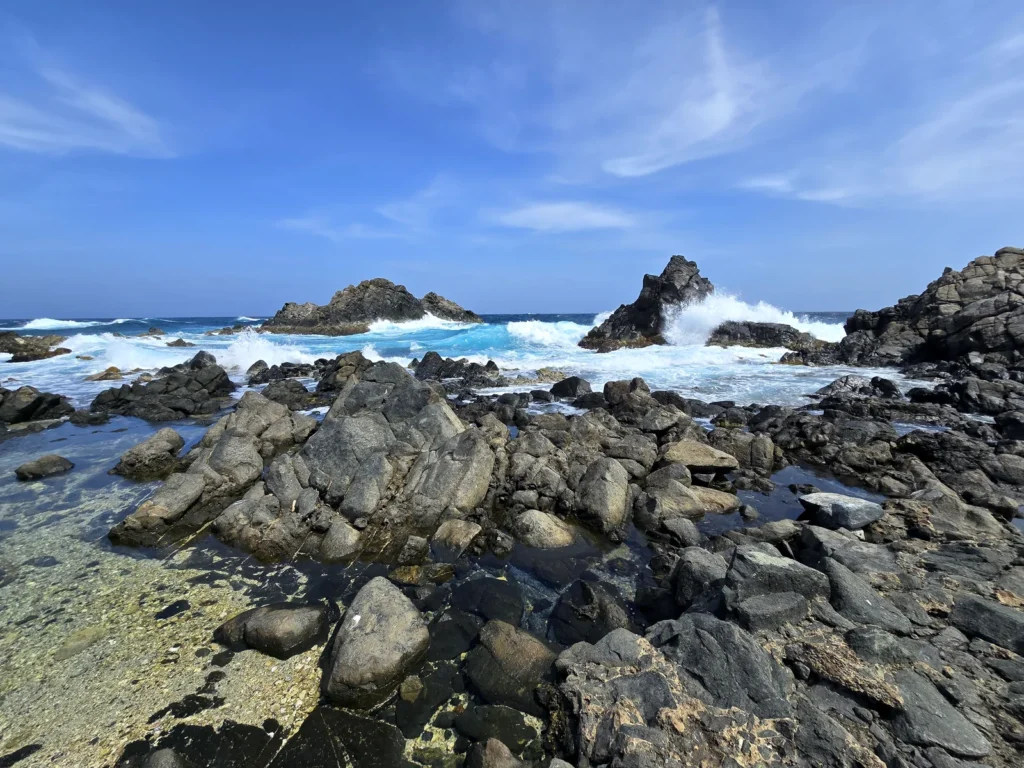
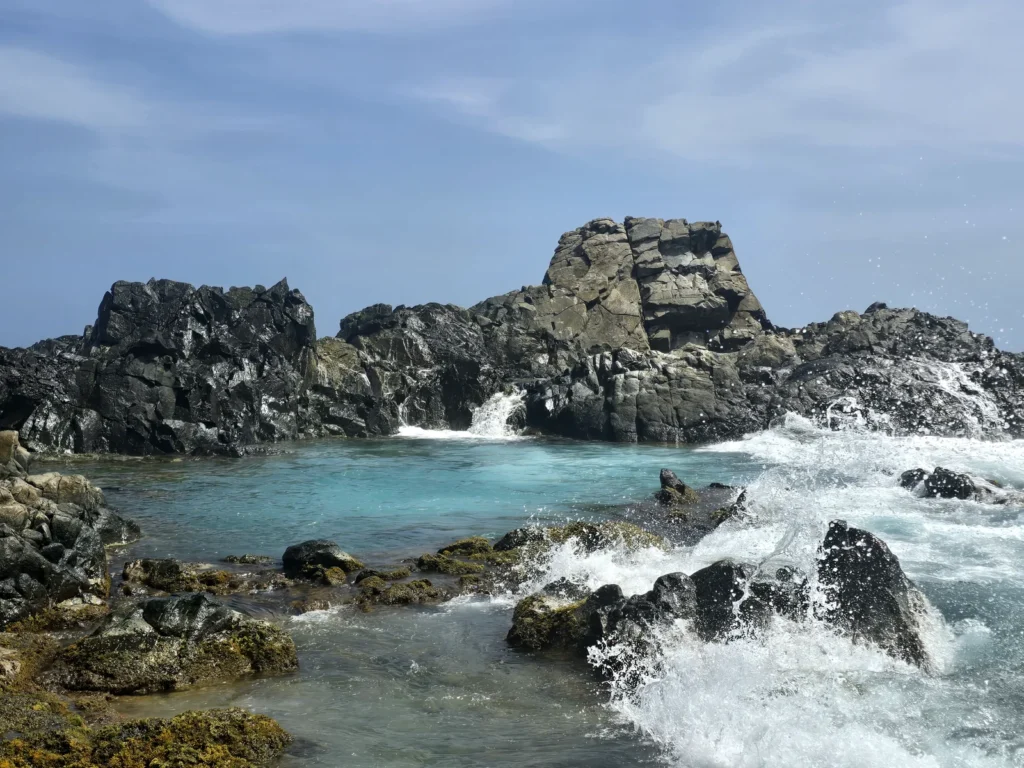
The Natural Pool, locally known as Conchi, is probably Arikok’s best-known attraction. Volcanic rock forms a natural basin along the wild coastline. The ocean outside can be powerful and dramatic, while the water inside the rock formation can be considerably calmer when conditions are good.
Its remote location is part of Conchi’s appeal, but it also makes getting there more challenging. A regular passenger car is not suitable for the rough route to Natural Pool. Options include a suitable 4×4, an organized off-road tour, horseback riding or hiking.
🌊 Ask about conditions when you enter: if you hope to swim at Conchi, check with the entrance staff or a park ranger about current conditions at Natural Pool. They can advise whether entering the water is considered safe at that time. Sea conditions can change during the day, so always follow the rangers’ instructions on site.
If swimming is allowed and conditions are calm, bring your snorkelling gear with you. Inside the natural pool you can often see fish between and around the rocks. The contrast between the rough ocean outside and the marine life inside Natural Pool makes this place even more special.
🤿 My tip: pack a mask and snorkel, but decide whether to swim only after you arrive. Even when Conchi looks calm, waves can break over the rocks. If you are unsure, stay out of the water and ask a ranger for advice.
🚙 Drive to Conchi yourself or book a tour?
If you have little experience on rough off-road tracks, Conchi is not the place to test your skills in a rental car. A guided 4×4 tour is the easier option: someone else handles the driving and you will often learn more about the park along the way.
2. Quadirikiri Cave
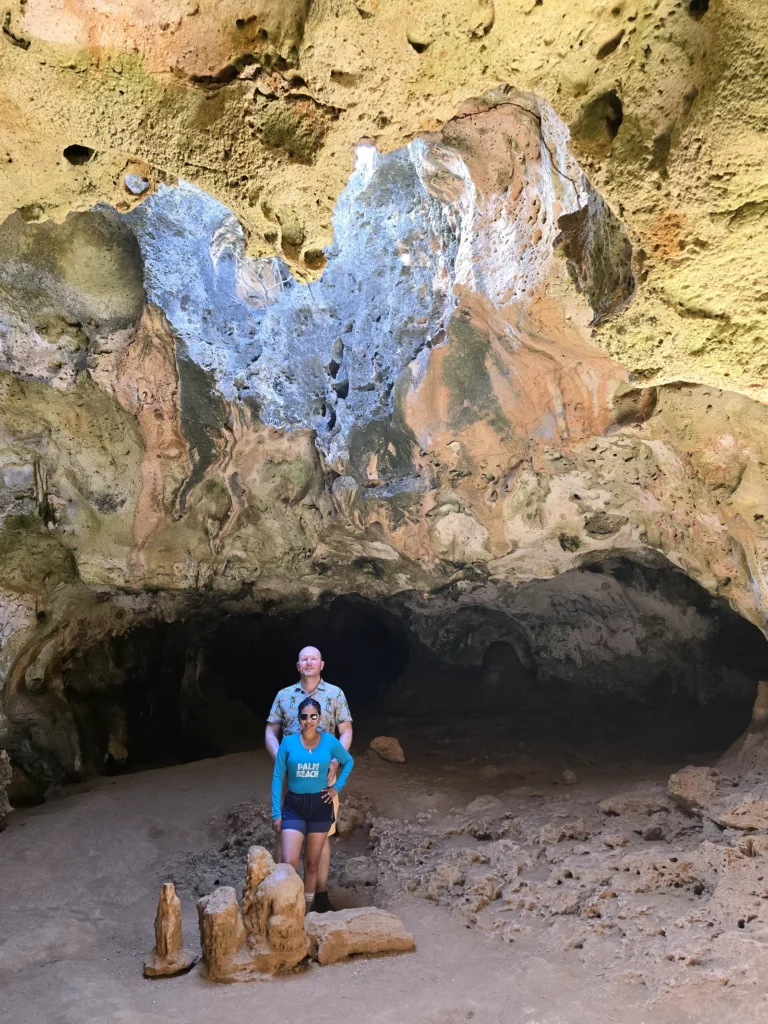
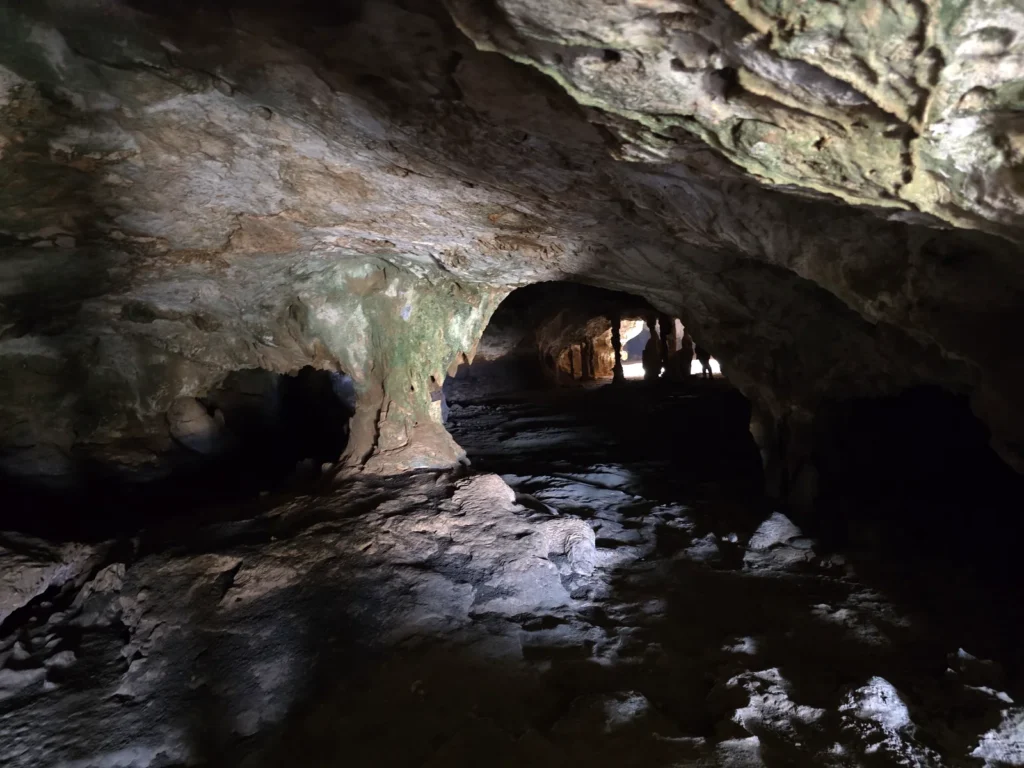
Quadirikiri Cave is best known for its chambers where sunlight enters through openings in the ceiling. The beams of light create a striking contrast with the dark limestone, while bats inhabit the darker sections of the cave.
Take your time and look carefully around the cave. From the right angle, you can see a natural opening between the rocks in the shape of a heart. This is one of the nicest places in the cave for a distinctive photo.
❤️ Photo tip: look for the heart-shaped opening inside Quadirikiri Cave. If you cannot find it, ask a park ranger. They know the cave well and can point you towards the right spot and angle.
There is much more to the cave than this photo spot. Take in the unusual rock formations and natural light, and if a ranger is present, ask about the cave and its history.
3. Fontein Cave
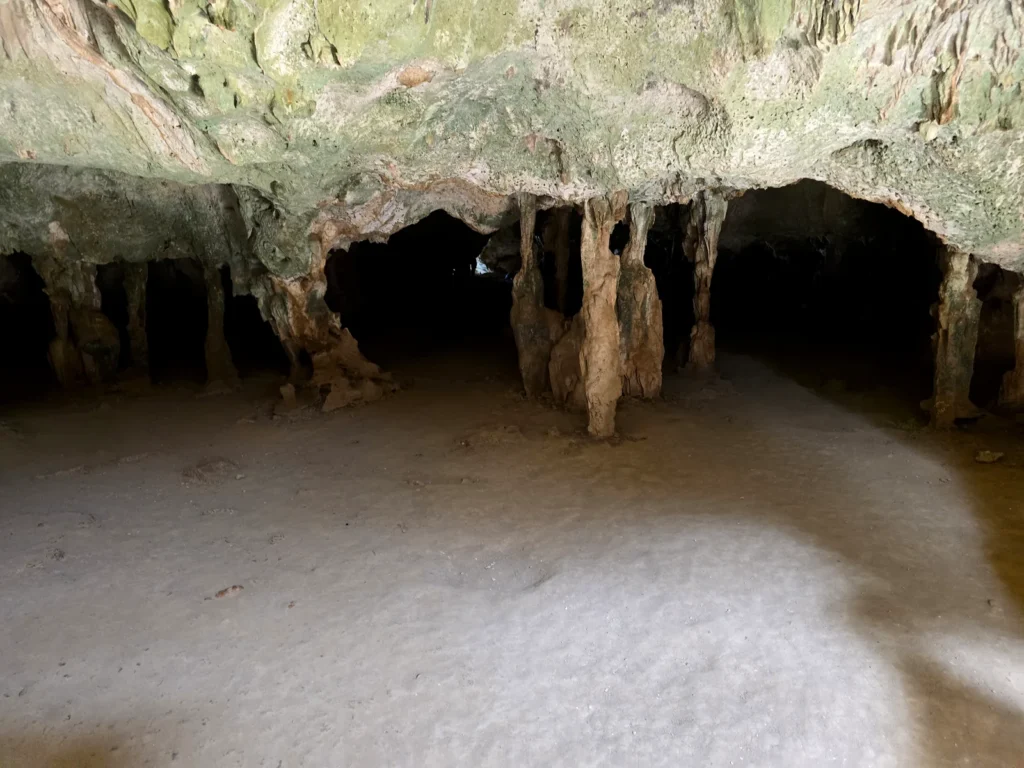
Fontein Cave is smaller, but culturally significant because of the ancient drawings and engravings preserved inside. The cave is warm and humid, and you may encounter bats and other small animals.
Do not touch the drawings or rock formations. These sites are fragile, and protecting them is far more important than getting one perfect photo.
4. Dos Playa
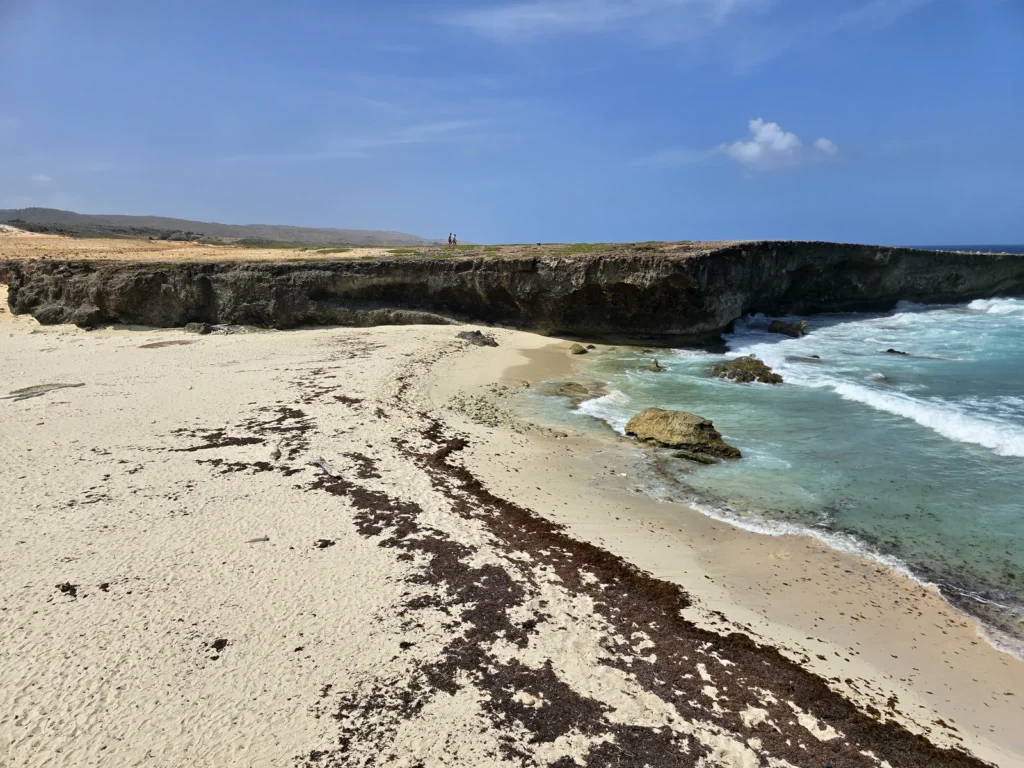
Dos Playa is a great place to experience Aruba’s wilder side. Do not expect the calm water and beach chairs of Palm Beach; this is a dramatic, windswept coastline with powerful waves and a much more untouched feel.
Think of Dos Playa primarily as a scenic and photography stop. The sea on this side of Aruba can be strong and unpredictable.
5. Boca Prins
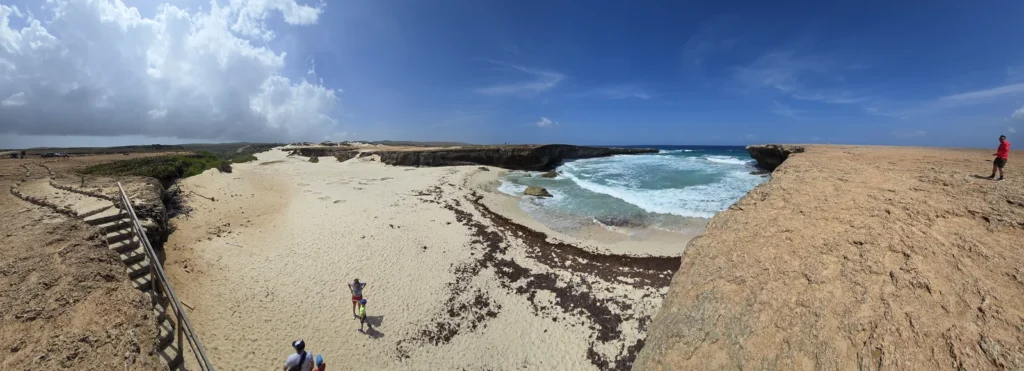
Boca Prins is another worthwhile stop for seeing the contrast between Aruba’s dry interior and wild ocean. Come for the scenery, photographs and coastal atmosphere rather than assuming it is a swimming beach.
🏖️ Looking for beaches that are better suited to an actual beach day? Read my guide to the best beaches in Aruba.
🚗 Visiting Arikok with a regular rental car or a 4×4?
Planning how to reach the park and explore the rest of the island? My complete guide to getting around Aruba compares regular rental cars, 4x4s, Arubus, taxis and transfers.
This is probably one of the most important questions when planning a visit to Arikok. You do not automatically need a 4×4 for the paved main route, but ground clearance matters. There are deep drainage channels across parts of the paved road, so very low cars can run into problems and may be refused entry. For the unpaved routes you need a suitable 4×4 vehicle.
🏍️ Important: ATVs and UTVs are not allowed in Arikok. Because of their impact on nature and the landscape, ATVs, UTVs and motorbikes are prohibited in protected nature areas managed by the Aruba Conservation Foundation. To explore Arikok’s rougher unpaved sections, use a suitable 4×4 or join an organized Jeep/4×4 tour.
A regular rental car can work well if you:
- plan to stay on the paved main route and easily accessible parts of the park, provided your car has enough ground clearance;
- mainly want to visit the caves and viewpoints;
- skip Conchi or book a separate tour to reach it;
- want to combine Arikok with other paved routes around Aruba.
A 4×4 or tour is the better choice if you:
- want to reach Natural Pool (Conchi) via the rough unpaved route;
- want to experience more of the park’s adventurous side;
- prefer not to navigate or drive yourself;
- would like information and context from a local guide.
Always check your rental company’s terms before driving yourself. Just because a vehicle can technically handle a route does not mean your rental agreement allows off-road use or covers any resulting damage.
🥾 Hiking in Arikok
Arikok is rewarding on foot too, but do not underestimate the combination of sun, wind, heat and limited shade. One well-known trail runs from the Visitor Center towards Natural Pool. Official tourism information lists the return route at roughly 7.7 km (4.8 miles) and an average duration of around 2 hours 40 minutes.
Start early, carry plenty of water and wear shoes with good grip. For a longer hike, I would avoid setting off around midday.
- 🥾 sturdy, comfortable shoes;
- 💧 plenty of drinking water for your planned route;
- 🧢 a cap or hat;
- ☀️ sun protection;
- 📱 a fully charged phone;
- 🗺️ route information before you set off.
⏰ Opening hours, entrance fee and Visitor Center
Current information from the Aruba Conservation Foundation lists the Visitor Center at San Fuego as open daily from 8:00 am to 3:30 pm. The entrance at Vader Piet is listed as open from 8:30 am to 3:00 pm. Hours can change, so check shortly before your visit.
A conservation pass is required to enter. The latest official ACF information I could verify lists the price at US$22 for non-residents; children under 17 were admitted free under that pricing structure. Prices can change, so check the current price shortly before visiting.
Entrance fees help fund conservation, protection and education. That makes this one of those admission fees where your visit also contributes to protecting the place you have come to see.
👉 Check the latest information from the Aruba Conservation Foundation.
🕗 Half a day or a full day in Arikok?
How much time you need mainly depends on whether Conchi and hiking are part of your plans. A few key stops can fit into half a day. If you want to combine the caves, coastline, viewpoints and Natural Pool without rushing, allow most of the day.
Example: half day without Conchi
- Start early at the San Fuego Visitor Center.
- Drive through the park and stop at viewpoints along the way.
- Visit Quadirikiri Cave.
- Visit Fontein Cave.
- Continue towards Boca Prins/Dos Playa if time and your route allow.
Example: adventurous day including Conchi
- Start early.
- Visit Natural Pool with a suitable 4×4/tour or as part of a planned hike.
- Then allow time for the caves.
- Explore the rugged coast around Dos Playa/Boca Prins.
- Finish the day outside the park with a beach stop or dinner.
Want to swim after visiting Arikok? Choose a beach that is actually suited to swimming rather than simply entering the water along the rugged east coast. My guide to Aruba’s best beaches can help you choose.
🎒 What should you bring to Arikok?
- 💧 plenty of water;
- ☀️ sunscreen and sun protection;
- 🧢 a cap or hat;
- 🥾 good footwear, especially for hiking and Conchi;
- 👙 swimwear if Natural Pool is part of your plans and swimming is considered safe;
- 👟 water shoes can be useful on rocky surfaces;
- 📷 camera or phone;
- 🔋 power bank for a long day;
- 🍌 snacks if needed;
- 🗑️ take all rubbish with you and leave nothing behind.
⚠️ Safety in Arikok
Arikok is not an attraction with facilities around every corner. That is part of its appeal, but it also means you need to come prepared.
- Follow park ranger instructions and signs.
- Do not swim when conditions at Conchi are unsafe.
- Stay out of closed or restricted areas.
- Do not touch rock art, wildlife or fragile formations.
- Do not feed wildlife.
- Take heat and dehydration seriously.
- Start longer hikes early.
- Check in advance whether your rental car agreement and insurance allow your planned route.
👨👩👧 Who is Arikok best suited for?
Arikok is especially rewarding if you enjoy nature, photography, hiking, geology or a little adventure. You do not need to be a serious hiker, though: several highlights can also be reached as part of a driving route or organized excursion.
Not every stop is suitable for visitors with limited mobility. Natural Pool, for example, involves uneven terrain and steep natural steps. Check in advance which locations match your mobility needs.
🚙 Explore Arikok independently or take a tour?
Driving yourself is a good fit if you value freedom, enjoy stopping for photos at your own pace and mainly want to explore the more accessible parts of the park.
A tour is a better fit if Natural Pool is a priority, you have little off-road driving experience or you would like a guide to explain the park while someone else handles the route and vehicle.
I would not say that one option is always better. The best choice depends on what you actually want to see in Arikok.
❓ Frequently asked questions about Arikok National Park
Do you need a 4×4 for Arikok?
Not for the paved main route, but very low cars are not always suitable because of the deep drainage channels. You need a suitable 4×4 for the unpaved routes, including the rough route towards Natural Pool (Conchi). Always check which routes your rental company permits.
Can you reach Natural Pool in a regular rental car?
No. Official Aruba information states that Natural Pool is not accessible by regular car because of the rough terrain. A 4×4 tour is a sensible option if you are not an experienced off-road driver.
How much time do you need for Arikok?
Allow around half a day for a selection of the main sights. If you want to combine Natural Pool, the caves, coastline and several stops at a relaxed pace, set aside most of the day.
Can you swim in Natural Pool?
It depends on conditions. Waves can break over the rocks and conditions may change quickly. Always follow current ranger advice and stay out of the water when swimming is discouraged.
How much does Arikok National Park cost?
The latest official pricing checked for this guide lists admission at US$22 for non-residents, with children under 17 admitted free. Always check the current conservation pass with the Aruba Conservation Foundation before visiting.
What are Arikok National Park’s opening hours?
The Aruba Conservation Foundation currently lists San Fuego as open daily from 8:00 am–3:30 pm and Vader Piet from 8:30 am–3:00 pm. Check shortly before you leave, as opening hours can change.
Is Arikok suitable for children?
Many families can comfortably visit parts of the park, but adapt your route to the children’s age, the heat and everyone’s mobility. Natural Pool and longer hiking trails require more effort than visiting a few accessible viewpoints and caves.
✨ My advice for visiting Arikok
If you only know Aruba from Palm Beach and Eagle Beach, Arikok can feel like a completely different island. The contrast of cacti, caves, rugged coastline and blue ocean is exactly why I think the park deserves a place in an Aruba itinerary.
I would make one decision before you go: is Conchi a must for you? If it is, arrange suitable transport or a tour in advance. If not, you can build an excellent day around the caves, landscapes and coastline without taking on a demanding off-road route.
🌴 Continue planning your Aruba trip
🚙 Browse Arikok and Jeep tours →
🚗 Compare rental cars with Sunny Cars →
🏨 Compare Aruba hotels with Expedia →
✈️ Browse Aruba holidays with TUI →
🌴 Planning more of your trip? Return to my complete Aruba travel guide or read my guide to the best beaches in Aruba.
Discover more from DutchieWorldTravel
Subscribe to get the latest posts sent to your email.





4 Comments
Pingback:
Pingback:
Pingback:
Pingback: