
Milan Travel Guide: Our Tips for a Complete City Break
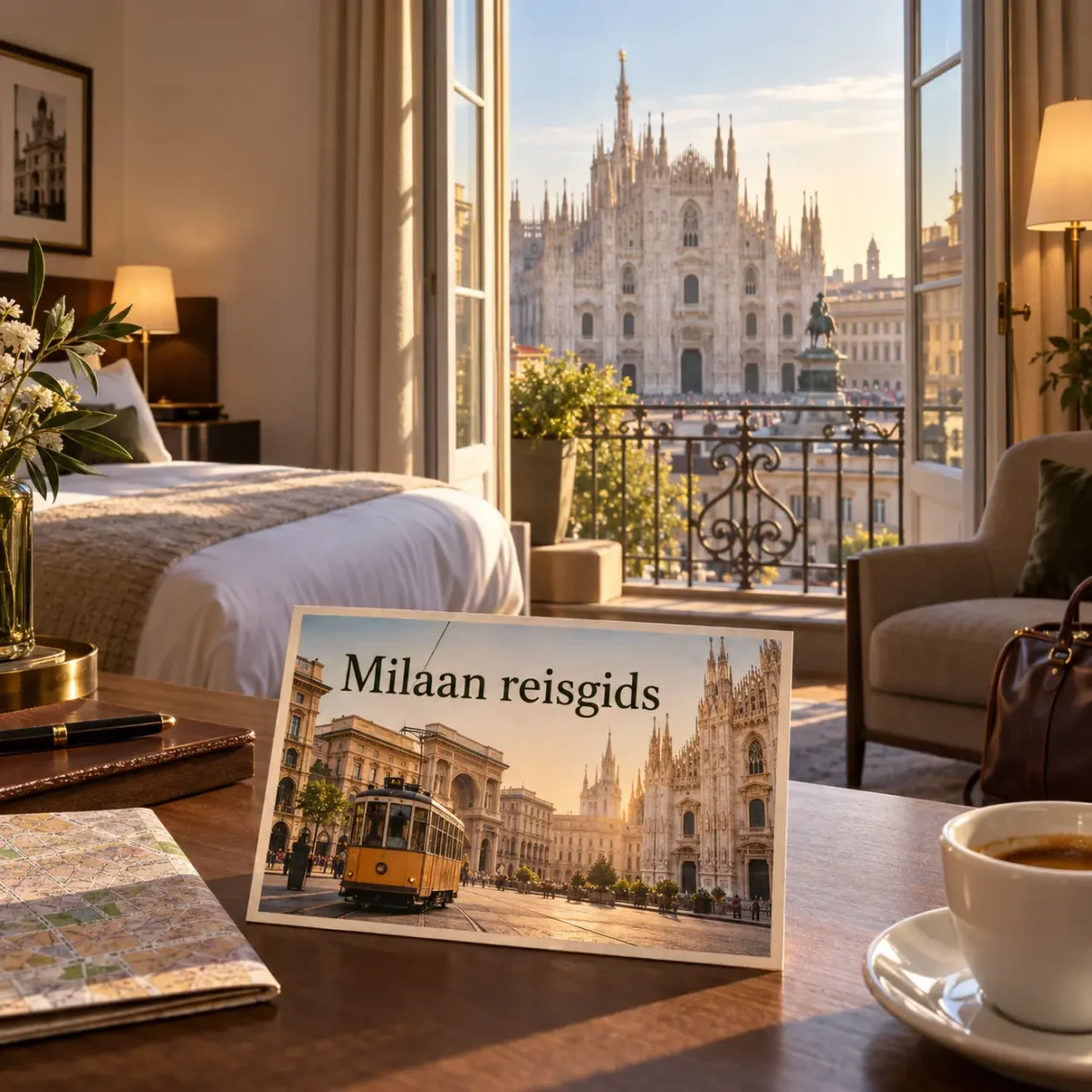
Milan was best known to us as Italy’s capital of fashion and design. After spending a few days in the city, we discovered that this image tells only a small part of the story. Beyond the famous shopping streets, Milan has remarkable churches, vintage trams, quiet courtyards, green parks, and inviting side streets where it is easy to linger over an espresso. In this Milan travel guide, we share our own experience along with the practical information you need to plan a well-balanced city break.
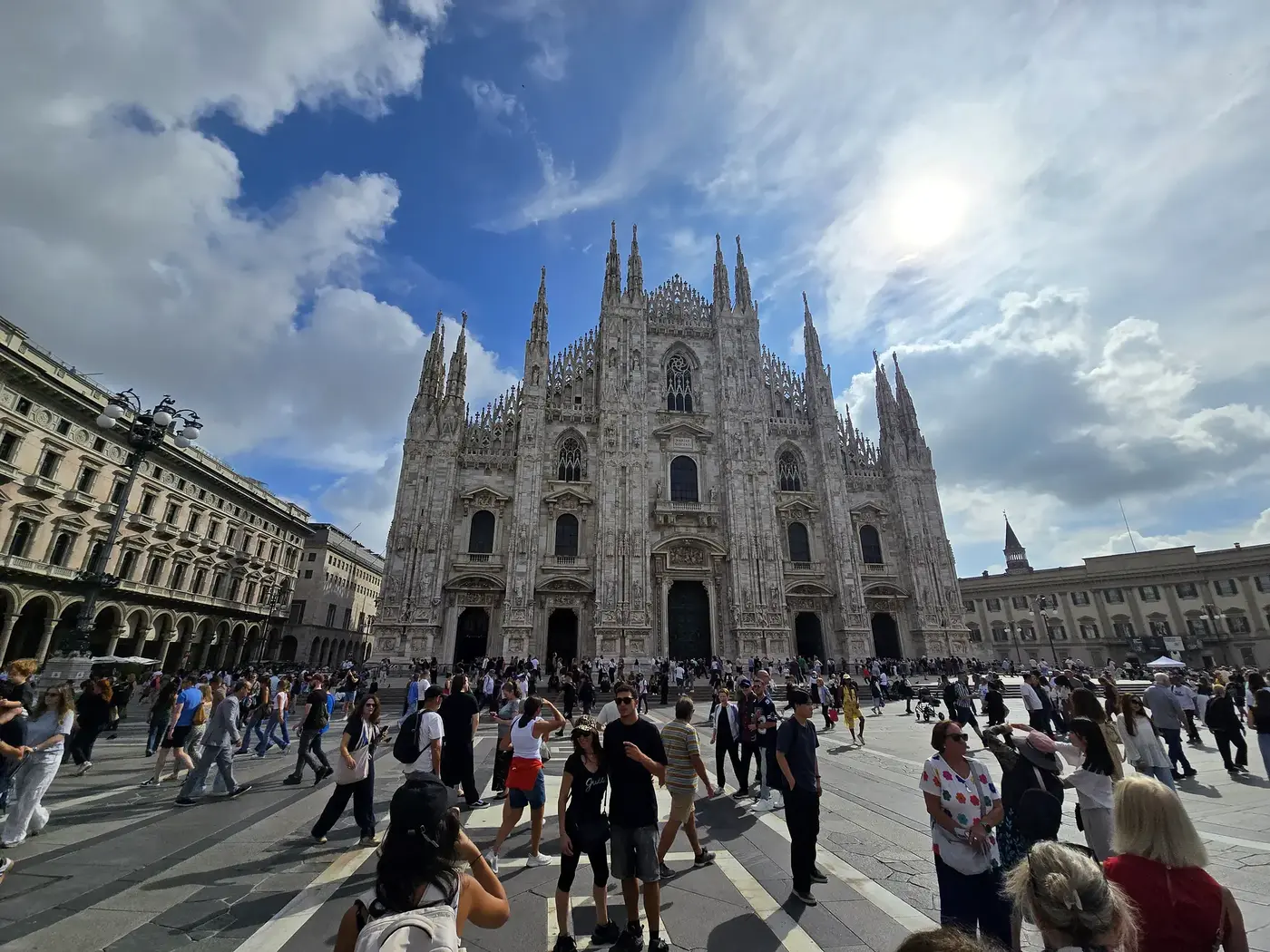
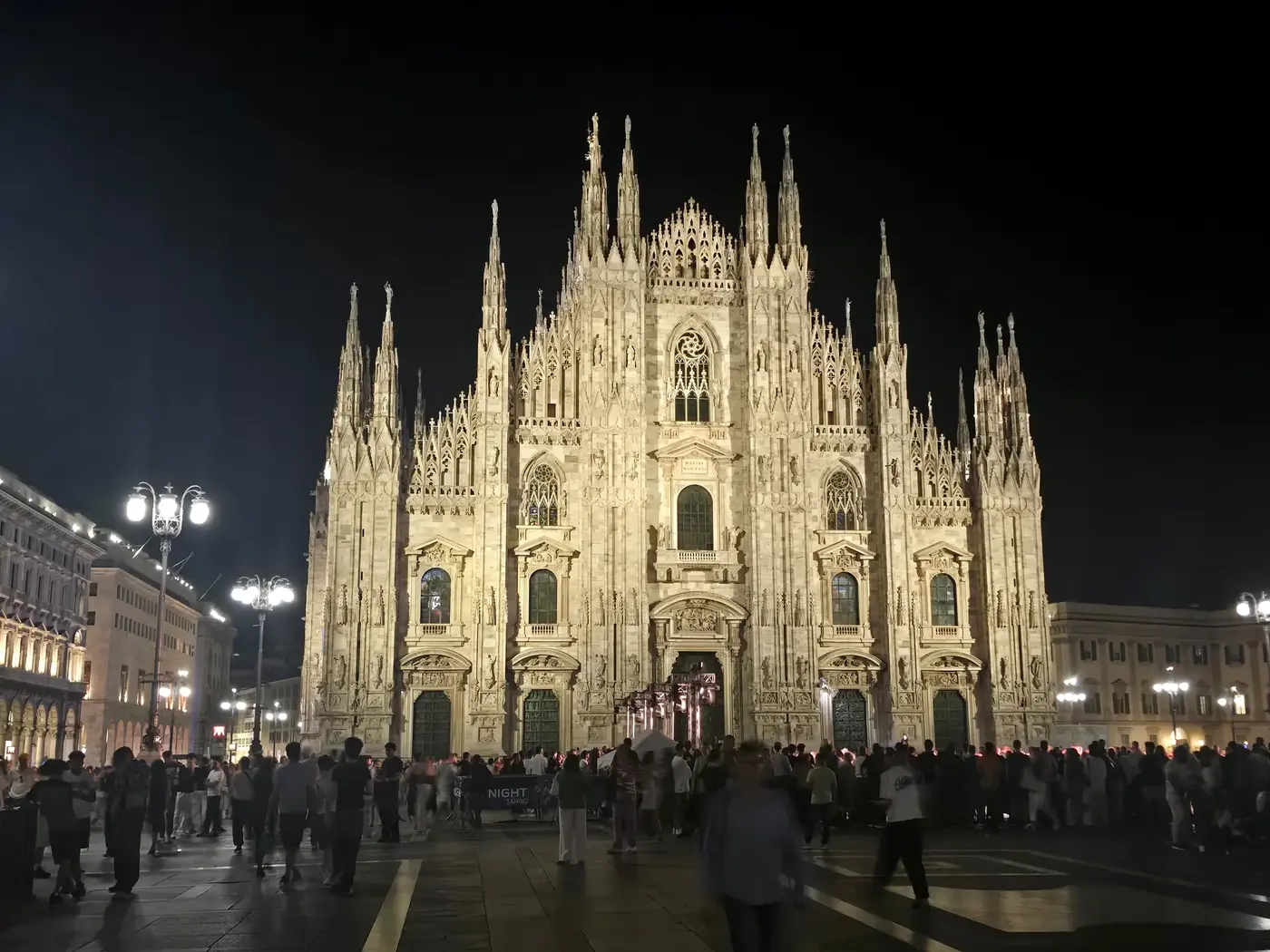
The Duomo is undoubtedly Milan’s most recognizable landmark, but what impressed us most was the variety. One moment we were surrounded by crowds on Piazza del Duomo; not long afterward, we were riding a wooden tram from another era past Castello Sforzesco and Arco della Pace. Step away from the main avenues now and then, and you will also find picturesque lanes, tiny coffee bars, and elegant facades that reveal a gentler side of the city.
Milan at a glance
| Topic | Our practical advice |
|---|---|
| Ideal trip length | Three full days for the main sights with enough time to explore at a relaxed pace |
| Best time to visit | Spring and early fall; summer can be hot and crowded |
| Getting around | Walk in the center and use the metro and trams for longer distances |
| Paying for public transit | Use a contactless debit card, credit card, phone, or smartwatch on ATM services |
| Do not miss | The Duomo, Galleria Vittorio Emanuele II, tram 1, Castello Sforzesco, and Sant’Ambrogio |
| Book ahead | The Last Supper and, preferably, the Duomo rooftop terraces |
| Budget | Many highlights are free; admission fees, restaurants, and accommodations make the biggest difference |
Why Milan surprised us
Milan feels different from Rome, Florence, or Venice. It does not present itself as an open-air museum on every corner. Modern office buildings stand between historic landmarks, and a quiet courtyard can suddenly appear behind a busy traffic artery. You sometimes have to look a little more closely, but that is exactly what made exploring Milan enjoyable for us.
The area around the Duomo is almost always busy. Head toward Brera, the streets around Via Madonnina and Via Fiori Chiari, or the route between the center and Castello Sforzesco, and the atmosphere quickly becomes more intimate. You will find boutiques, brick facades, and cafes with only a handful of tables. We loved leaving some space in our schedule and simply walking into a coffee bar when we felt like it.
How do you get to Milan?
Flying into Malpensa, Linate, or Bergamo
Milan is served by three airports. Malpensa is the largest international airport. The Malpensa Express connects it with stations including Milano Centrale and Milano Cadorna. At the time of writing, a one-way ticket costs about €15 and the journey takes roughly 40 to 60 minutes, depending on your destination. Always check the current fare and schedule before traveling.
Linate is closest to the city. Metro line M4 takes you directly toward the center, where you can connect to other lines. Bergamo Orio al Serio is popular with low-cost airlines, and several shuttle companies operate buses to Milano Centrale. When comparing flights, look beyond the airfare and include the transfer time and cost.
We do not recommend renting a car for Milan itself: the center is compact and public transportation works very well. If you plan to continue through Lombardy or the rest of Italy after your city break, renting a car at the airport or outside the center can be practical.
Mobile data and an eSIM for Italy
Before leaving, check whether Italy is included in your current mobile plan. If it is not, if your data allowance is limited, or if you prefer a separate travel plan, you can arrange an eSIM for Italy in advance.
Public transportation: easier than expected
We found Milan’s public transportation exceptionally easy to use. On metro trains, trams, buses, and trolleybuses operated by ATM, you can generally pay with a contactless debit or credit card. A phone or smartwatch linked to a payment card also works. Tap the same card or device at the reader, and the system calculates the appropriate fare.
On the metro, tap both in and out, even if a gate is open. On a city tram or bus, you normally tap when boarding. Always use the exact same payment method throughout your journey and when transferring. A physical card and the same card stored on your phone are treated as two different payment methods. One card also cannot be used simultaneously for two travelers.
According to ATM, a Mi1–Mi3 single ticket currently costs €2.20 and is valid for 90 minutes. After several rides, the contactless system automatically applies a more economical daily fare; the current daily cap is €7.60. Contactless payment through ATM is not automatically valid on S suburban trains or Trenord services, so you need a separate valid ticket for those. Our detailed guide to public transportation in Milan explains the system step by step.
Historic tram 1: transportation and sightseeing in one
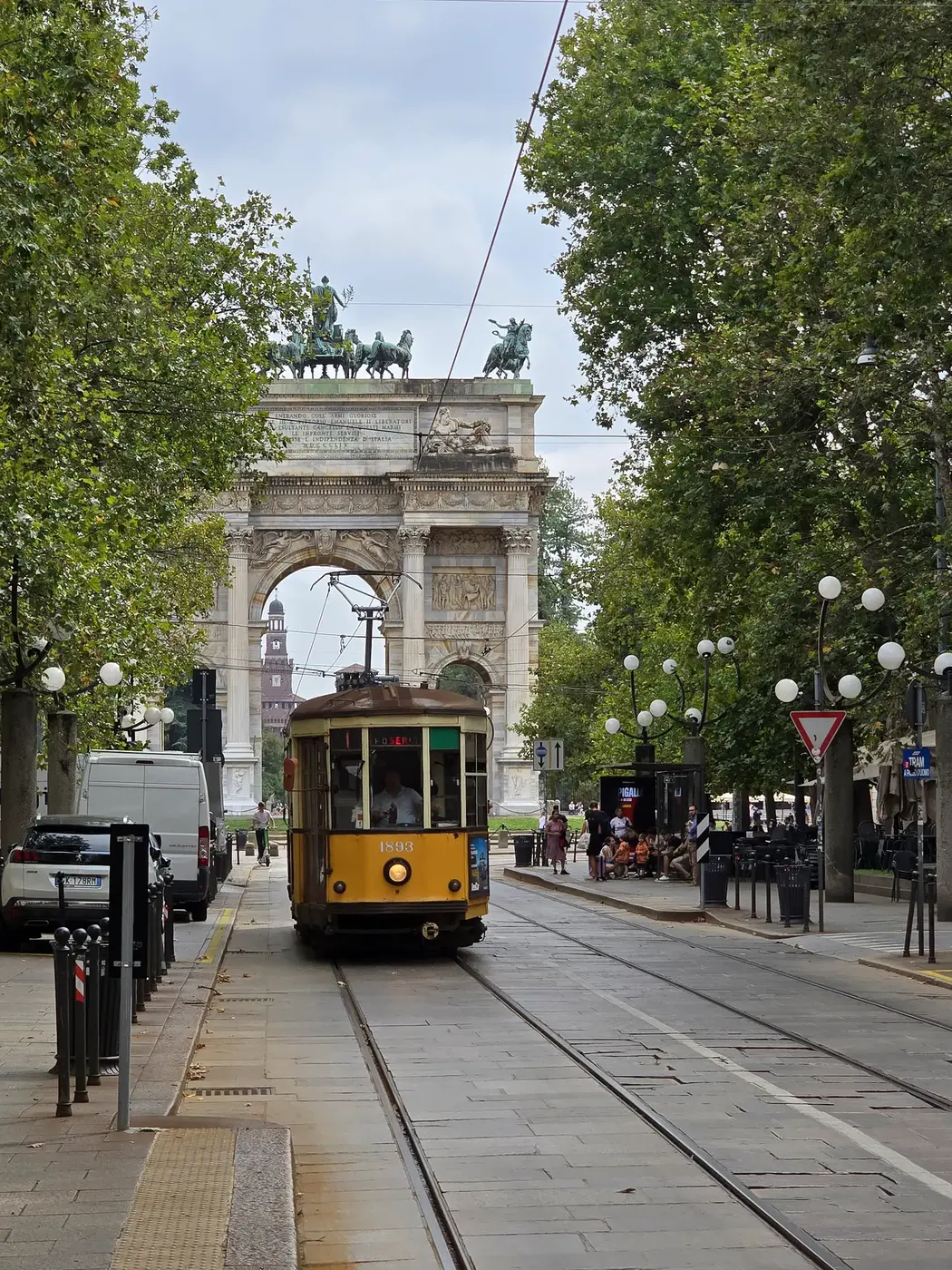
One of our favorite experiences was riding tram 1. Classic yellow-and-orange Carrelli trams with wooden interiors regularly operate on this line. Based on a design from the late 1920s, they feel almost like moving museums while still forming part of Milan’s everyday transit network.
Line 1 connects Greco and Roserio and passes several well-known places, including Piazza della Scala, the Duomo area, Cairoli, Castello Sforzesco, Parco Sempione, and Arco della Pace. You do not need to ride the entire route to enjoy the view. The central section is enough to see Milan from a very different perspective. Schedules, detours, and the type of tram in service can change, so check the official ATM app on the day of your ride.
The main sights in Milan
The Duomo and Galleria Vittorio Emanuele II
Start at Piazza del Duomo. The cathedral is impressive from the outside, but if time allows, visit the interior and rooftop terraces as well. Next to the square is Galleria Vittorio Emanuele II, known for its glass dome, mosaics, and elegant facades. Walking through the gallery is free. Read our separate guide to the Milan Duomo and Galleria Vittorio Emanuele II for tickets, dress rules, and tips for a quieter visit.
Castello Sforzesco, Parco Sempione, and Arco della Pace
These three landmarks form a natural walking route. You can explore the courtyards of Castello Sforzesco for free. Parco Sempione begins behind the castle and offers a welcome break from the crowds. Arco della Pace stands at the opposite end of the park. Without visiting a museum, allow about two hours for the route, including photo stops and a coffee break. Follow our complete Castello Sforzesco, Parco Sempione, and Arco della Pace walk.
Sant’Ambrogio and Santa Maria delle Grazie
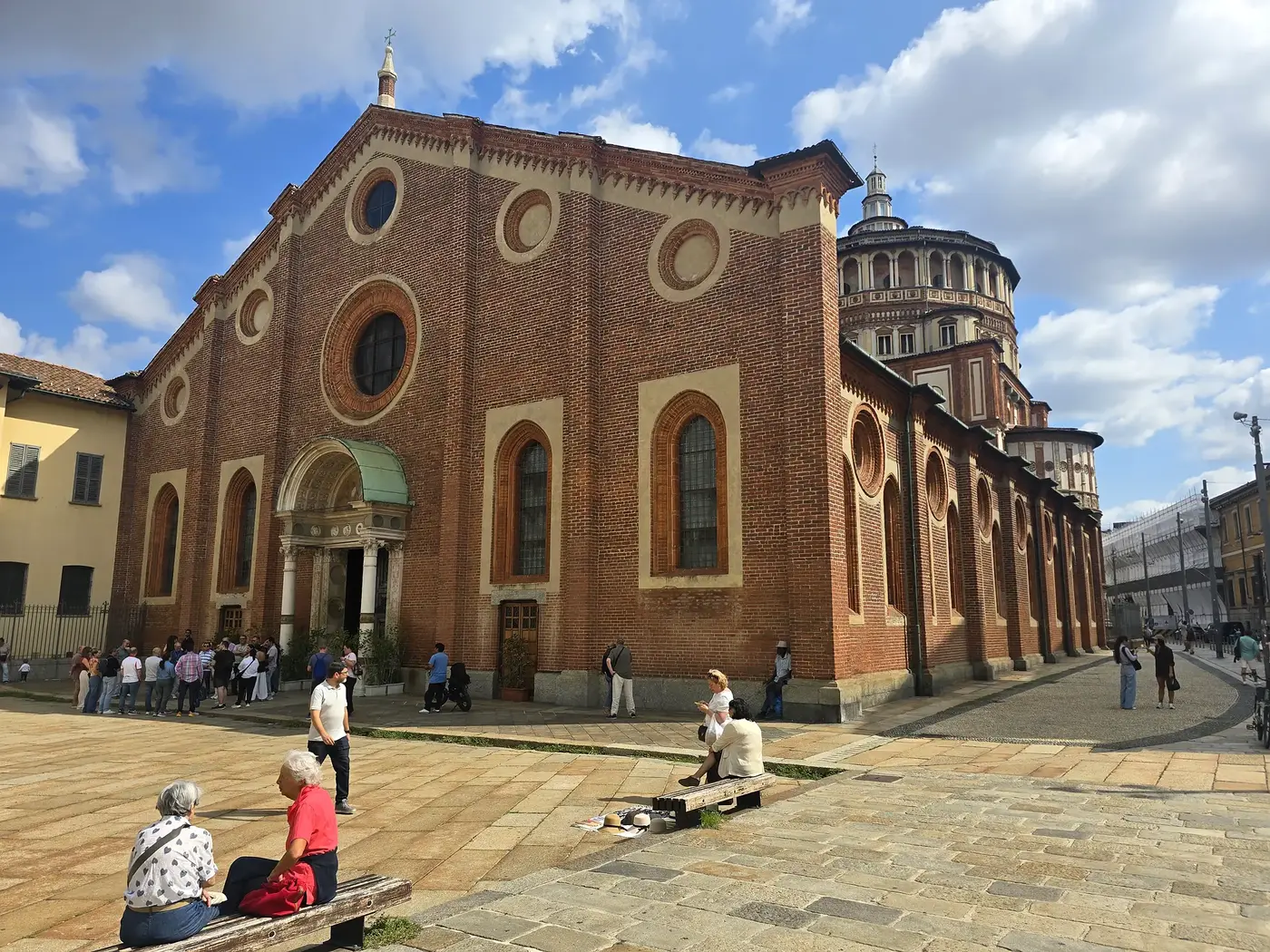
Basilica di Sant’Ambrogio showed us a quieter, more historic Milan. Its brick courtyard and restrained, ancient atmosphere make it very different from the ornate Duomo. Santa Maria delle Grazie is famous for Leonardo da Vinci’s The Last Supper. Advance reservations for the museum are required, and available time slots often disappear quickly. Find more details in our guide to Milan’s historic churches.
Coffee, side streets, and the rhythm of Milan
The grand monuments naturally attract attention, but some of our favorite moments happened in smaller streets. Around Brera and between the famous squares are picturesque lanes with courtyards, specialty shops, and tiny coffee bars. In Italy, order an espresso, not an “expresso.” If you simply ask for un caffè, you will normally receive an espresso.
Try drinking it the way many Italians do: standing at the bar, in a few sips, before continuing your day. At touristy locations, table service often costs more. Order a macchiato if you prefer something milder. Cappuccino is readily available too. Italians usually drink it in the morning, but as a visitor, you should order whatever you enjoy.
What should you eat in Milan?
- Risotto alla Milanese: creamy saffron risotto.
- Cotoletta alla Milanese: breaded veal, often served in a generous portion.
- Ossobuco: slow-cooked veal shank, sometimes paired with risotto.
- Panzerotto: a stuffed and fried dough snack that makes a quick lunch.
- Aperitivo: a late-afternoon drink with small bites; ask what is included in the price.
- Espresso and a pastry: an ideal short break during a long day of walking.
Where should you stay in Milan?
For a first visit, staying near a metro station matters more than having a room right beside the Duomo. Centro Storico is central but usually more expensive. Brera has plenty of atmosphere and suits travelers who enjoy walking to restaurants at night. The area around Milano Centrale offers many accommodations and convenient airport and train connections, although not every street feels equally inviting after dark. Navigli is ideal if you want nightlife and aperitivo, but expect some noise.
How much does a Milan city break cost?
| Expense | Estimate per person |
|---|---|
| Mi1–Mi3 single transit ticket | €2.20 |
| 24-hour public transit | €7.60 |
| 3-day transit ticket | €15.50 |
| Espresso at the bar | Often about €1.50–€2.50; higher near major sights |
| Quick lunch | About €8–€15 |
| Dinner | About €20–€45, excluding upscale restaurants |
| Duomo | From about €15; combinations with rooftop access cost more |
| The Last Supper | The official basic ticket is currently €15; reservations are mandatory |
Is Milan safe?
We felt comfortable in the parts of Milan we visited, including in the evening. As in almost every busy European city, pickpocketing is the main practical concern. Pay extra attention in crowded metro trains and trams, at stations, and around the Duomo. Do not leave your phone in an open coat pocket, and keep your bag in front of you when it gets busy.
Around major attractions, people may offer unsolicited bracelets, flowers, birdseed, or “help” with tickets. A polite but firm refusal and continuing to walk is normally enough. Buy admission tickets only from official outlets or reliable platforms, and check current government travel advice shortly before departure.
How many days do you need in Milan?
You can see the best-known highlights in two days, but we preferred having three. That way, you do not have to rush from one reservation to the next, and there is time for a coffee stop, a ride on tram 1, and the quieter churches. Our three-day Milan itinerary groups the sights logically by neighborhood.
Our verdict on Milan
Milan suits travelers who want to combine architecture, history, food, and the energy of a major city. Do not expect a quiet historic backdrop without traffic or modern buildings. The contrasts are what make Milan interesting. Our main advice is not to treat the trip as a checklist of monuments. Board tram 1, turn into a side street, and make time for a proper Italian espresso. Those were the moments when Milan felt more personal to us.
Frequently asked questions about Milan
Can you explore Milan on foot?
Yes. Many attractions in the historic center are within walking distance. For longer trips, the metro and tram make an ideal combination.
Can international visitors pay contactlessly on public transportation?
A compatible contactless debit or credit card from an accepted card network works on ATM services. Use one card per traveler and always use the same physical card or device when tapping in and out.
Is historic tram 1 a tourist tram?
No. Line 1 is regular public transportation, so you pay the normal ATM fare. Roadwork and service changes can affect both the route and the type of tram used.
Some links on this page are affiliate links. If you book through one of these links, we may earn a small commission at no extra cost to you. This helps support our website.
Discover more from DutchieWorldTravel
Subscribe to get the latest posts sent to your email.


One Comment
Pingback: