
Visiting the Milan Duomo and Galleria Vittorio Emanuele II
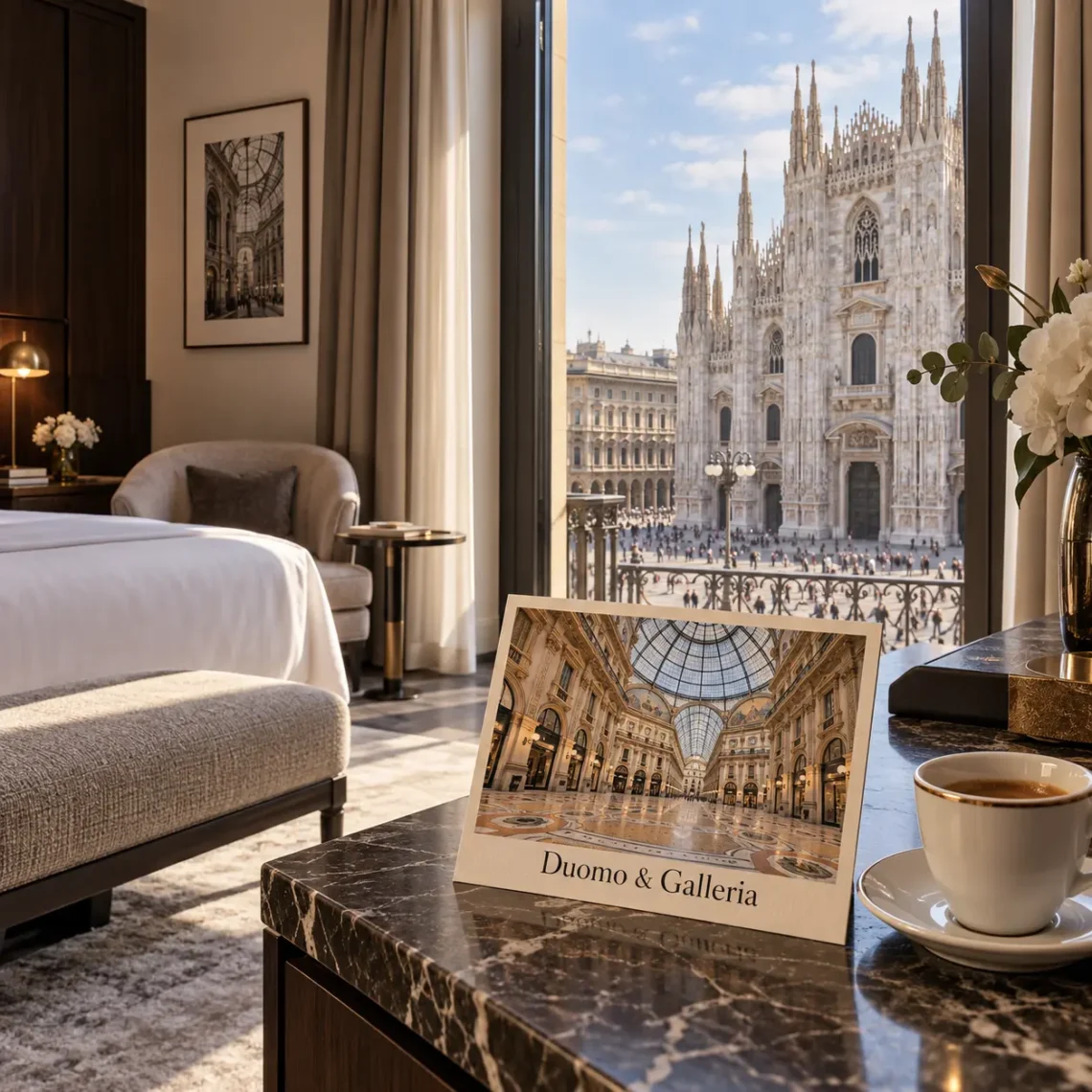
The first time we walked onto Piazza del Duomo, we immediately understood why almost every trip to Milan begins here. The white cathedral fills nearly your entire field of vision and remains impressive no matter how often you pass it during a city break. Right beside it stands the elegant Galleria Vittorio Emanuele II. Together they form Milan’s best-known scene, but with good timing, your visit can become much more than a quick photo stop.
Why is the Milan Duomo so special?
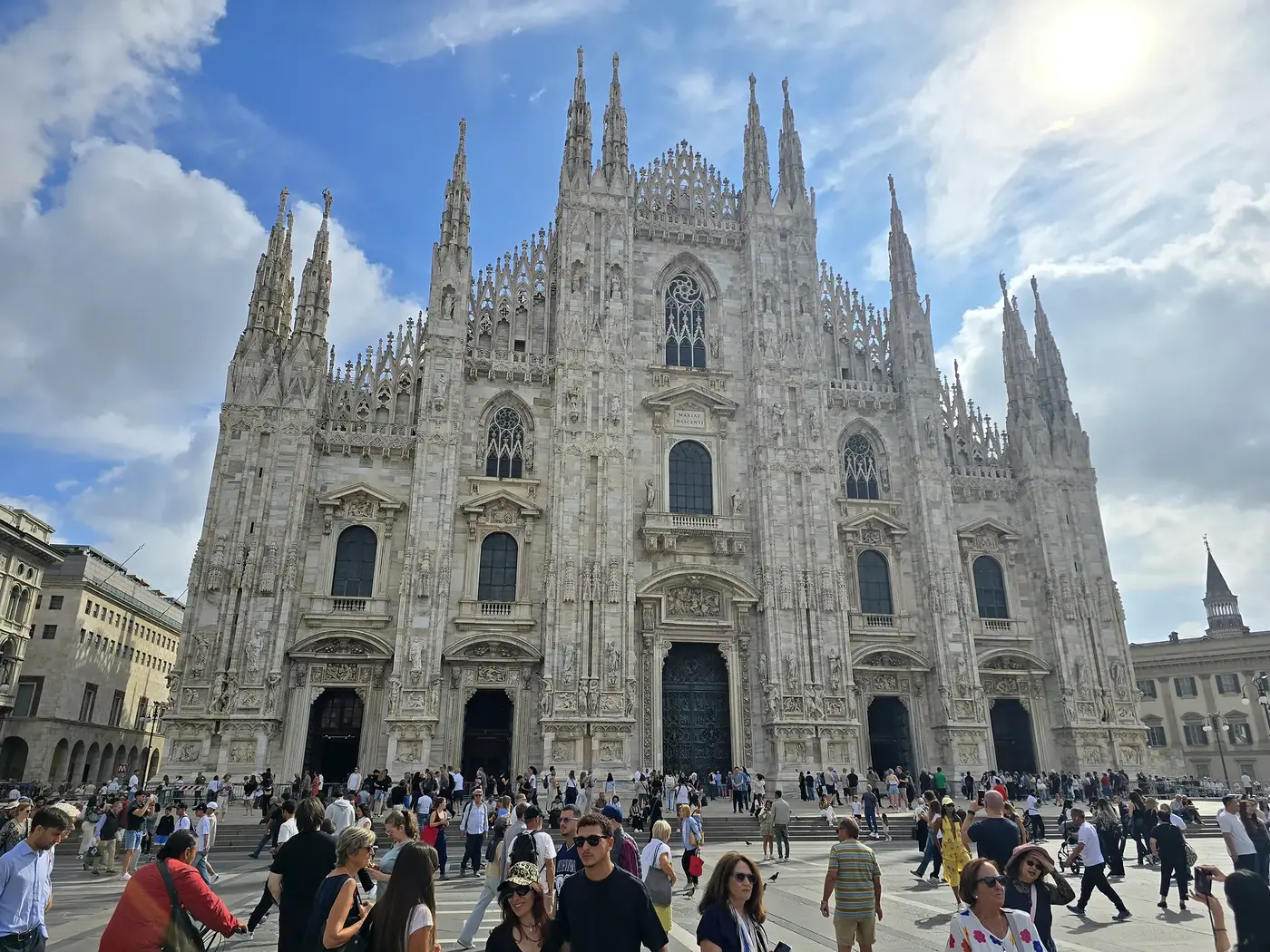
Construction began in 1386 and continued for centuries. As a result, the cathedral contains influences from several periods, although its Gothic appearance dominates. The marble, countless sculptures, and slender pinnacles create an almost unreal level of detail. A gilded statue known as the Madonnina crowns the highest spire and has become one of Milan’s symbols.
Our advice is not to join a line immediately. First cross part of the square, study the facade from several angles, and then move closer. In the crowds, it is easy to look only straight ahead, while the doors, sculptures, and upper facade are packed with smaller details.
Which parts of the Duomo can you visit?
- The cathedral: the vast interior with stained glass, columns, and religious art.
- The rooftop terraces: reached by stairs or elevator and a highlight for many visitors.
- The archaeological area: remains of earlier religious buildings beneath the square.
- The crypt: access depends on your ticket and current visitor arrangements.
- Museo del Duomo: sculptures, models, and objects from the cathedral’s history.
The ticket structure changes occasionally. In 2026, a Culture Pass costs about €15, while passes with rooftop access start around €22 by stairs and €26 by elevator. Before booking, always check the current inclusions and prices on the official Duomo website. The least expensive ticket does not necessarily include every area.
Are the rooftop terraces worth it?
If your budget and schedule allow, we would not skip the terraces. The attraction is not only the view over Milan. Walking among the pinnacles and sculptures that are barely visible from the square is what makes the rooftop special. On a clear day, the views stretch far beyond the center; in hot weather, remember that the roof offers little shade.
The stairs cost less but require reasonable fitness and are not ideal if you have limited mobility or dislike confined spaces. The elevator eliminates most of the climb, although lines are possible and you may still encounter a few steps. Wear shoes with good traction because the marble can become slippery, especially after rain.
Dress code and security screening
The Duomo is an active church. Shoulders and knees must be covered, and hats normally need to be removed inside. In warm weather, bring a light scarf or extra layer if necessary. Visitors pass through security, and large bags may be refused. Avoid planning your visit while carrying all your luggage on an arrival or departure day.
Different entrance arrangements apply if you are entering solely to pray or attend a service. Do not use that entrance as a free alternative to sightseeing, and always respect services in progress.
The best time to visit the Duomo
| Time | Advantage | Disadvantage |
|---|---|---|
| Early morning | Fewer people on the square and softer light | Not every section or nearby store is open yet |
| Midday | Everything is open and the area feels lively | Crowded, warm, and harsher light |
| Late afternoon | More attractive light on the facade | Admission times may become tight |
| Evening | Illuminated cathedral and a special atmosphere | The interior and terraces are generally closed |
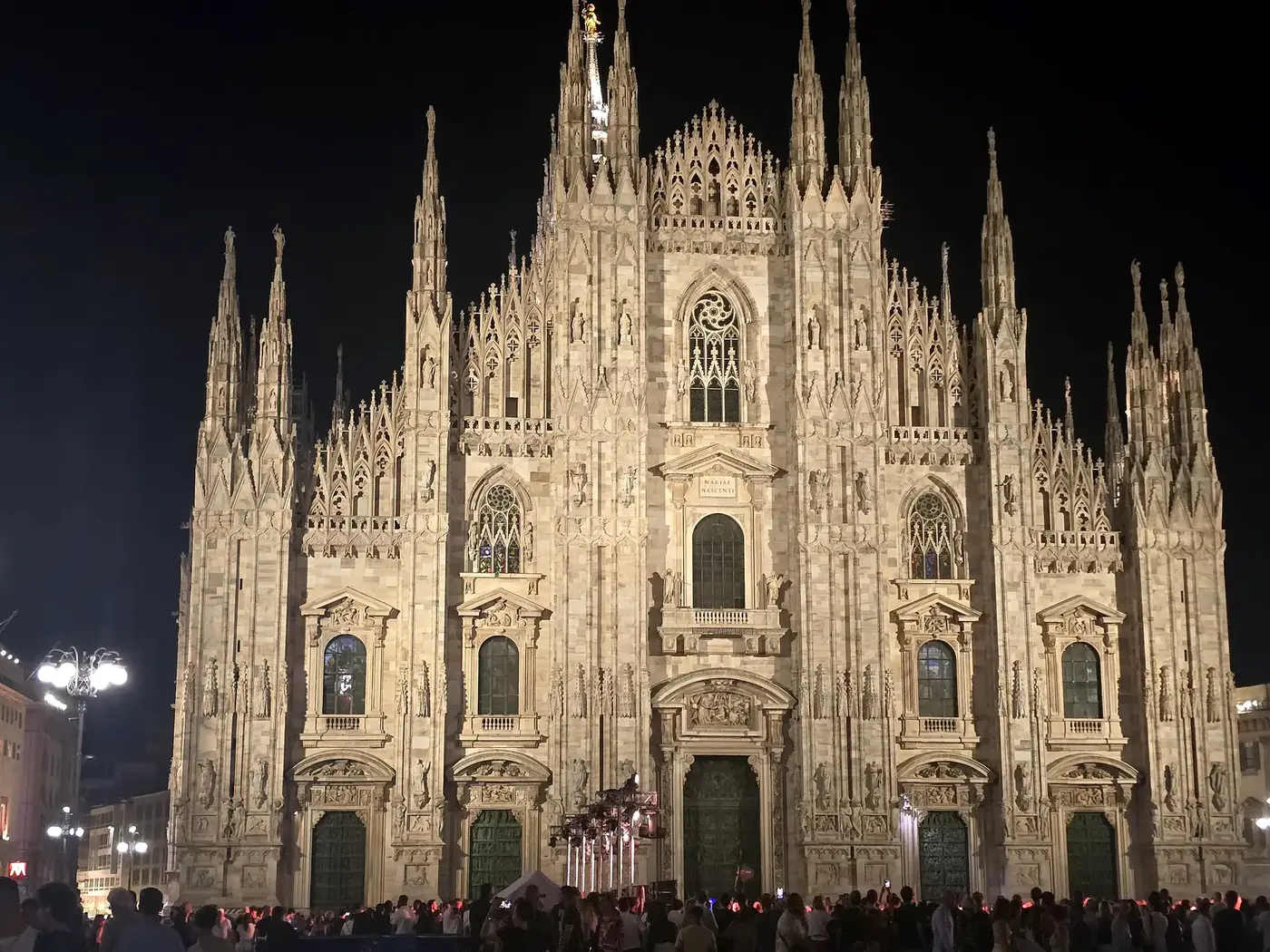
We returned both during the day and after dark. Daylight reveals the color of the marble and its details more clearly. At night, the facade appears more sharply defined and the square has a different energy. If you stay nearby or eat in the center, a second visit takes very little extra effort.
Galleria Vittorio Emanuele II
From Piazza del Duomo, a monumental arch leads into Galleria Vittorio Emanuele II. This 19th-century arcade connects the cathedral square with Piazza della Scala. Luxury stores, cafes, and restaurants sit beneath its high glass dome. The arcade is open to the public, and walking through it is free.
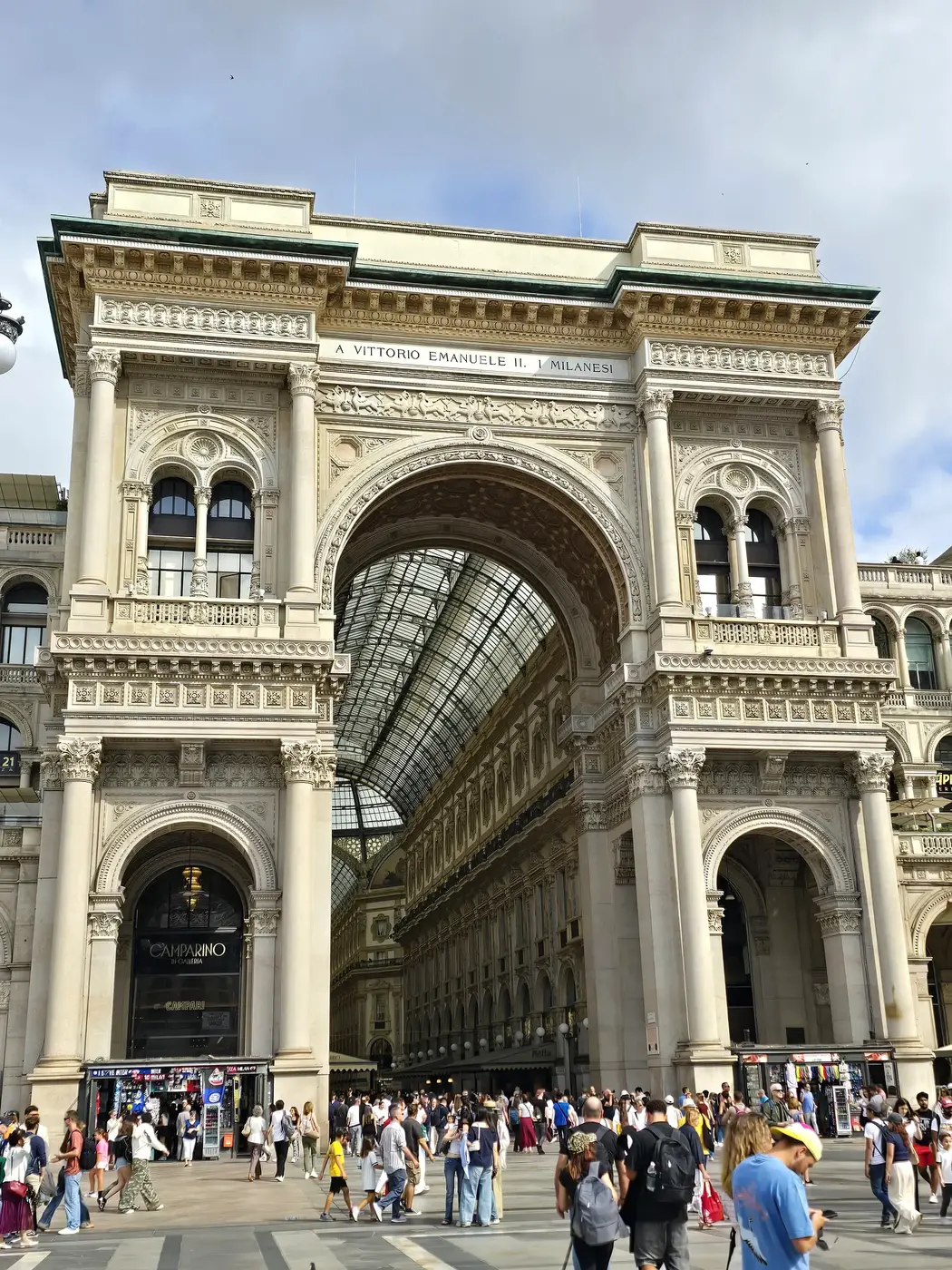
Look up and down
The dome and symmetrical facades immediately draw your attention, but the mosaic floor is just as interesting. According to a popular tradition, visitors place a heel on a specific point of the bull mosaic and turn for good luck. A small crowd can form there. Join in if you like, but avoid causing further damage and give other visitors space.
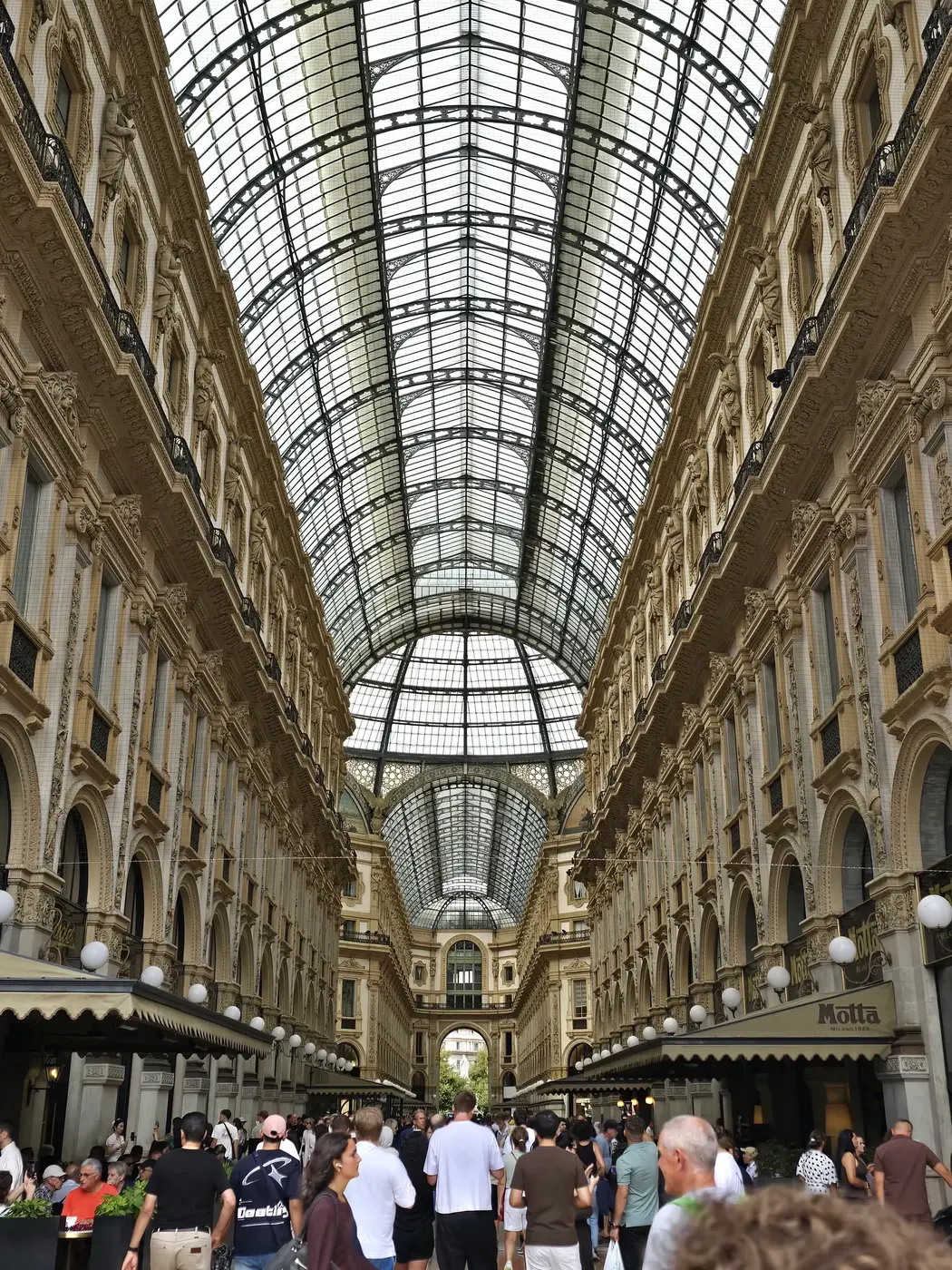
Coffee inside or outside the Galleria?
Having coffee in the Galleria means paying for the location and its history. That can be a deliberate treat, but for an everyday espresso, we prefer walking a few streets farther. In a small Italian bar, ask for un caffè and drink it standing at the counter. The stop is cheaper and usually feels less touristy.
A practical walking route around the Duomo
- Start early on Piazza del Duomo.
- Visit the cathedral and, if selected, the terraces at your reserved time.
- Walk through Galleria Vittorio Emanuele II to Piazza della Scala.
- See Teatro alla Scala from outside or visit its museum.
- Continue toward Brera for lunch or an espresso.
- Follow the atmospheric streets toward Via Dante and Castello Sforzesco.
Continue with our walk past Castello Sforzesco, Parco Sempione, and Arco della Pace. If you prefer not to walk farther, take the metro or tram. Contactless payment means there is no need to search for a paper ticket first.
Daytime or evening?
If you have time, visit Piazza del Duomo twice. During the day, the marble details are clearest and the cathedral and rooftop terraces are open. In the evening, the square feels livelier and the illuminated facade almost takes on a different color. The Galleria remains impressive after stores close, when its interior lighting becomes more noticeable.
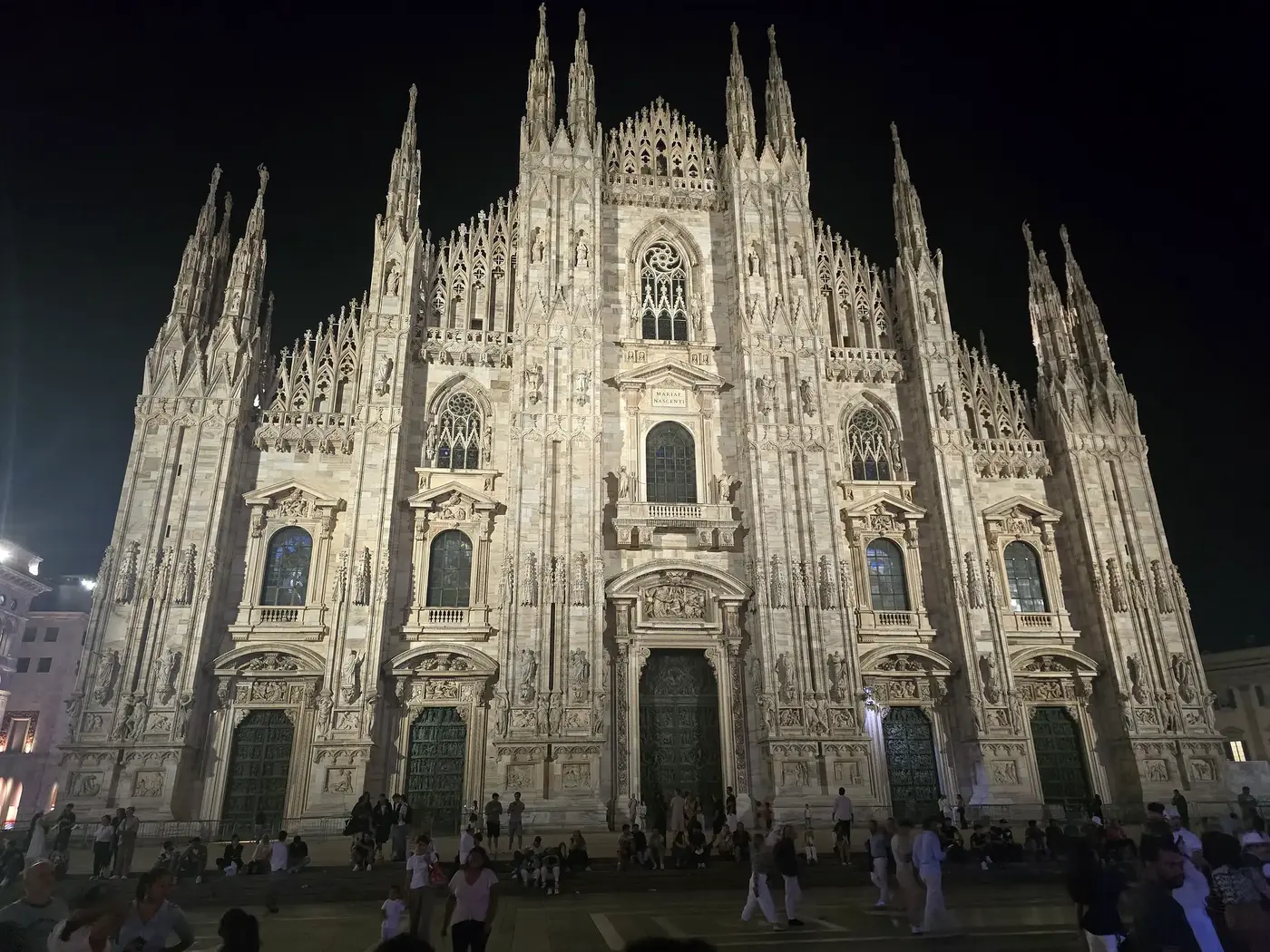
We would not leave the interior visit until the end of the day. Different sections do not always share the same opening hours, and final admission may be well before closing. Use the evening to stroll across the square without time pressure or eat on a side street. A restaurant overlooking the Duomo offers a beautiful setting, but check the menu and recent reviews first because you often pay extra for the location.
Accessibility and visiting with children
The square and Galleria are mostly level, but the Duomo area has crowds, security barriers, and sometimes long lines. The elevator is the logical option for strollers and wheelchairs, although steps and narrow passages still limit access to parts of the terraces. Check the current accessible route beforehand and ask staff if you need assistance.
With children, the visit often works better if you do not try to explain every artwork. Ask them to find animals and unusual faces on the facade, count the spires visible from one spot, and look down at how small everyone appears from the roof. Plan a short drink break afterward so the cathedral feels like a discovery rather than a long series of stones and names.
Photography tips for Piazza del Duomo
- Use an ultra-wide lens only when the cathedral will not fit otherwise; expect distorted lines near the edges.
- Move toward the sides of the square for a calmer foreground.
- Photograph details with a modest zoom instead of always capturing the full facade.
- Return in the evening without a heavy day bag; it is more comfortable in the crowds.
- Respect security instructions and any indoor photography restrictions.
Frequently asked questions
Should you buy Duomo tickets in advance?
Advance reservations are sensible, especially for the rooftop terraces and during busy travel periods. Check carefully which areas your chosen ticket includes.
Is the Galleria free?
Yes. You can walk through the public arcade for free. Stores, food and drinks, and any special experiences naturally cost extra.
How much time should you allow?
Allow one to 1.5 hours for only the square and Galleria. With the cathedral, museum, and rooftop terraces, the visit can easily take three to four hours.
Some links on this page are affiliate links. If you book through one of them, we may earn a small commission at no extra cost to you. This helps support our website.
Discover more from DutchieWorldTravel
Subscribe to get the latest posts sent to your email.



2 Comments
Pingback:
Pingback: